








Stephen Whittlesey
Houseman, 1996
Material: Painted wood
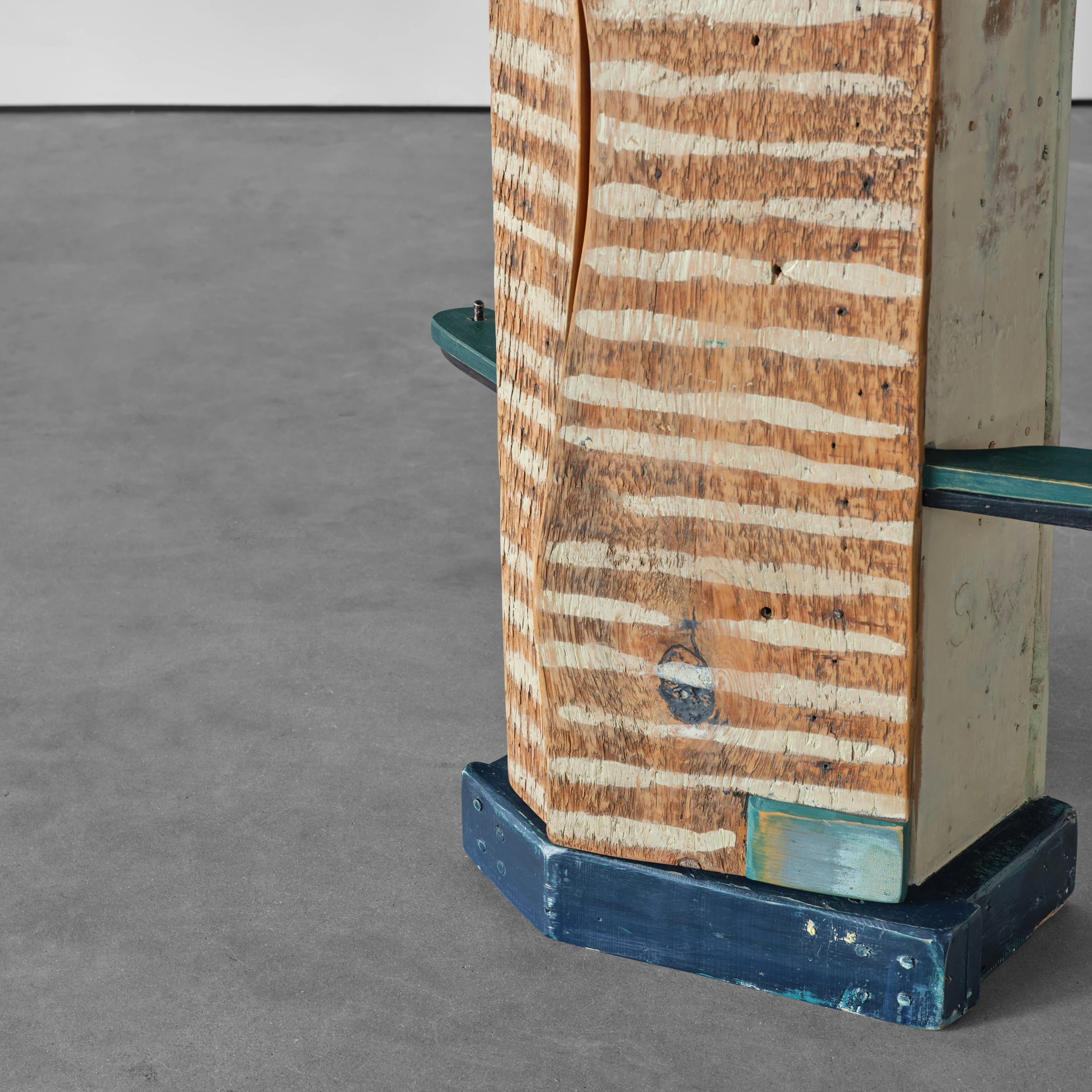
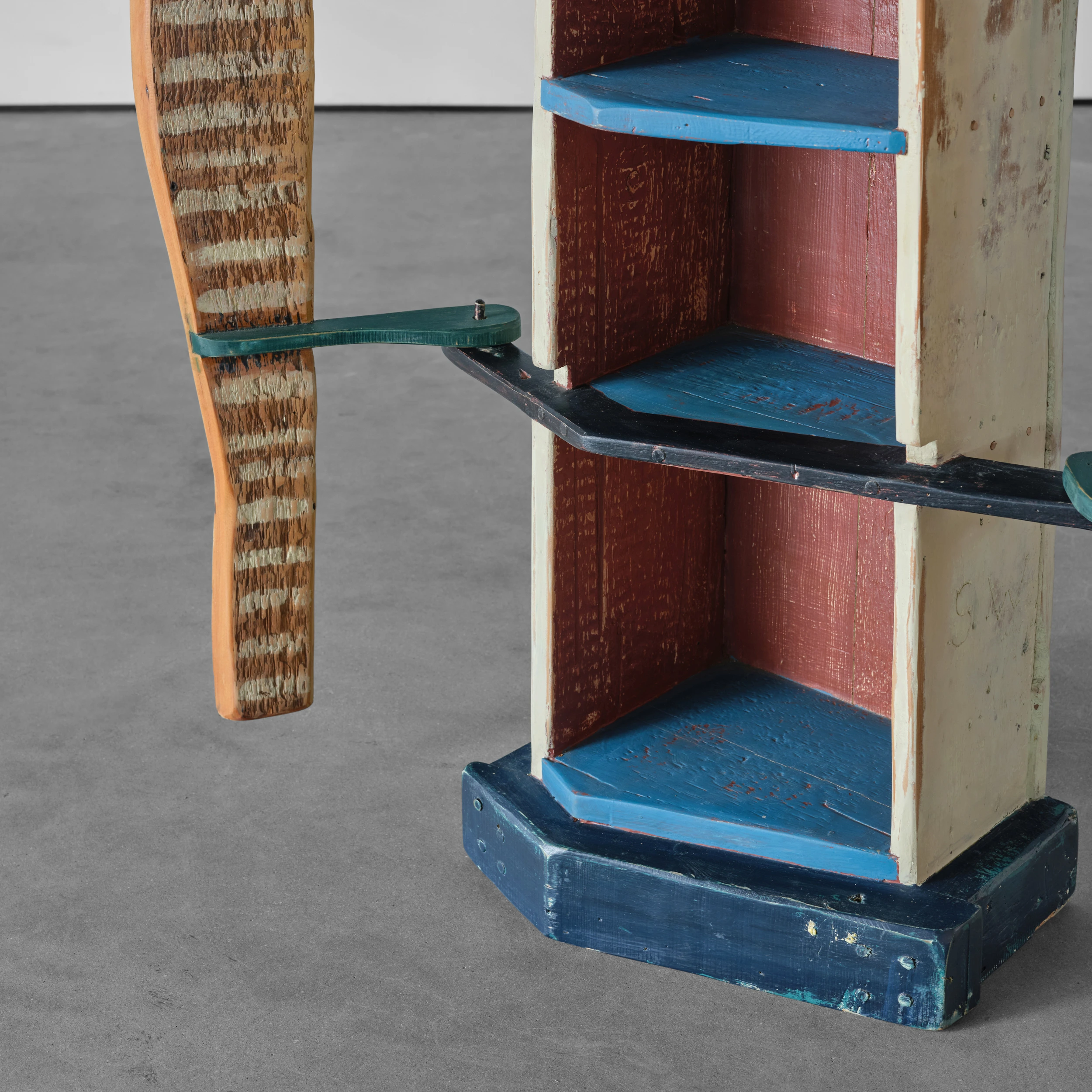
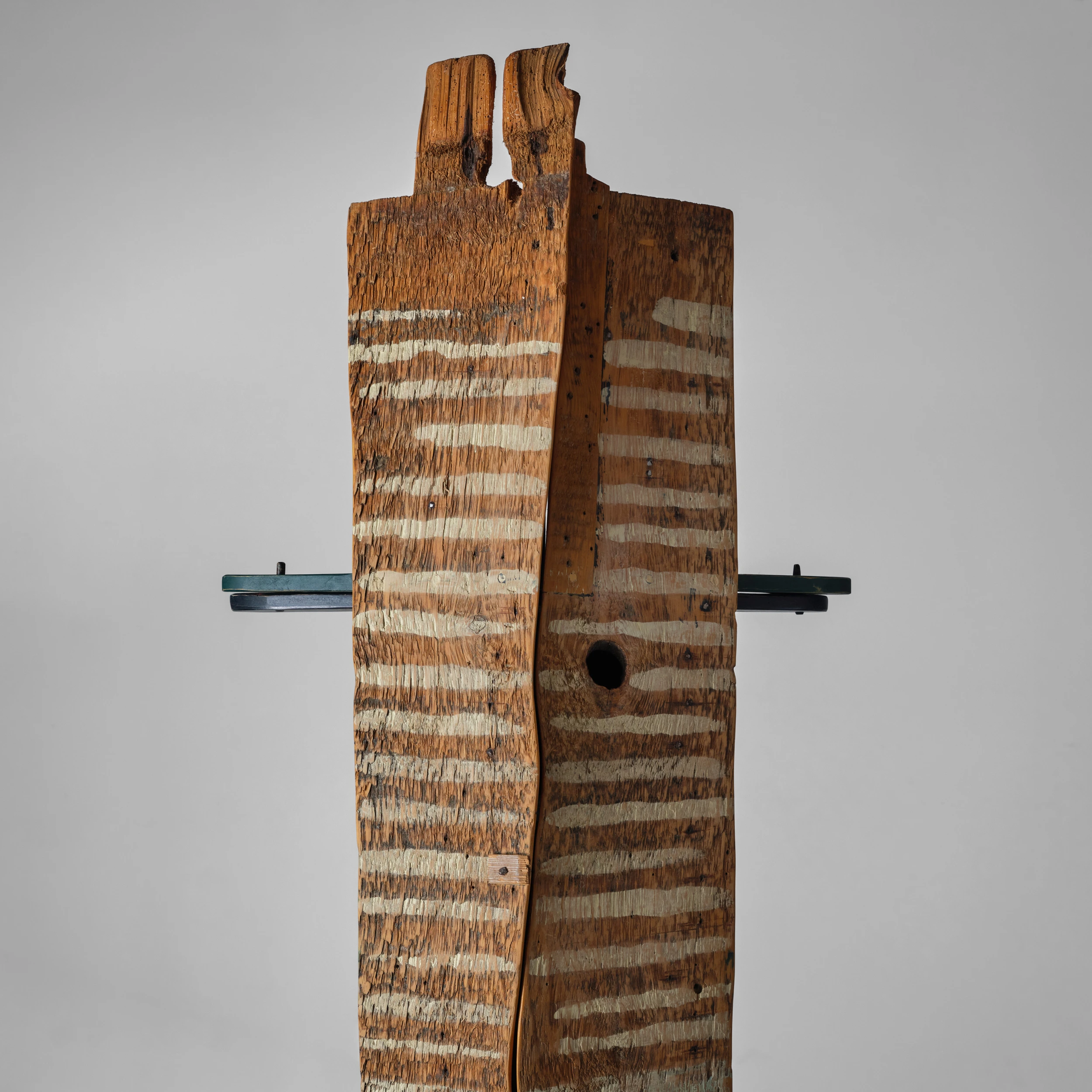
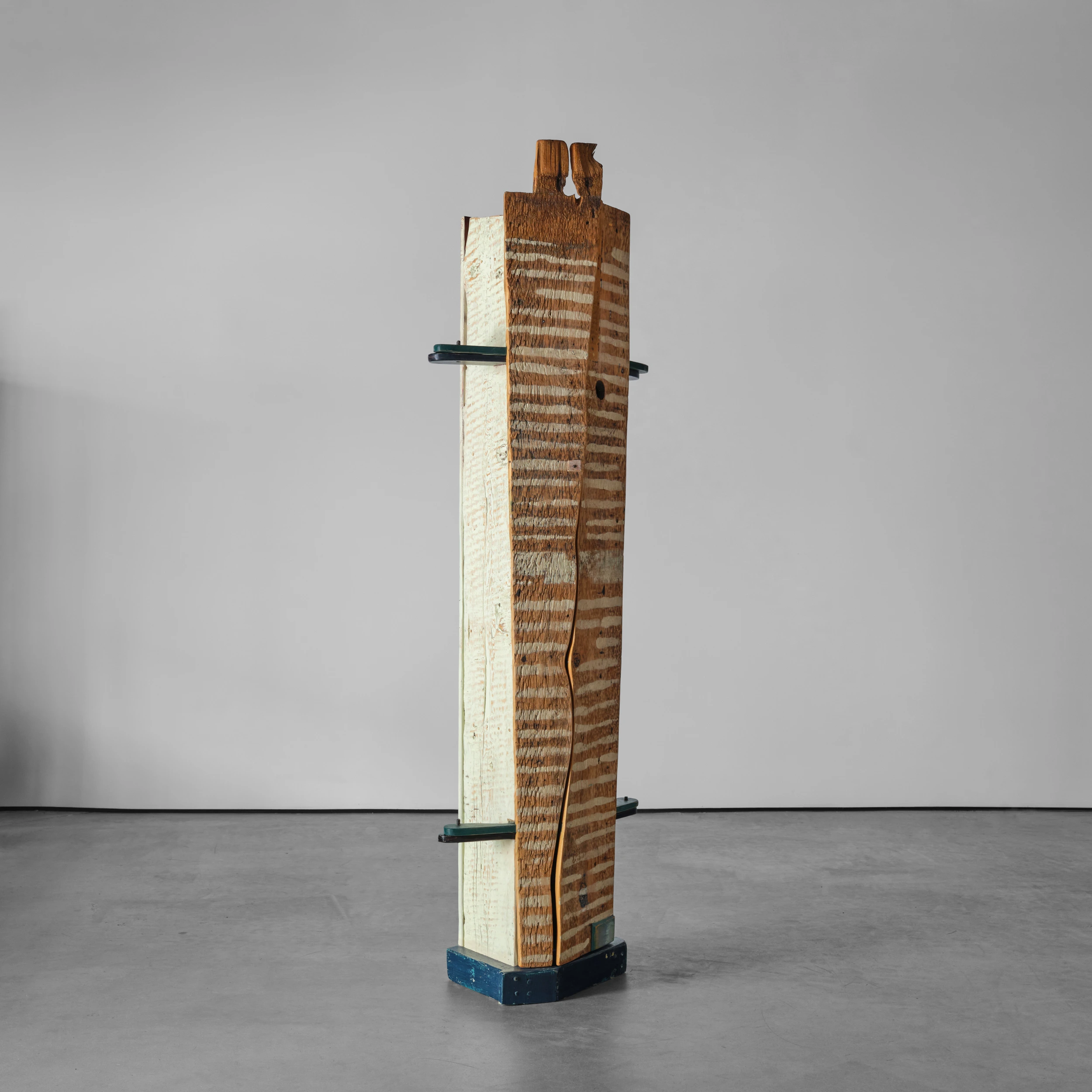
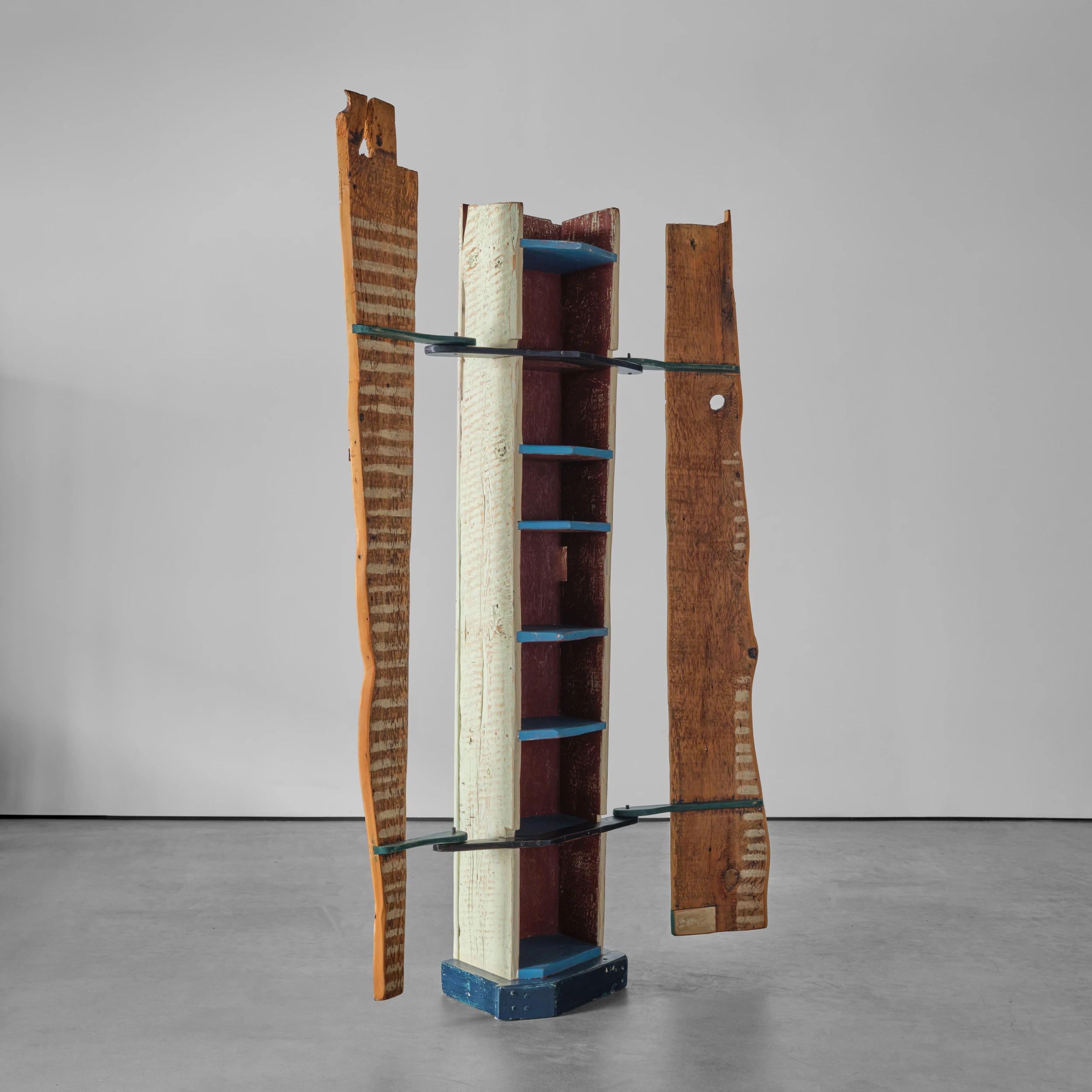
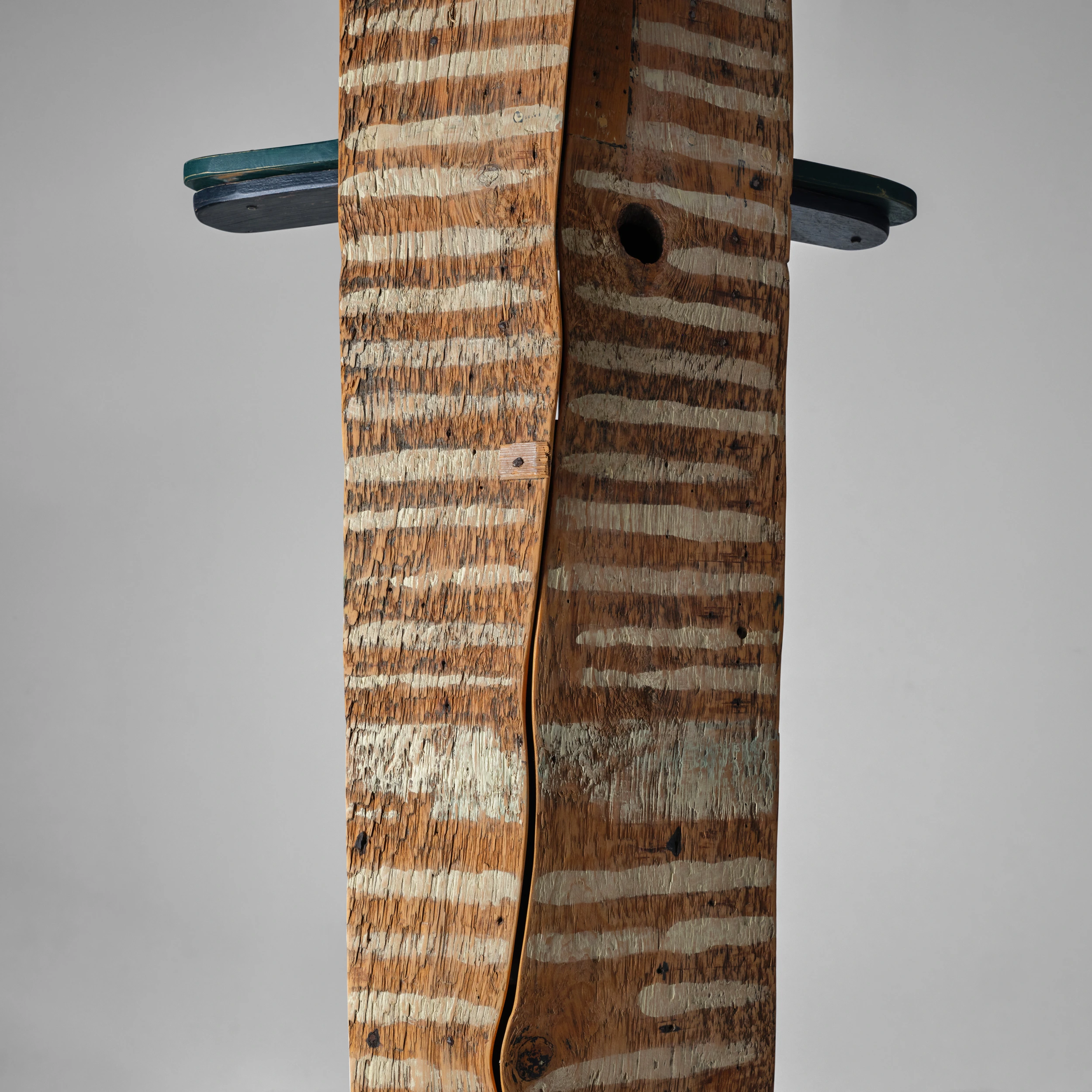
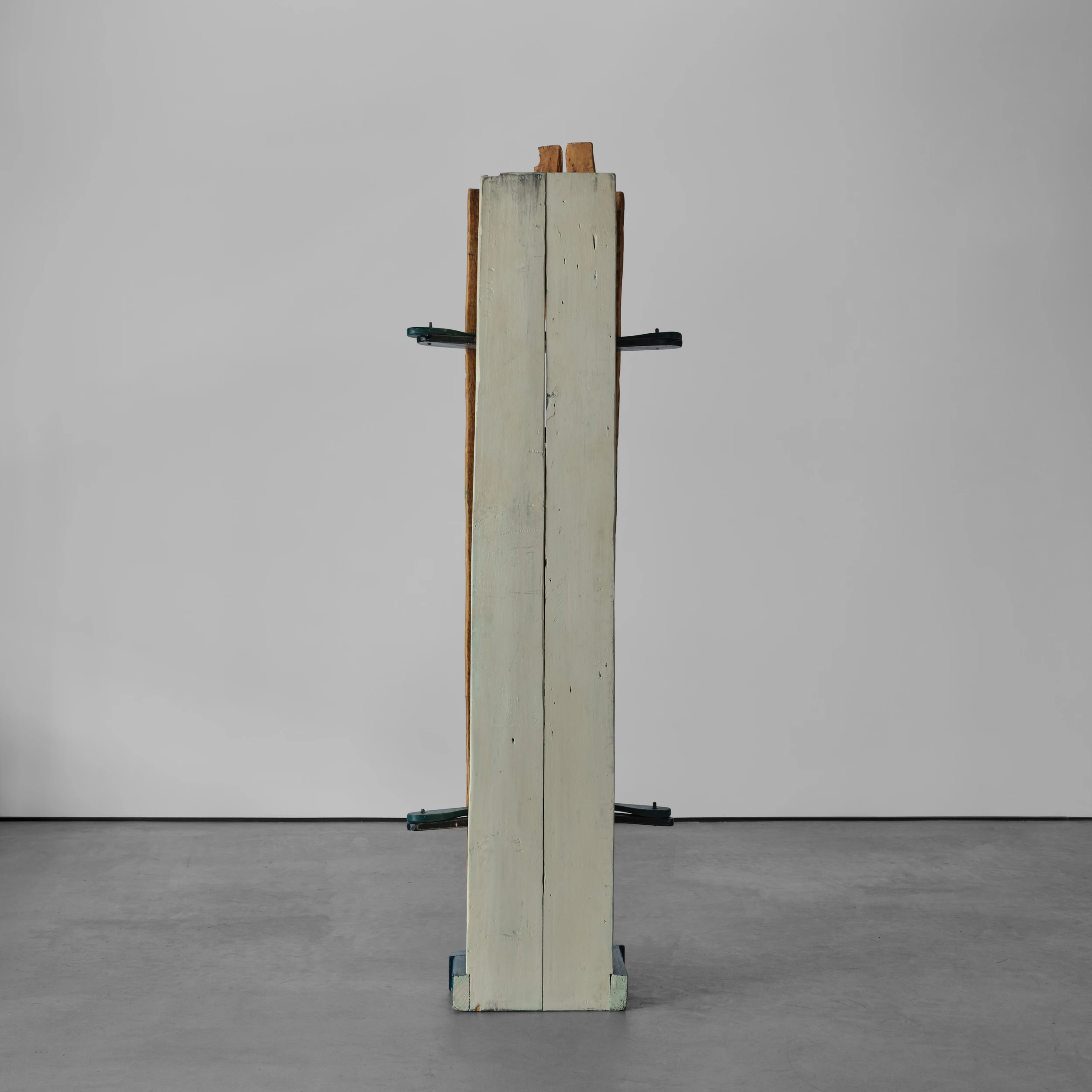
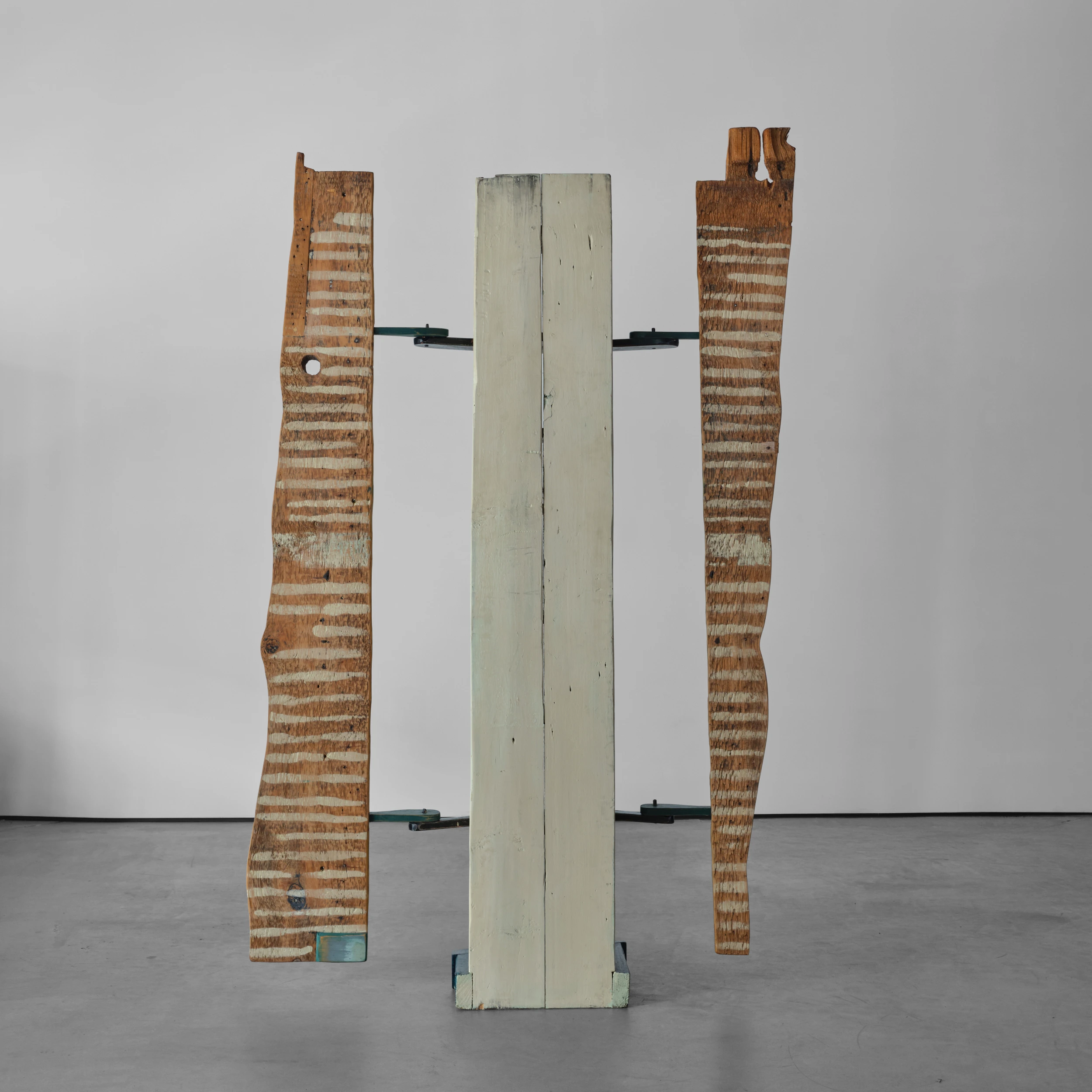
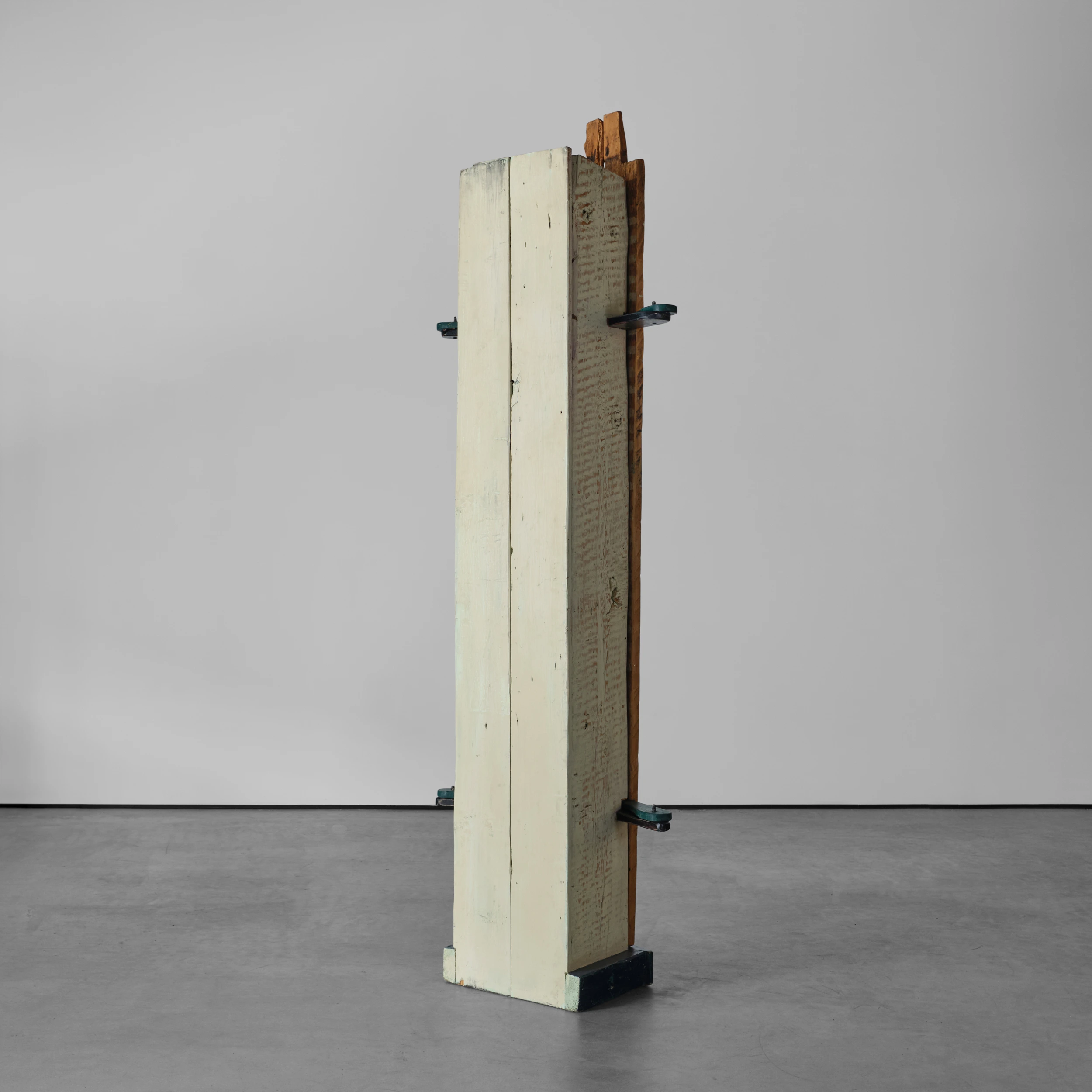
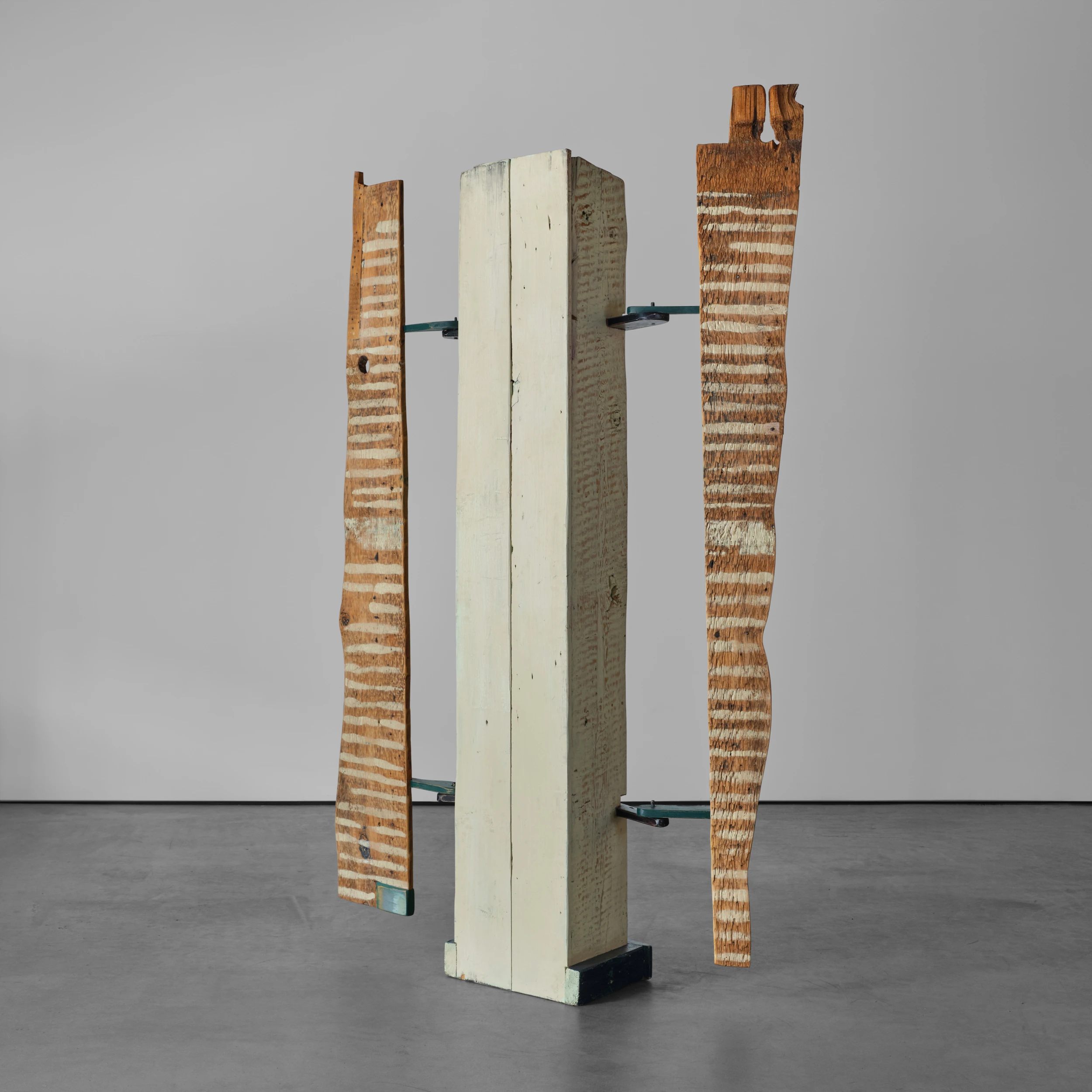
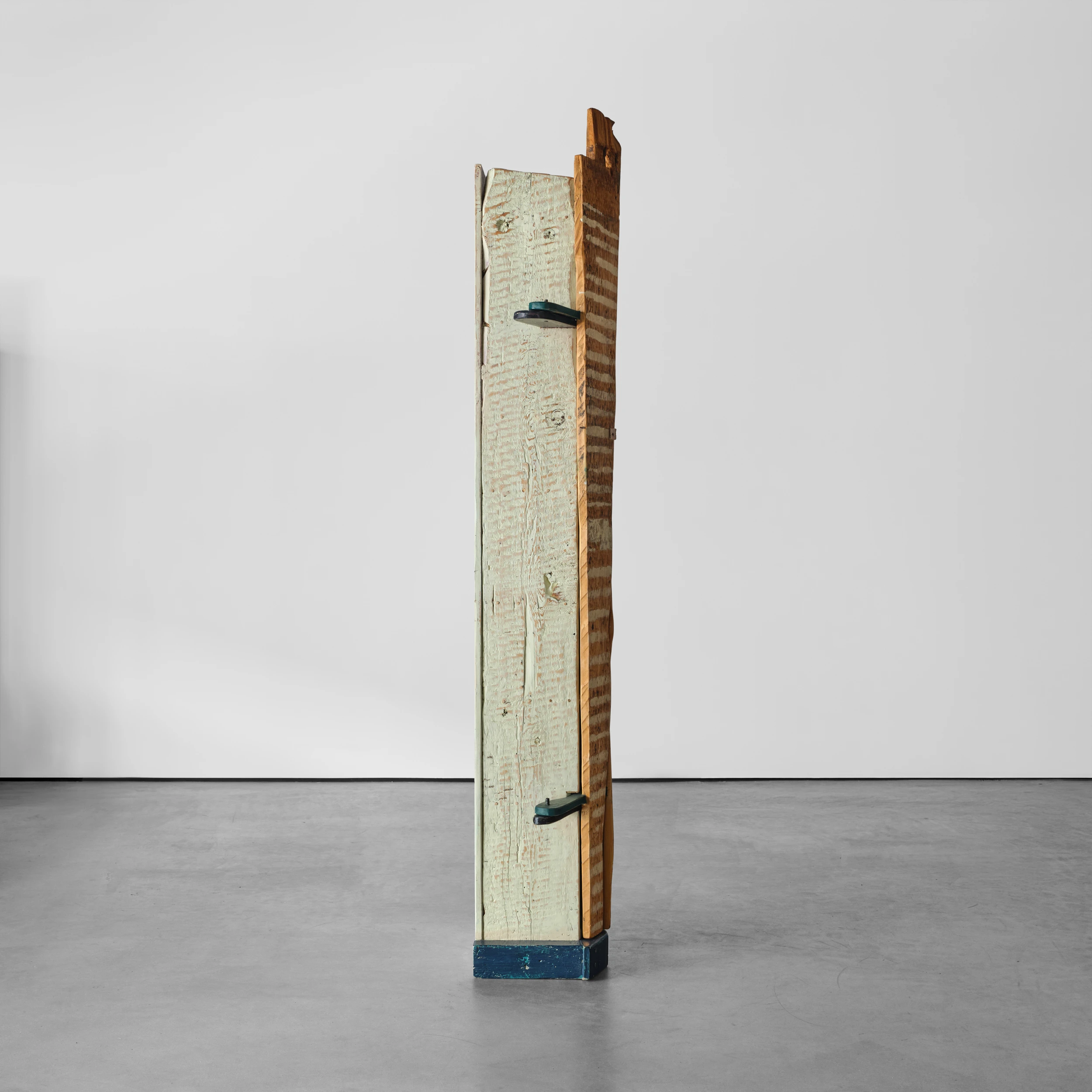
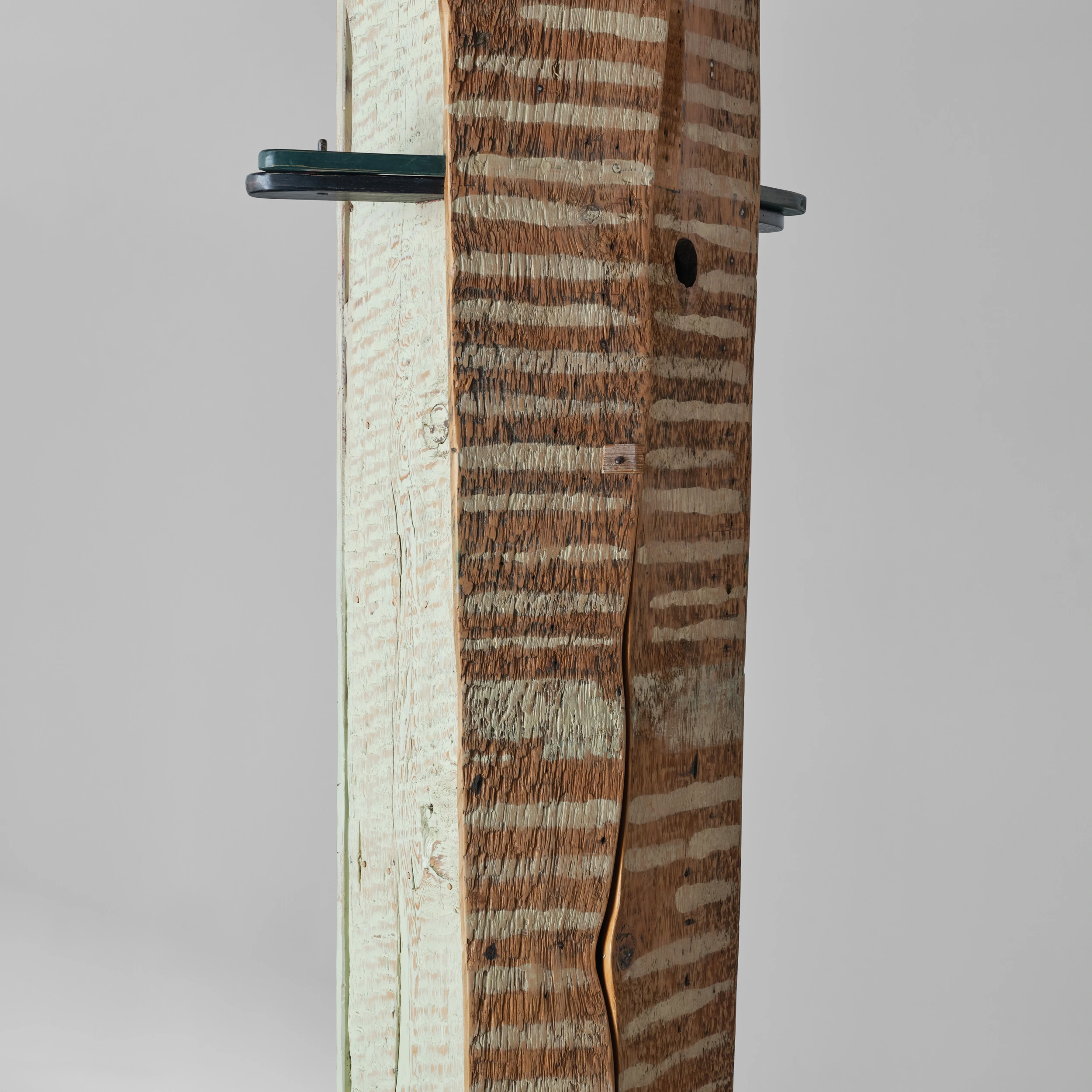
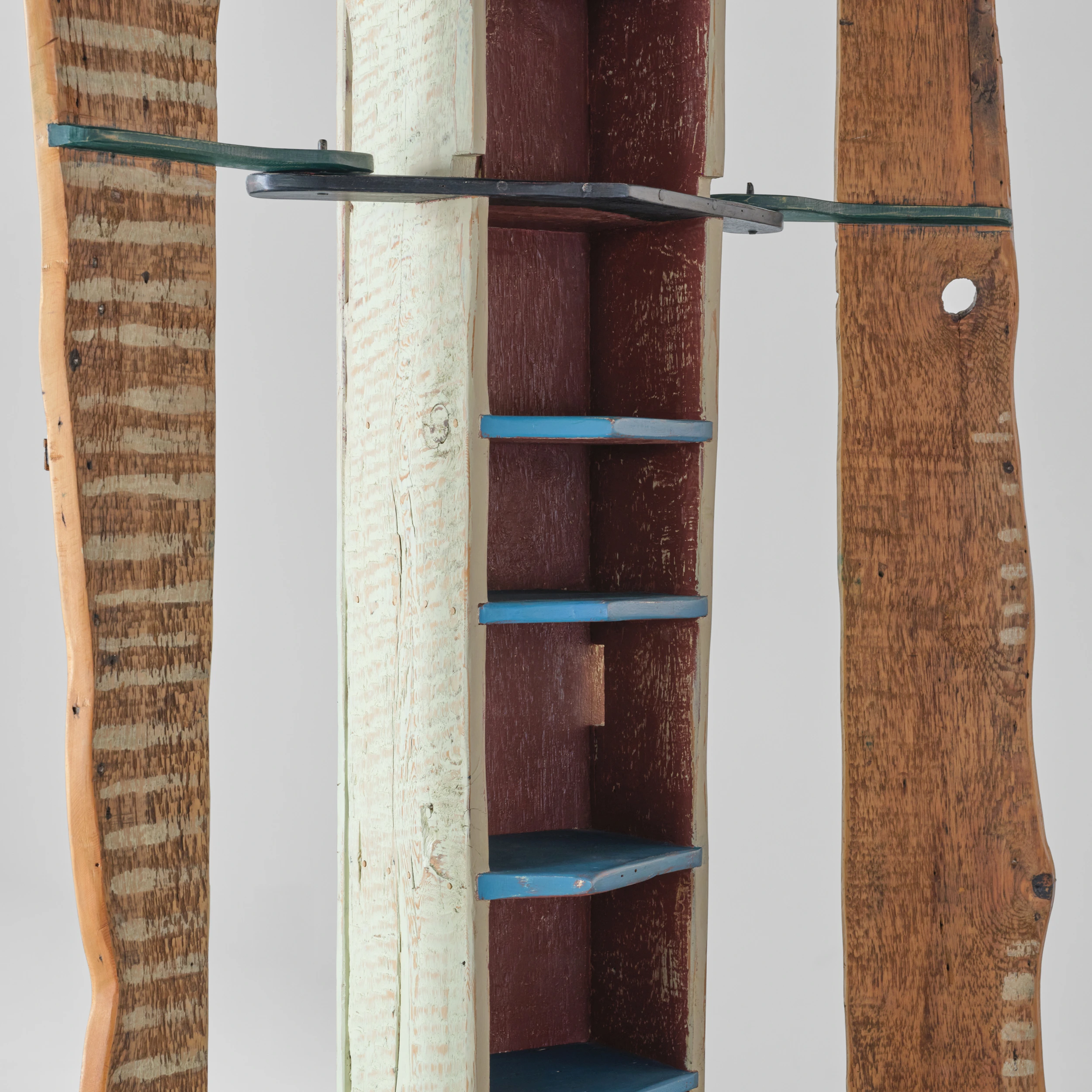
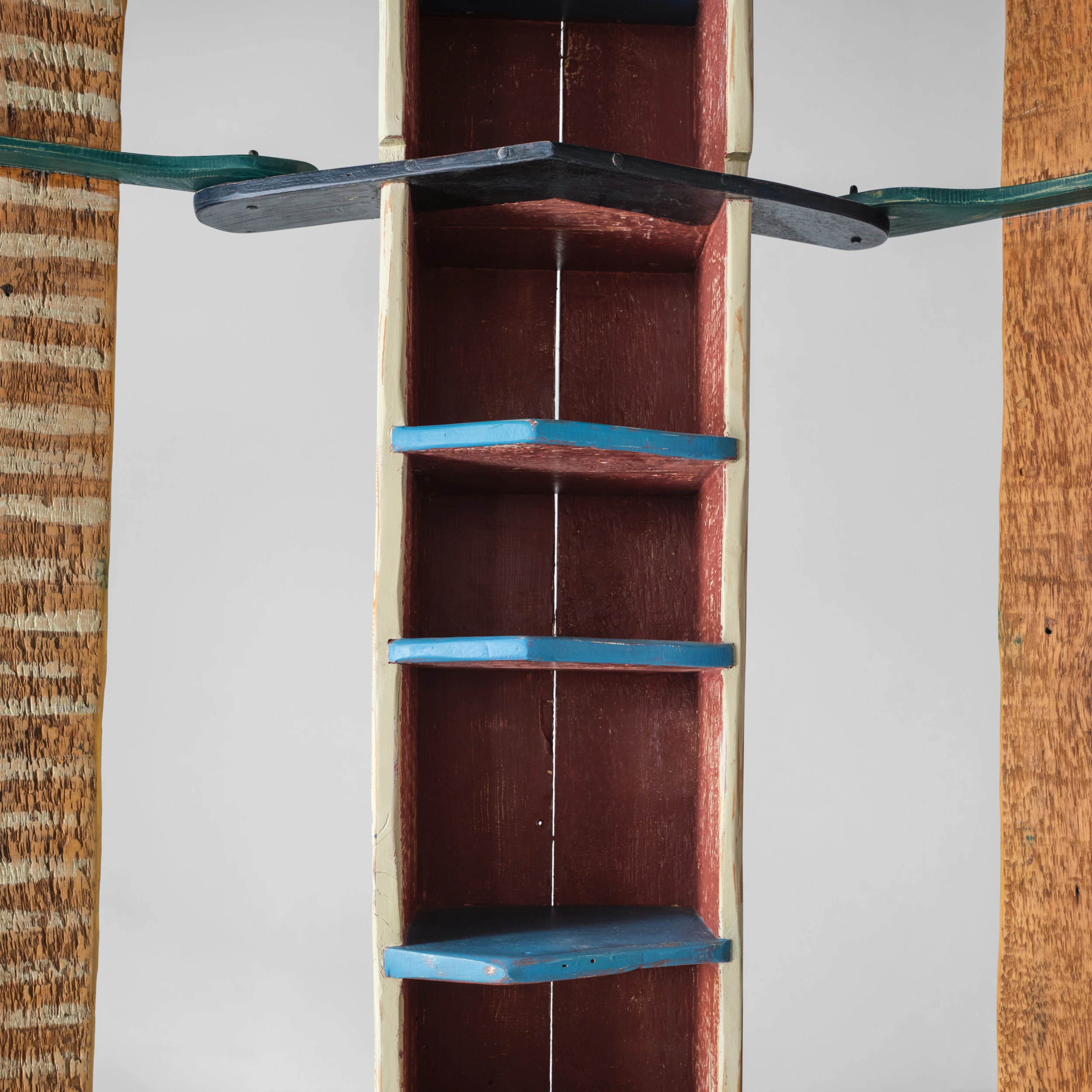
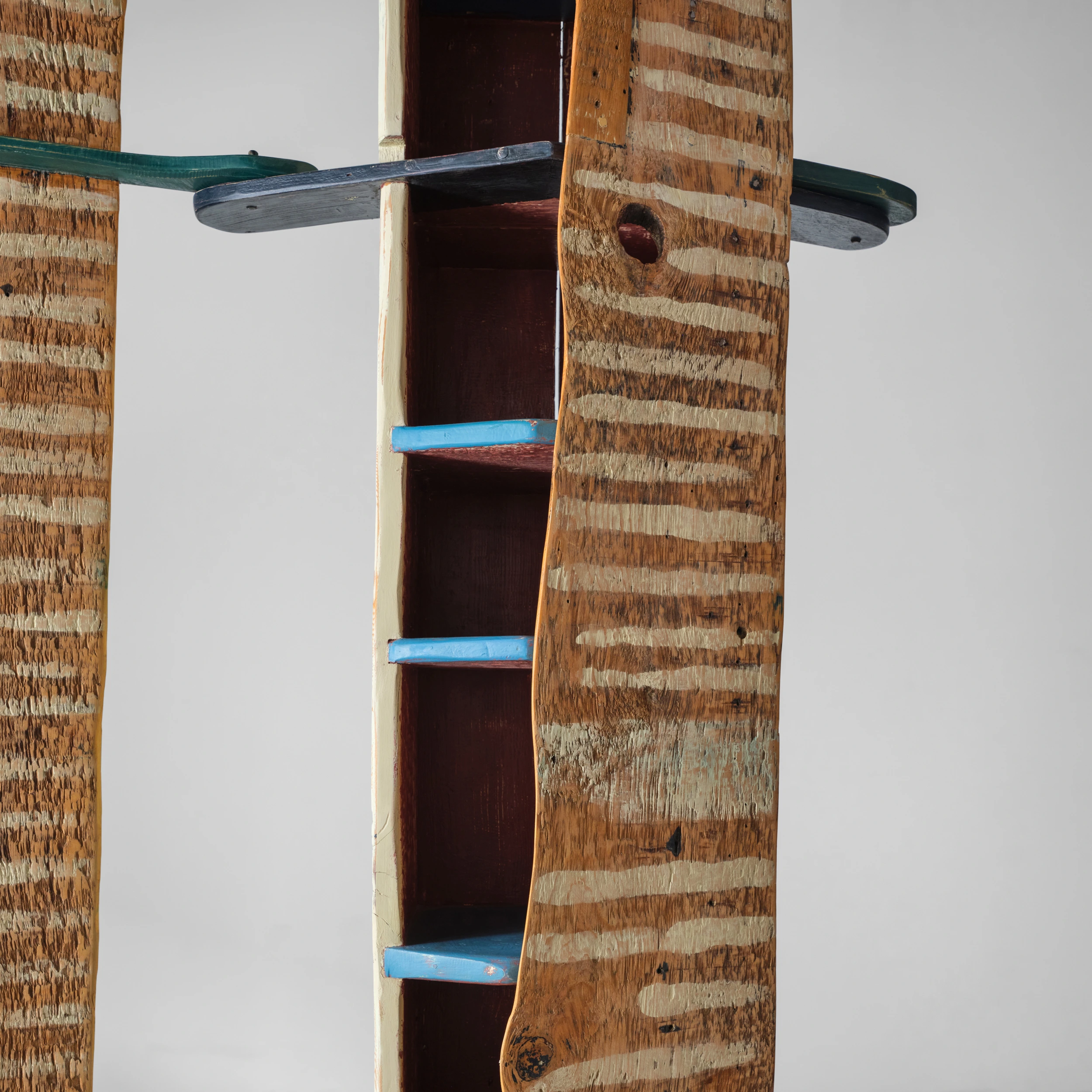
“Houseman” a 1996 work by Stephen Whittlesey features the artist’s signature use of weathered reclaimed wood in its form and construction. The work showcases rustic, worn surfaces and incorporates a painted, striped motif. Additionally, the cabinet’s doors rest upon patinated, hinges further expanding the work’s found, reclaimed aesthetic.
“Like McKie, Stephen Whittlesey (b. 1938) is not an academically trained woodworker. He had an MFA in painting and sculpture before he started making furniture as a side project to house restoration. Wittlesey came of age as an artist in New York in the 60s, when teaching was directed towards a personal search for form and imagery. He found the system too self-referential and ponderous. In contrast, he appreciated the construction of buildings he saw in a Spanish fishing village: everything made from materials at hand without the aid of rulers and squares—an informal approach that struck him as more honest than anything he learned in art school.
In 1968, Whittlesey moved to Cape Cod to work as a carpenter. He also painted and made plain furniture. He began picking up pieces of weathered and painted wood from derelict buildings and boats he found on the Cape, as one might pick up stones, enjoying them for their surfaces. Before long, he was building practical furniture out of these pieces of experienced wood. His forms were conventional—mirror frames and tables, for instance—and the results were rather tame. So he began to invent odd forms. He made curved elements by cutting front and back profiles and nailing tongue-and-groove paneling on the sides. He added pieces of old architectural ornaments, such as brackets and pinnacles. It was like Memphis furniture made out of the wreckage of an old New England house.
With a painter’s eye for color and texture, Whittlesey composed each piece of furniture as a geometric abstraction. His cabinets often have weather-beaten exteriors and surprisingly bright-colored interiors. The real charge is in the recycled wood, which carries traces of a previous life: silhouettes of missing hinges, inexplicable holes, bits of old wallpaper, copious nicks and dings. Sometimes his list of materials states the source of the wood—from an old lobster boat or maybe a whale-oil-candle house.
Whittlesey says, “This isn’t nostalgia. It is carrying a story forward in a different fashion, re-telling the stories and myths of old familiar forms.”
The claim is open to question. His salvaged wood speaks of a past rendered dreamy and lustrous by the aesthetically worn surfaces. There’s nothing of dark mills or poor immigrants crowded into tenements. Still, such things didn’t exist on Cape Cod, and Whittlesey is using resources that can be found in his immediate environment. Perhaps nostalgia exists only in the eye of the beholder.
(Koplos, Janet, and Bruce Metcalf. Makers. Univ of North Carolina Press, 31 July 2010.)
| Dimensions | 19 × 10 × 75 in |
|---|---|
| Artist | Stephen Whittlesey |
| Date | 1996 |
| Material | Painted Wood |
| Style |