






Wharton Esherick
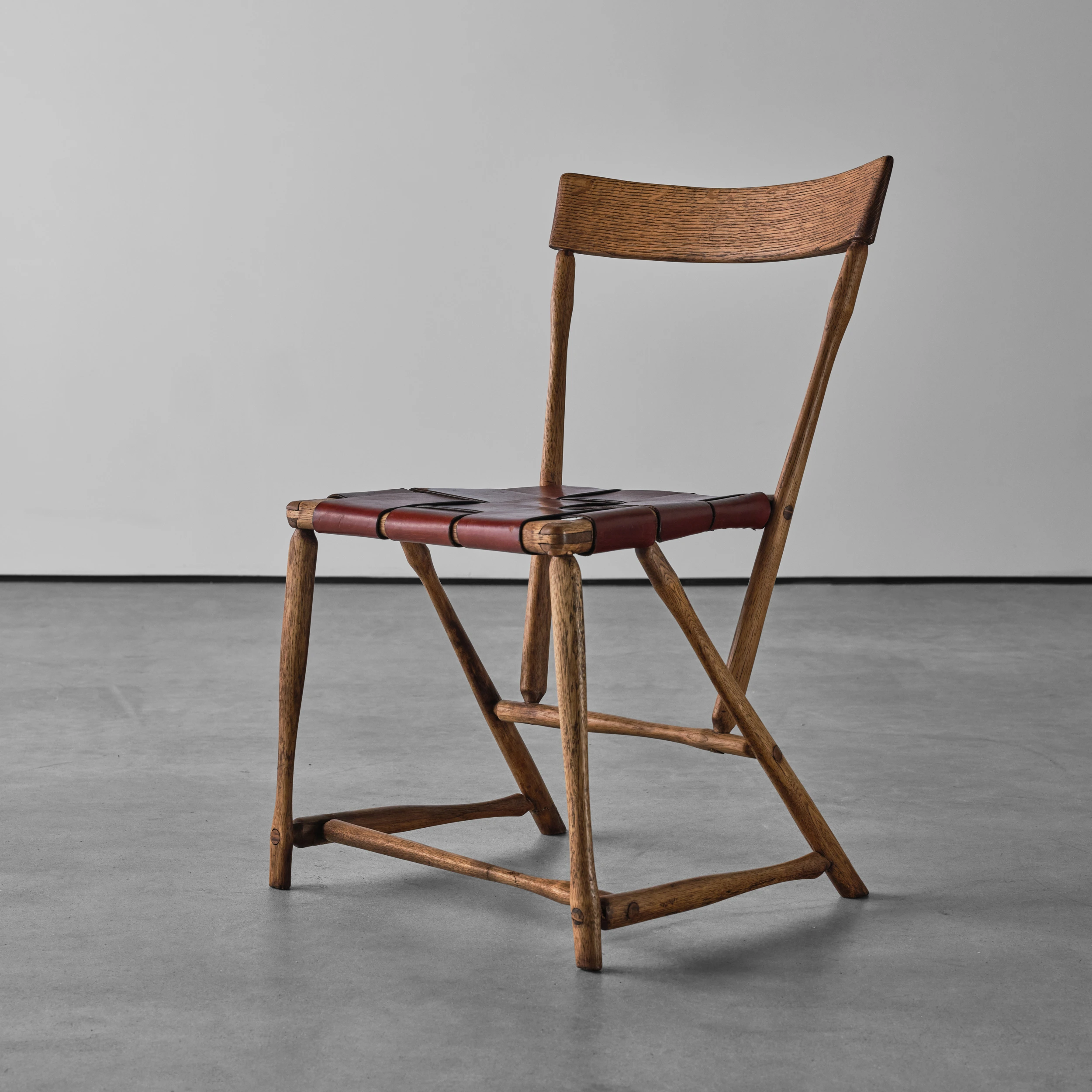
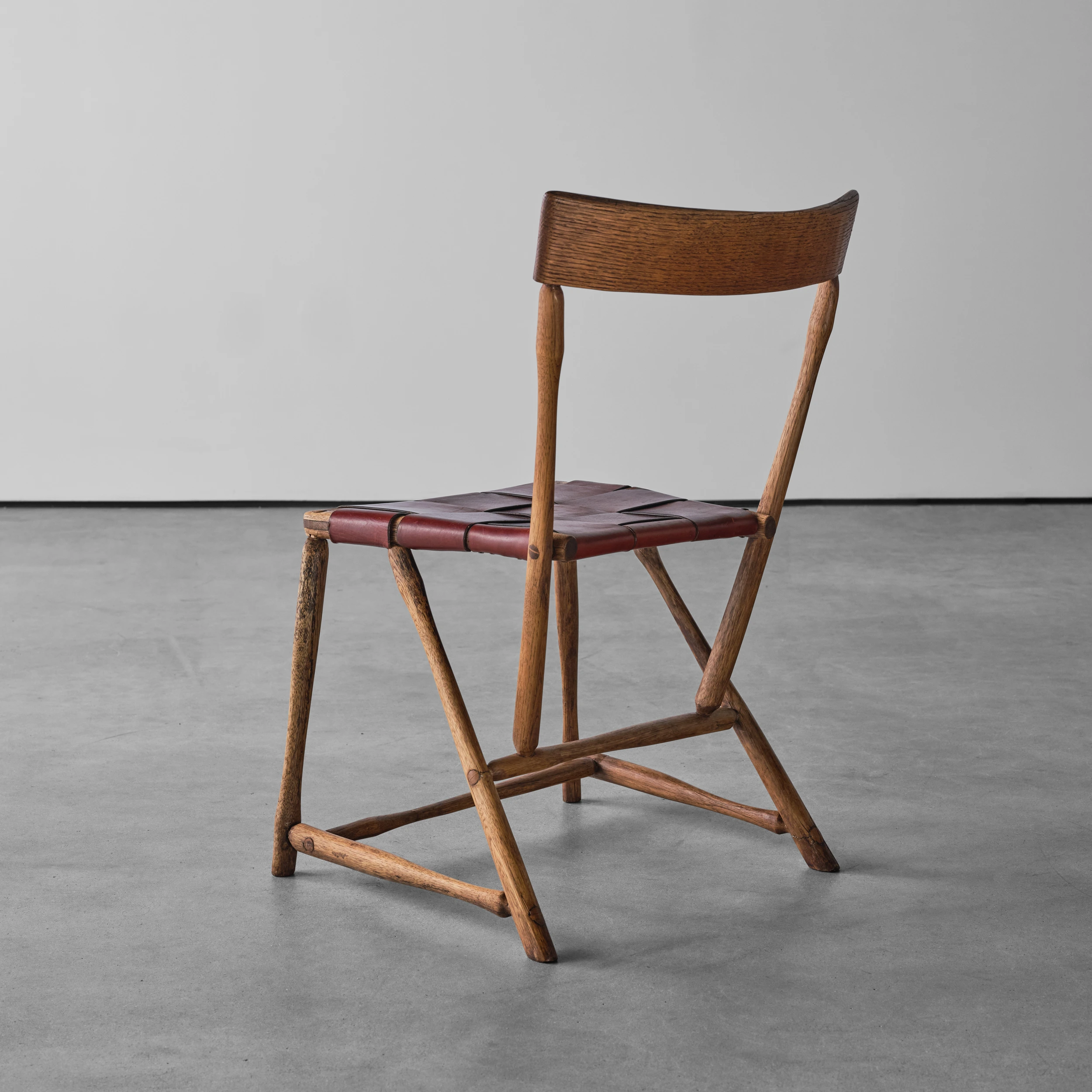
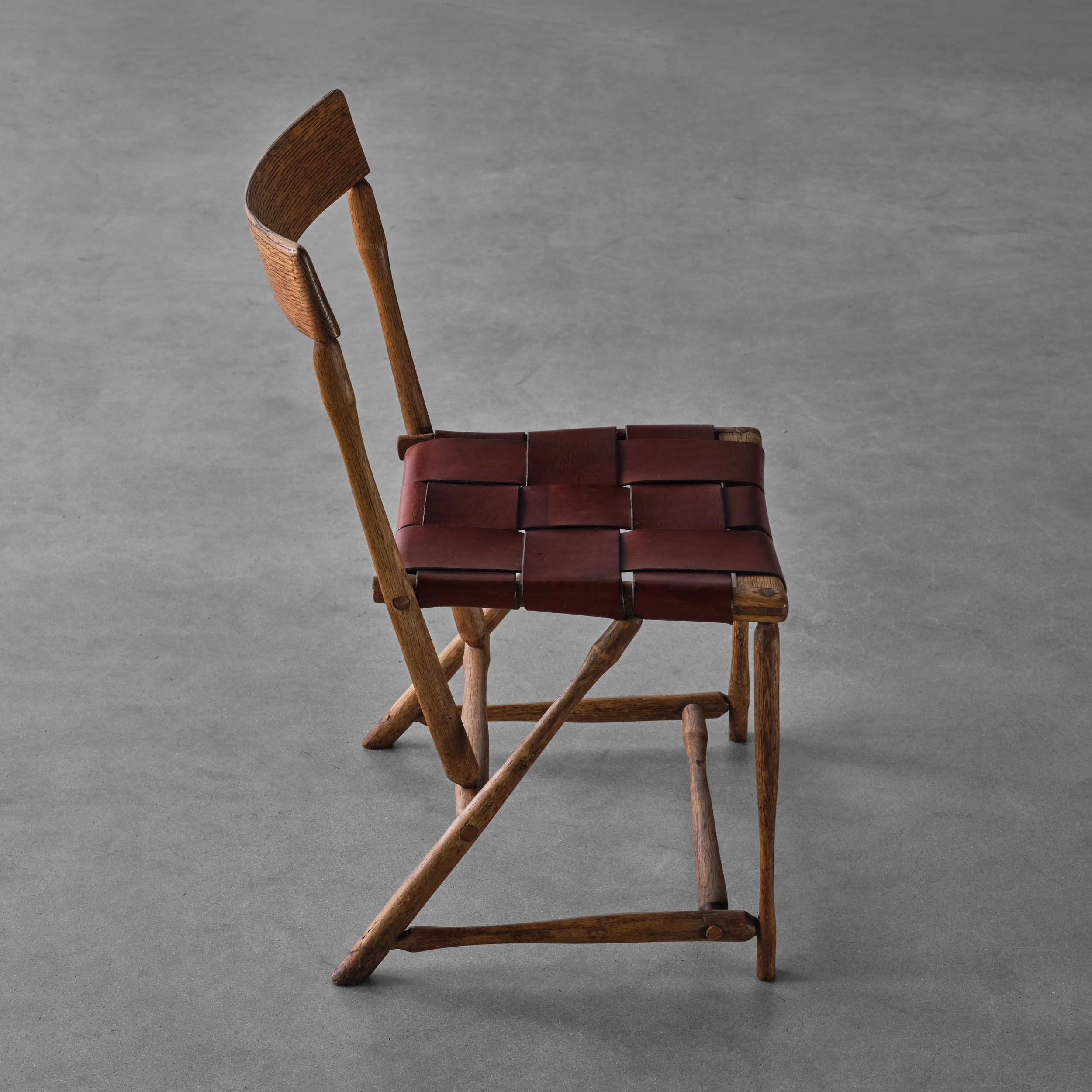
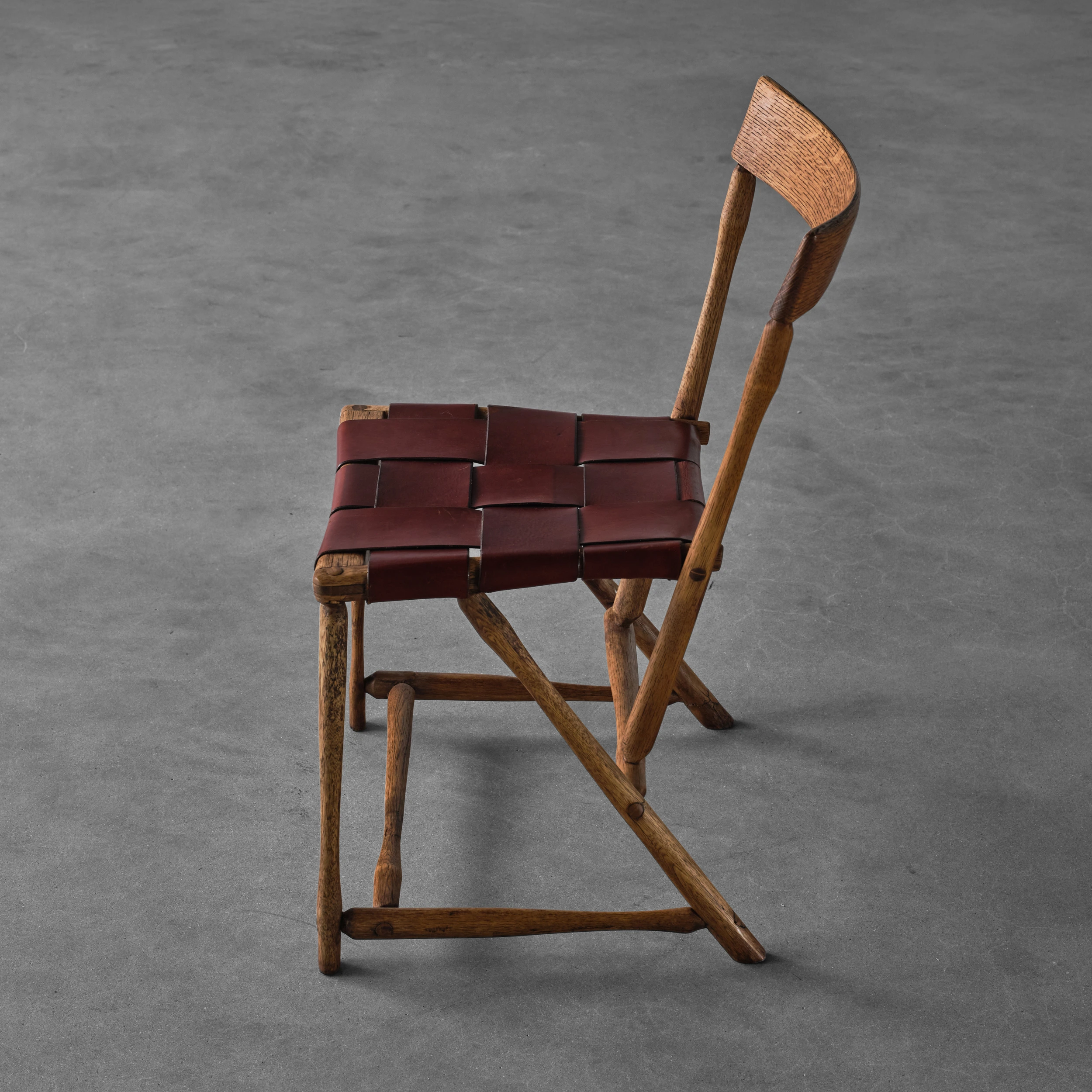
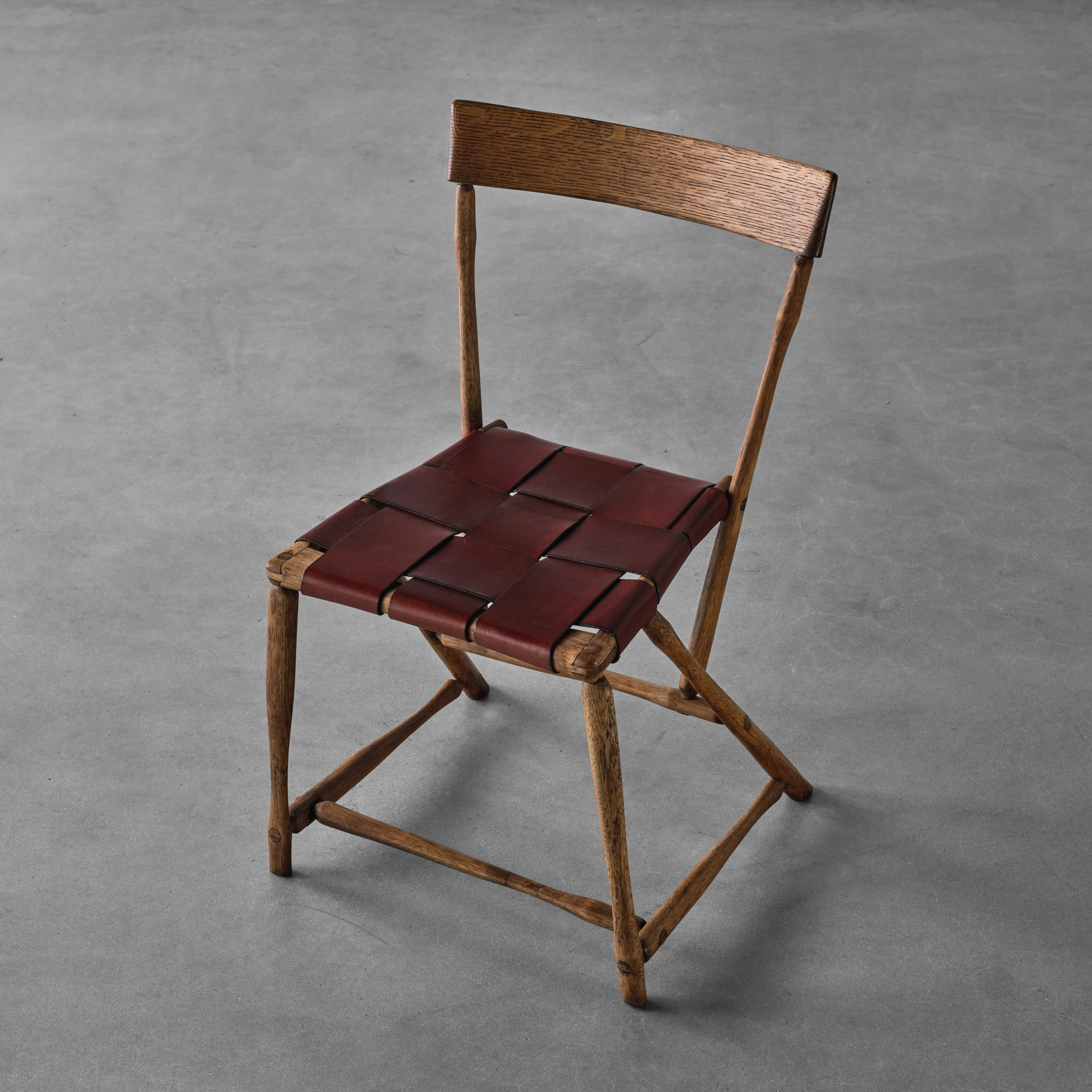
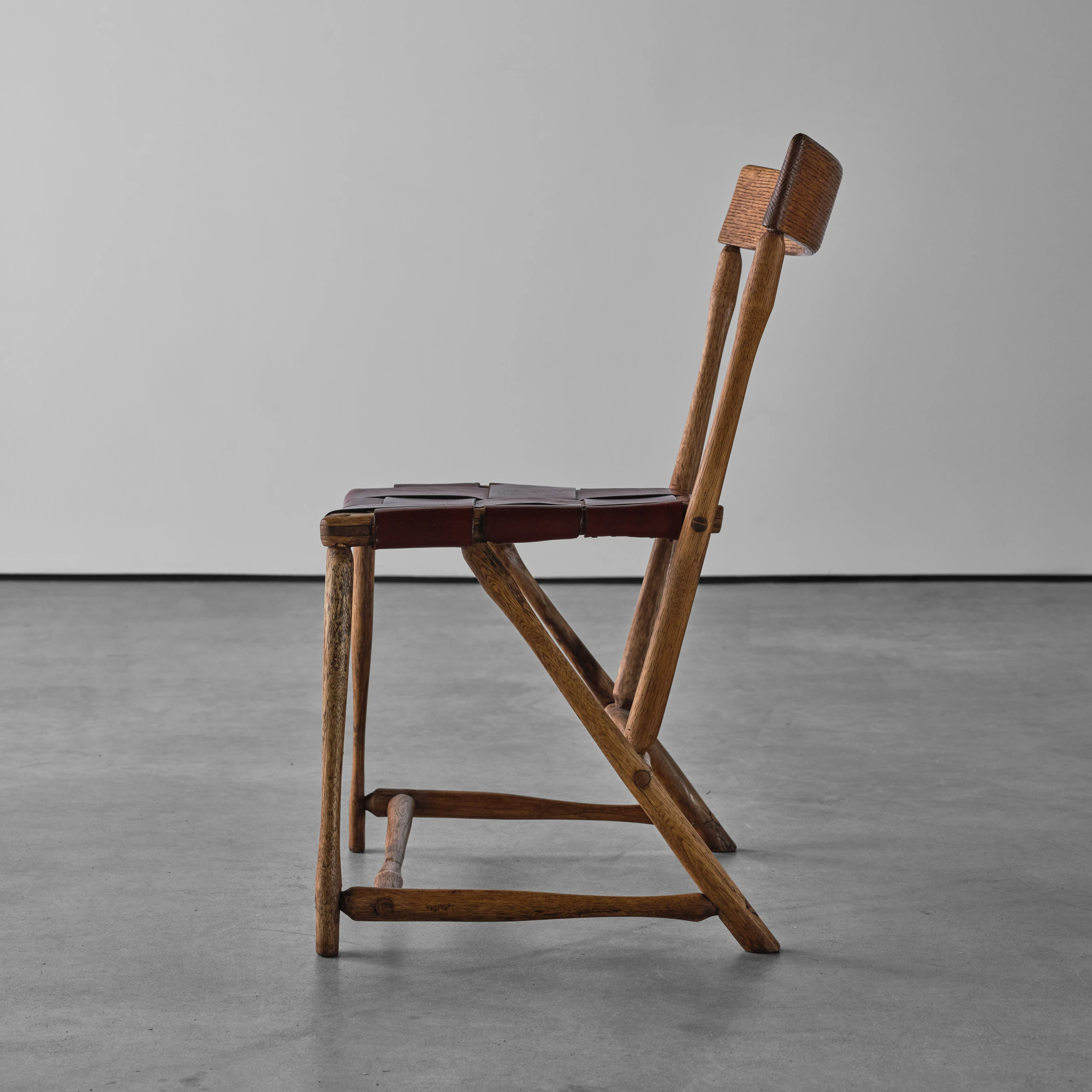
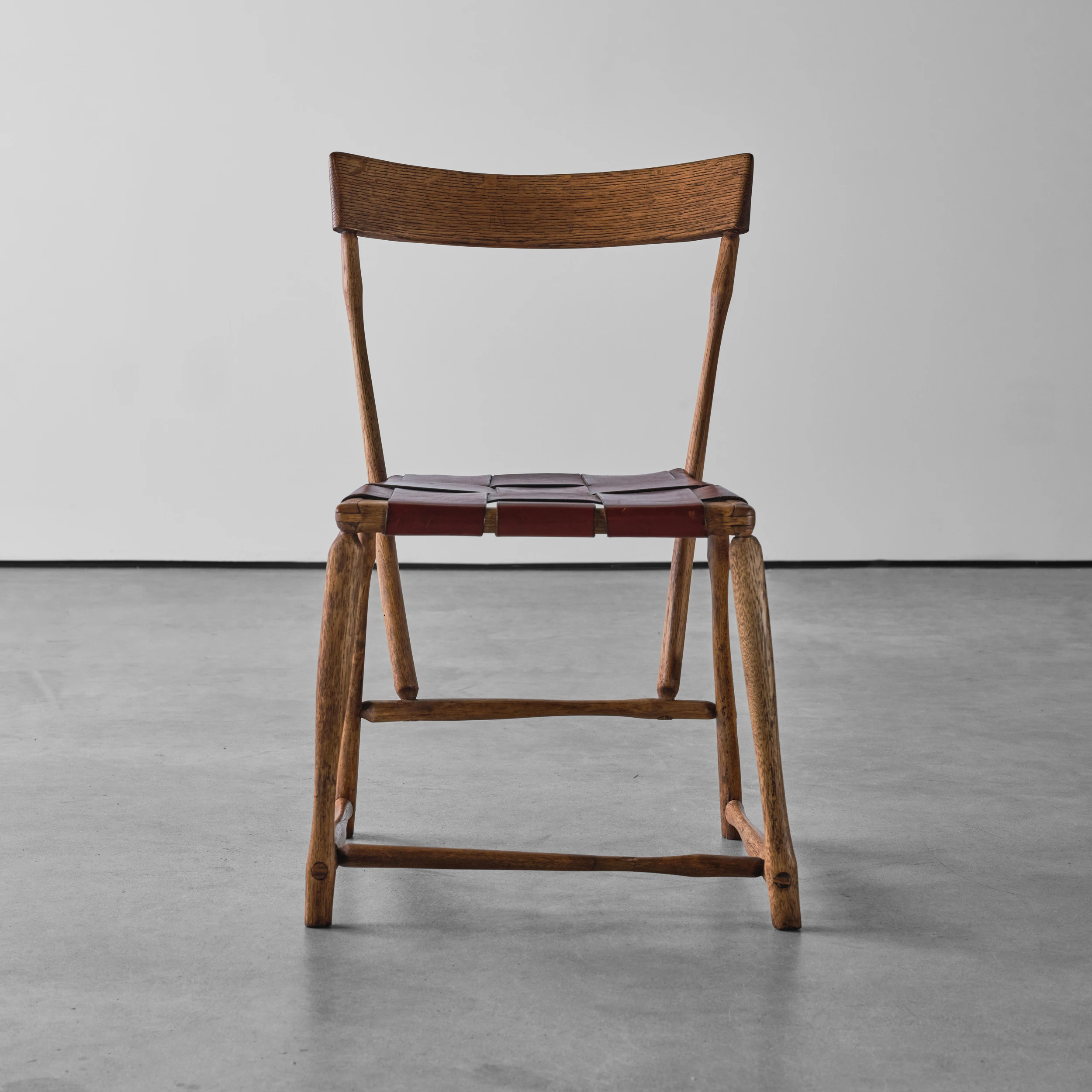
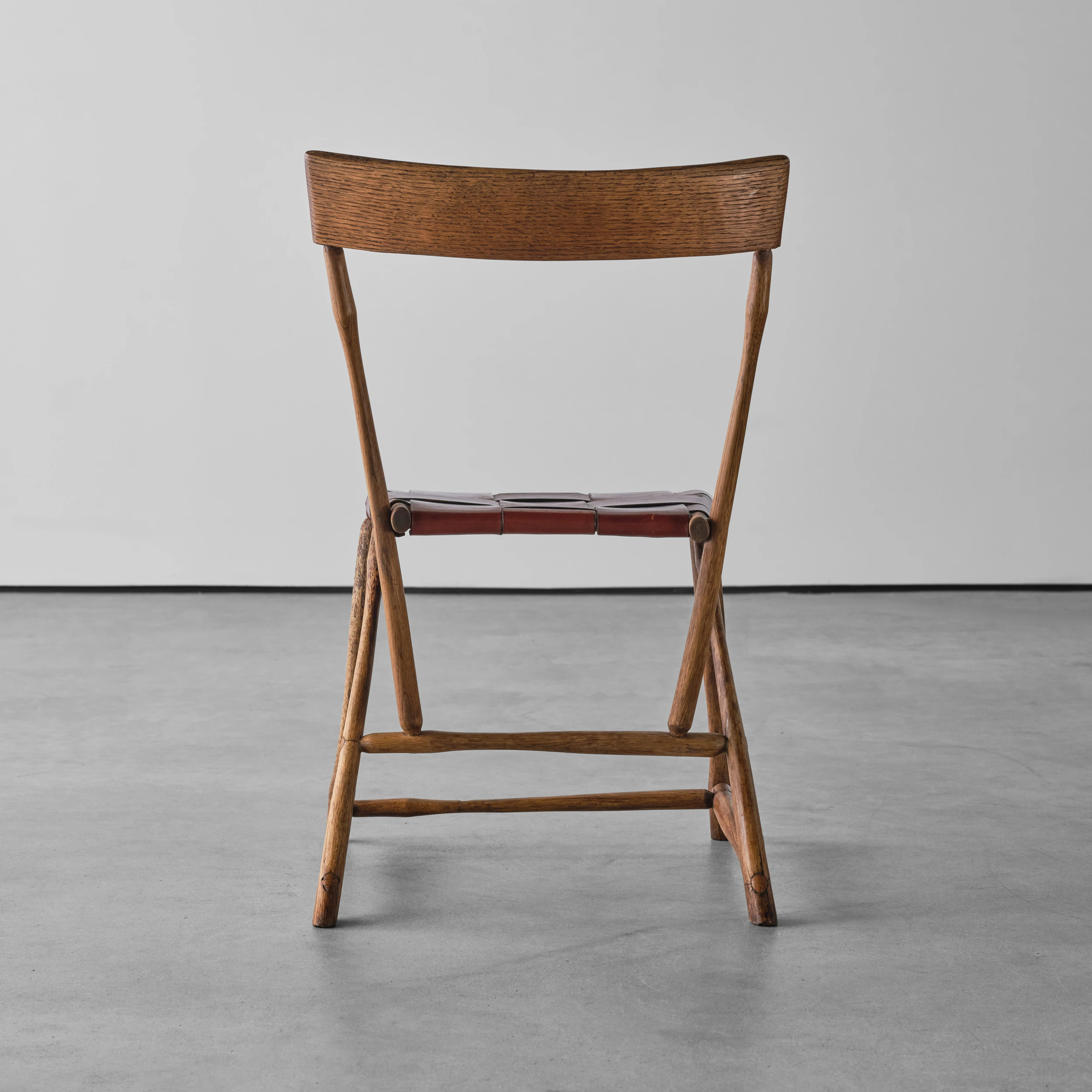
Hammer Handle Chair, 1938
Material: Ash, Oak, Leather
A Hammer Handle Chair by Wharton Esherick c. 1938. This particular example derives from the collection of the Hedgerow Theater, for which the chairs were originally made.
“This unconventional chair is one of Esherick’s best-known forms. After acquiring two barrels of hammer handles at an auction in a search for inexpensive wood, he repurposed them as legs for a series of forty-five related, but distinct, pieces of seating. Esherick traded thirty-six of the chairs to the Hedgerow Theater, in exchange for an apprenticeship for his daughter Ruth” (Archer, Sarah, et al. The Crafted World of Wharton Esherick. Rizzoli International Publications, 1 Oct. 2024, p. 192).
”At an auction of the assets of a defunct woodturning firm, Wharton inadvertently acquired two barrels of ash and hickory hammer handles in two lengths – short for one-handed carpenters’ and machinists’ hammers and long for two-handed smithing hammers – and was unsure what he would do with them. When Hedgerow requested thirty-six chairs for its rehearsal room, the large living room of the house where the actors lived, Wharton realized the hammer handles could become the chair’s legs, stretchers, rails, and backs, leaving just the curving top of the back to be shaped. Typically, the handles necked between the grip and a shoulder at the hammer end and were wider in the plane of the swing. For strength, any design of a chair would require placing the joints at the thickened parts” (Mansfield Bascom. Wharton Esherick: The Journey of a Creative Mind. New York ; London, Abrams, 2010, p. 162).
Wharton Esherick (1887 – 1970) was an internationally significant figure in the landscape of art history and American modern design. As a sculptor, Esherick worked primarily in wood and extended his unique forms to furniture, furnishings, interiors, buildings, and more. A Philadelphia-area modernist sculptor deeply influenced by the Arts & Crafts movement, Wharton Esherick designed and built furniture distinctive for its asymmetric, prismatic forms. His goal was to design furniture that functioned as sculpture, and sculpture that functioned as furniture.
| Dimensions | 19.5 × 19 × 32 in |
|---|---|
| Artist | |
| Date | 1938 |
| Material | ash, Oak, webbing |
| Style |