George Nakashima
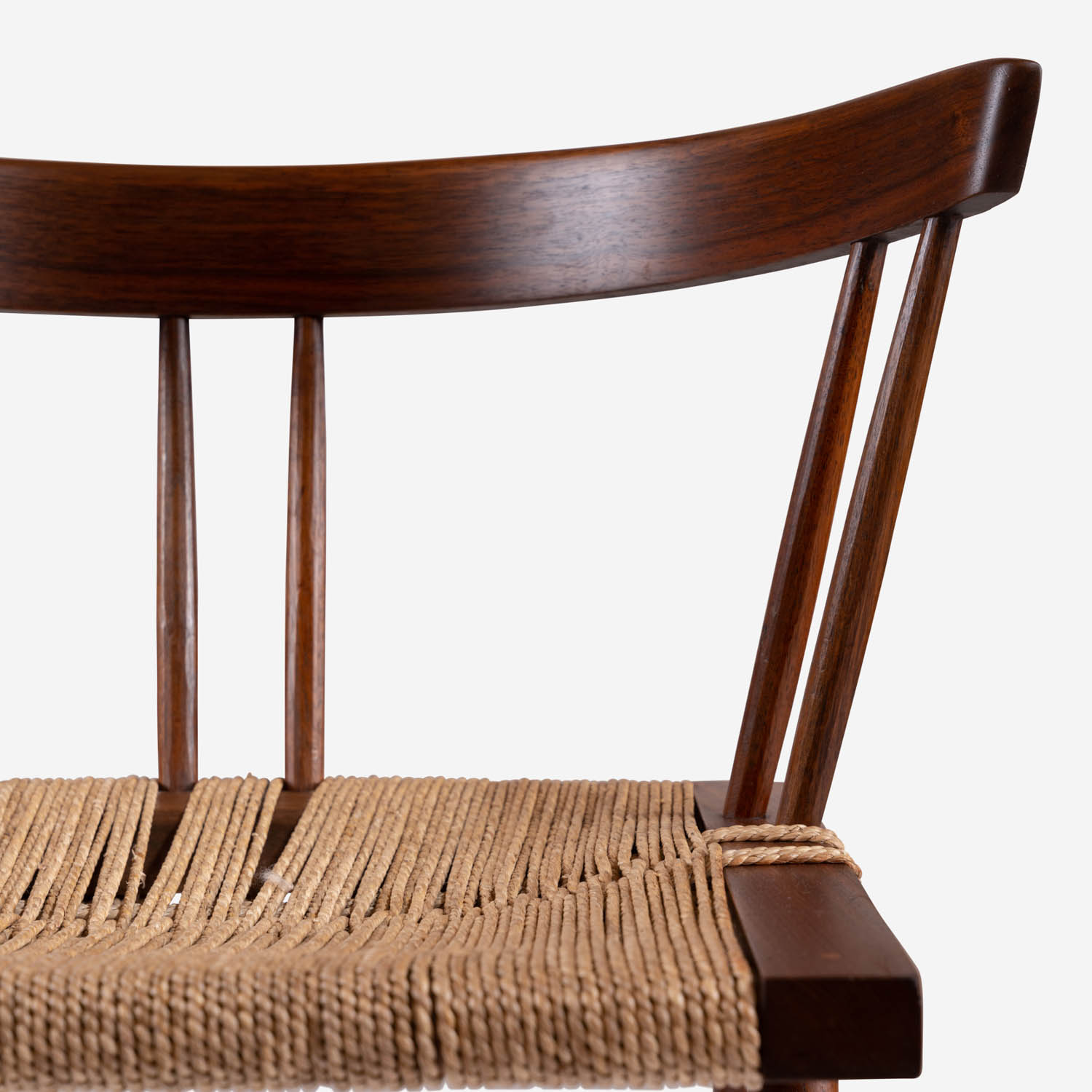
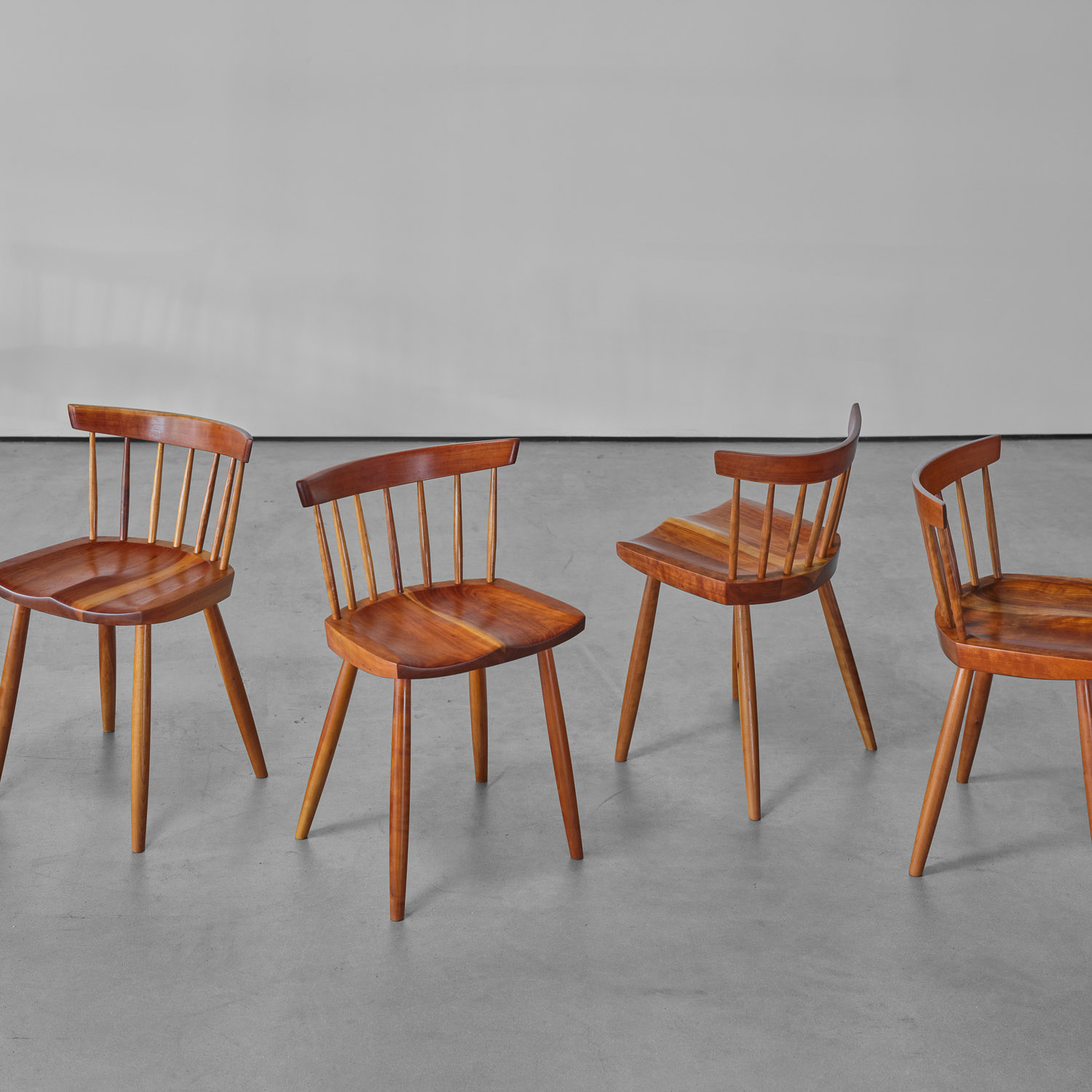
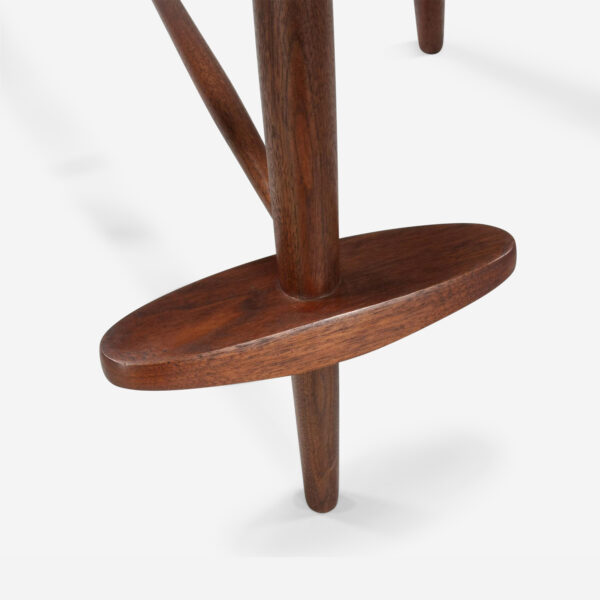
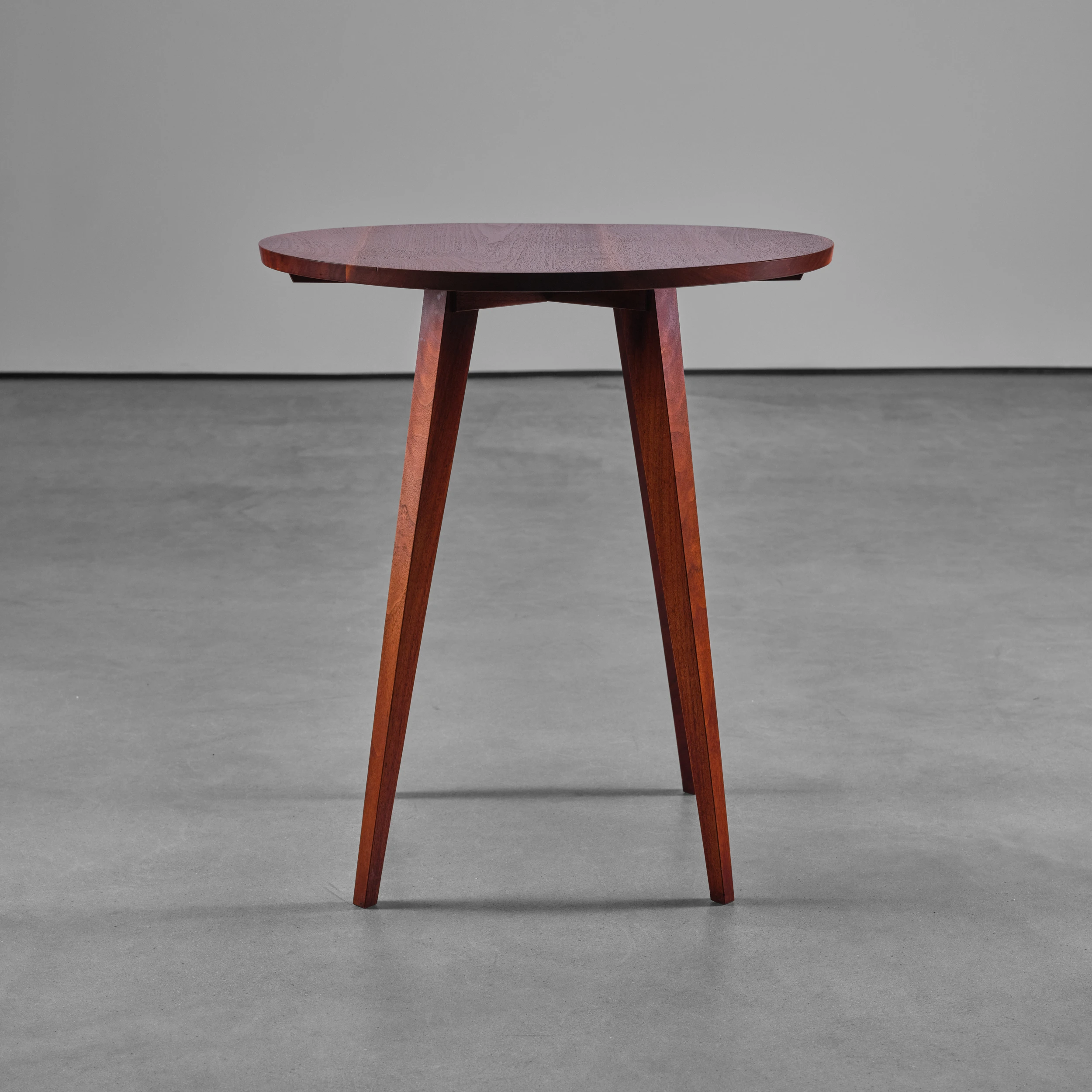
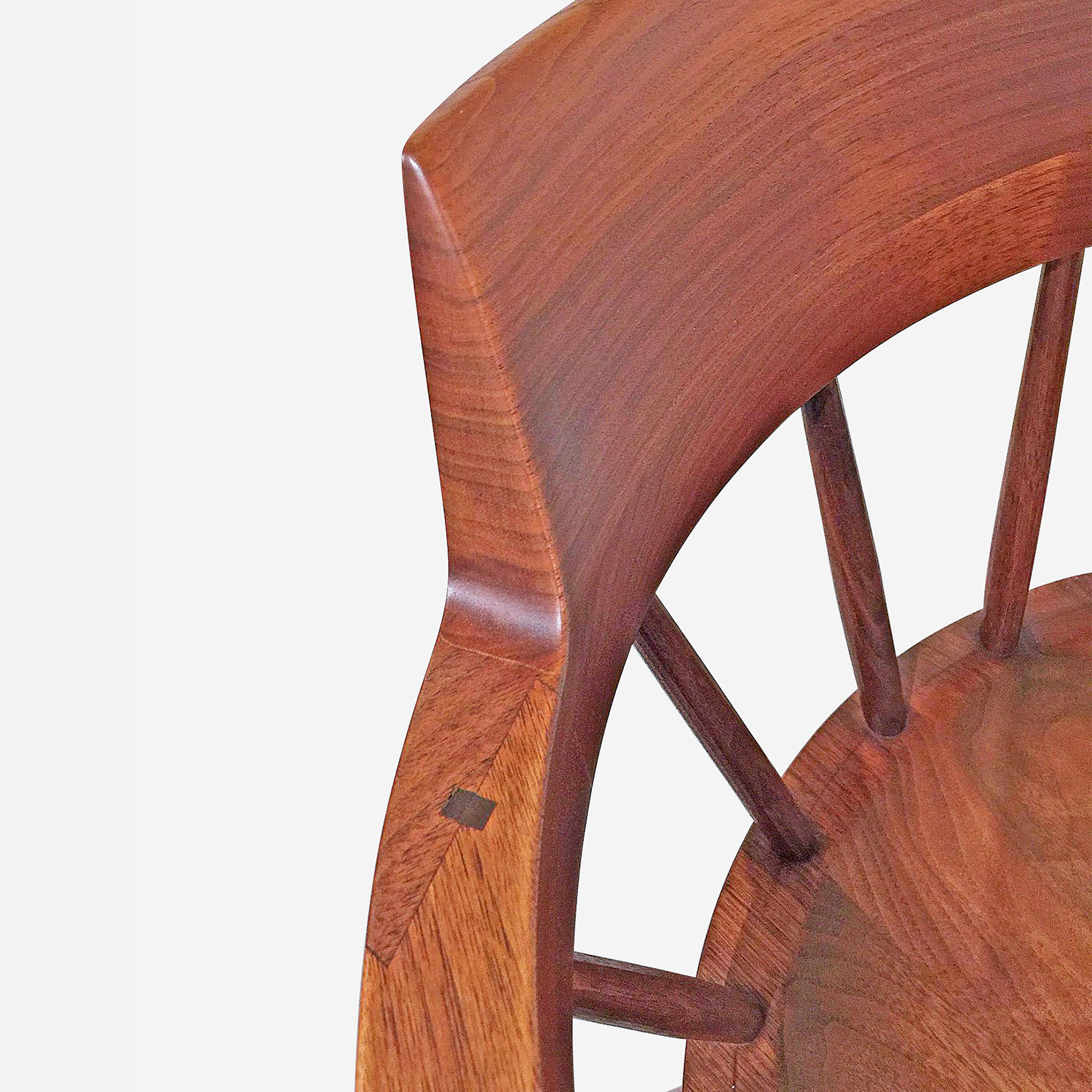
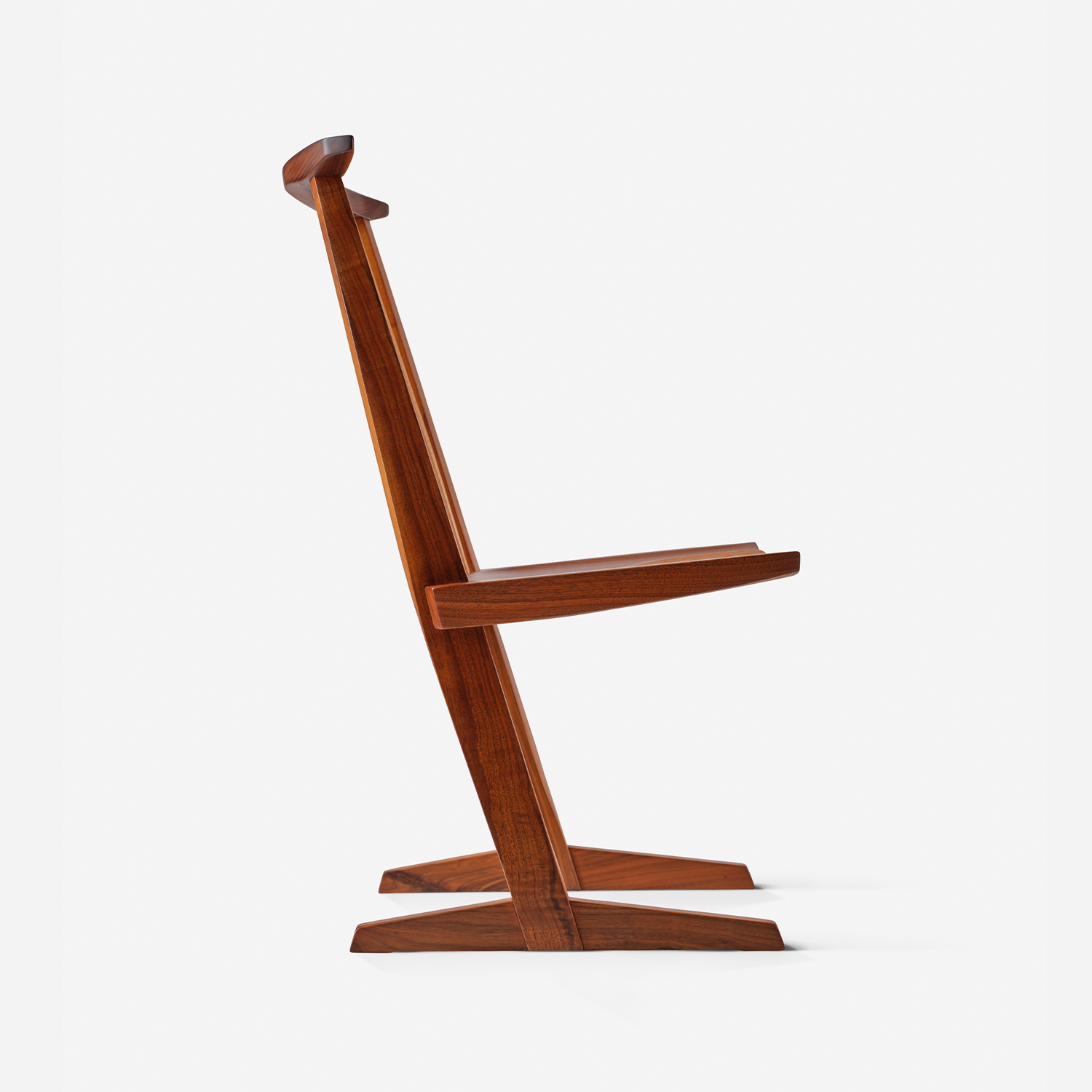
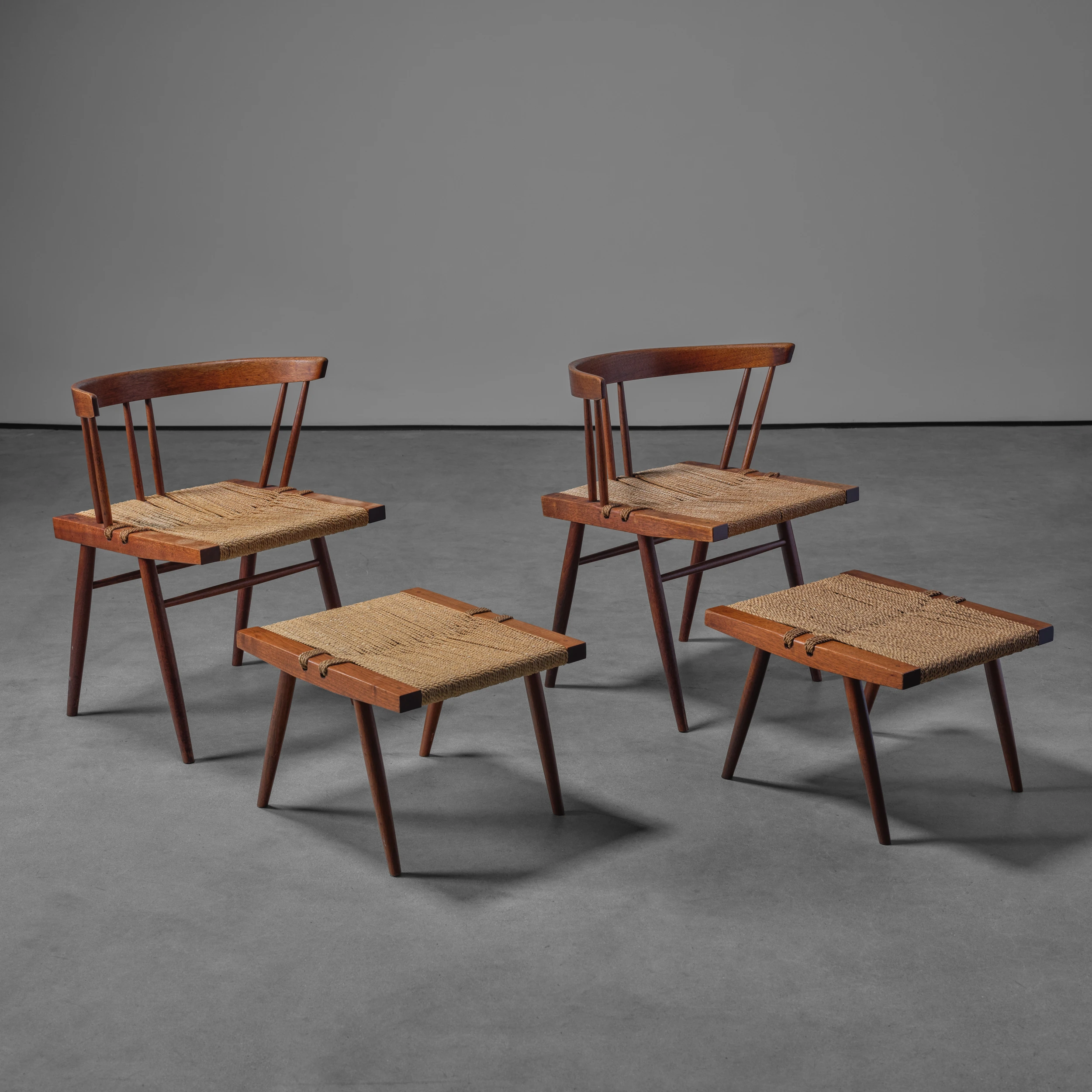
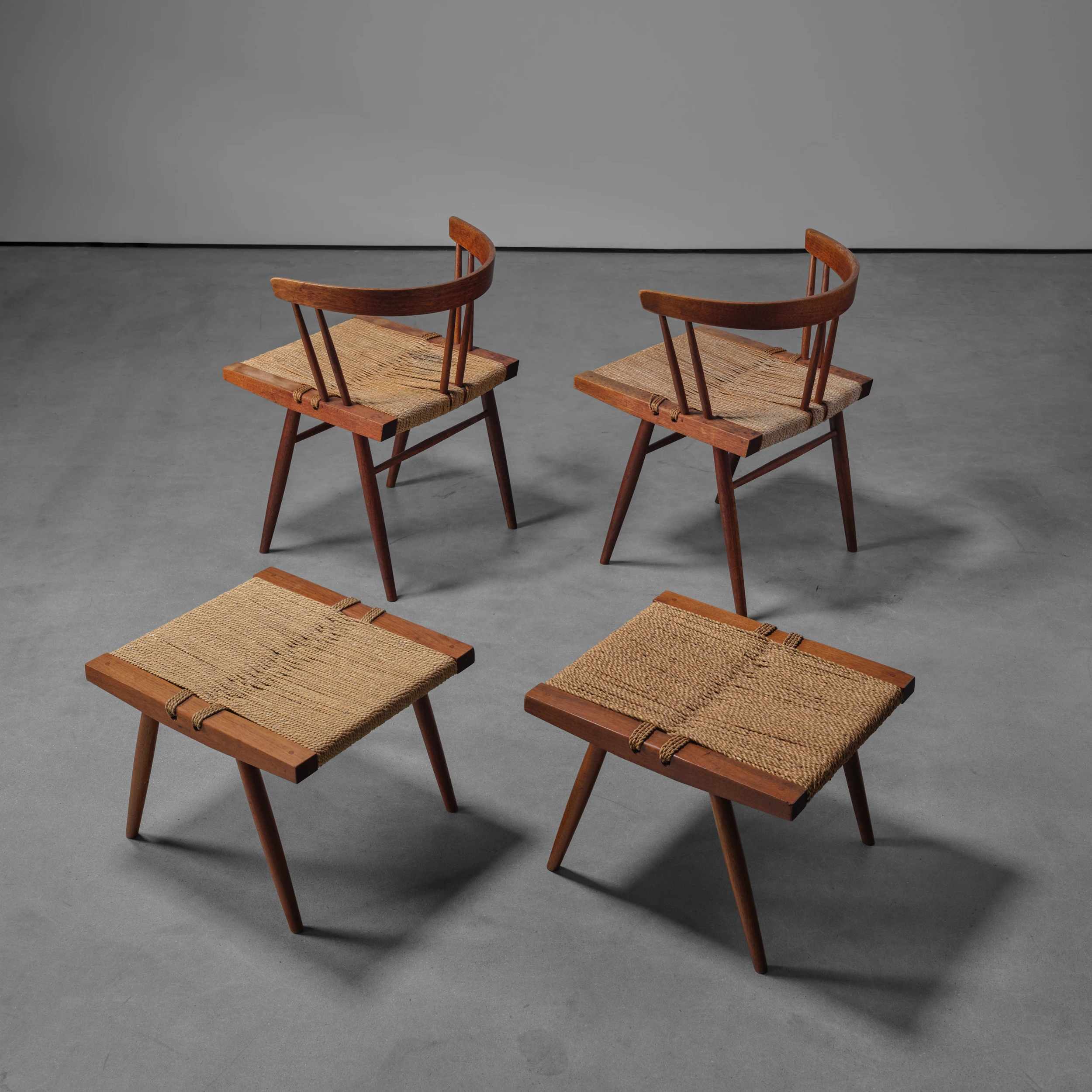
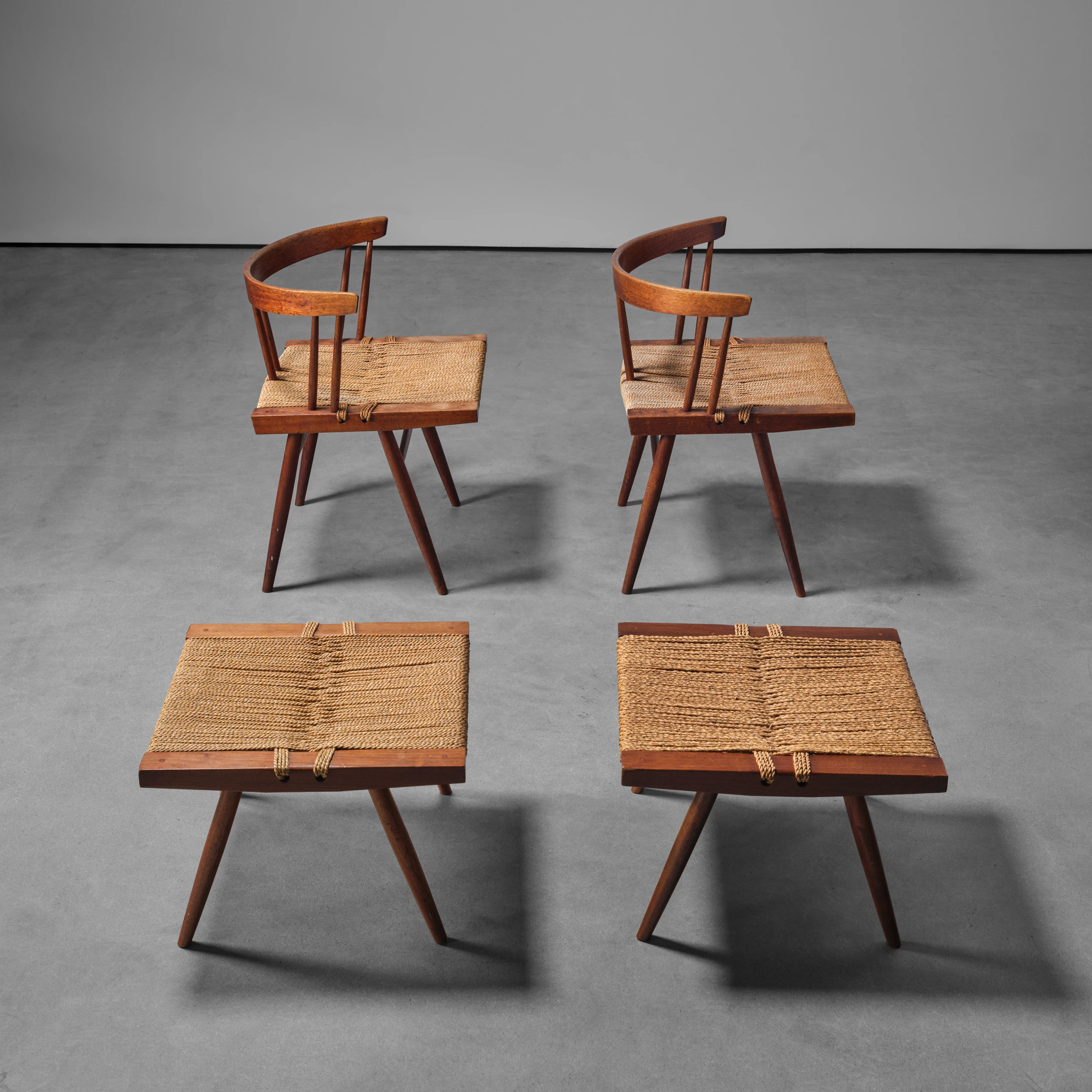
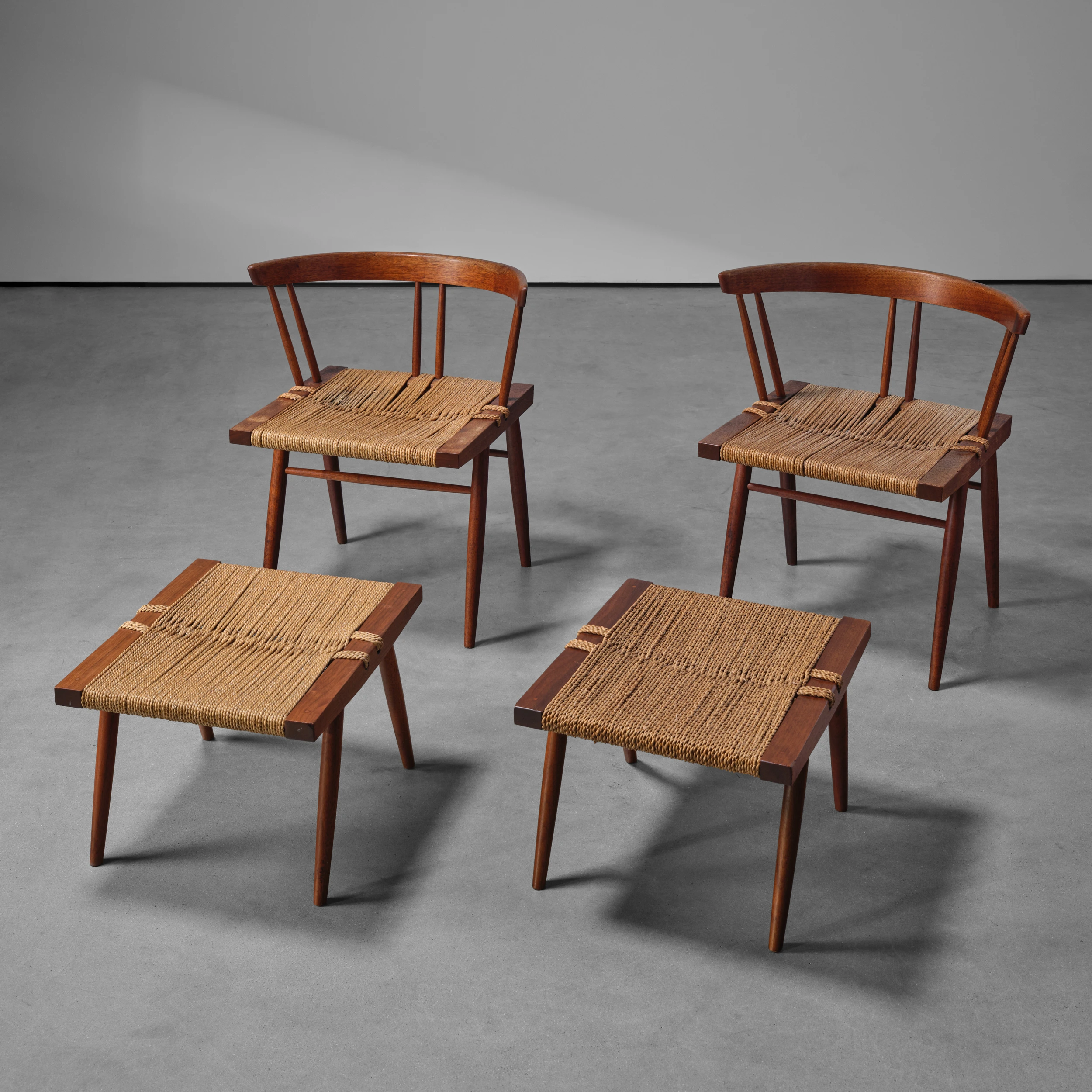
Grass-Seated Chair | Pair & Grass-Seated Stool | Pair
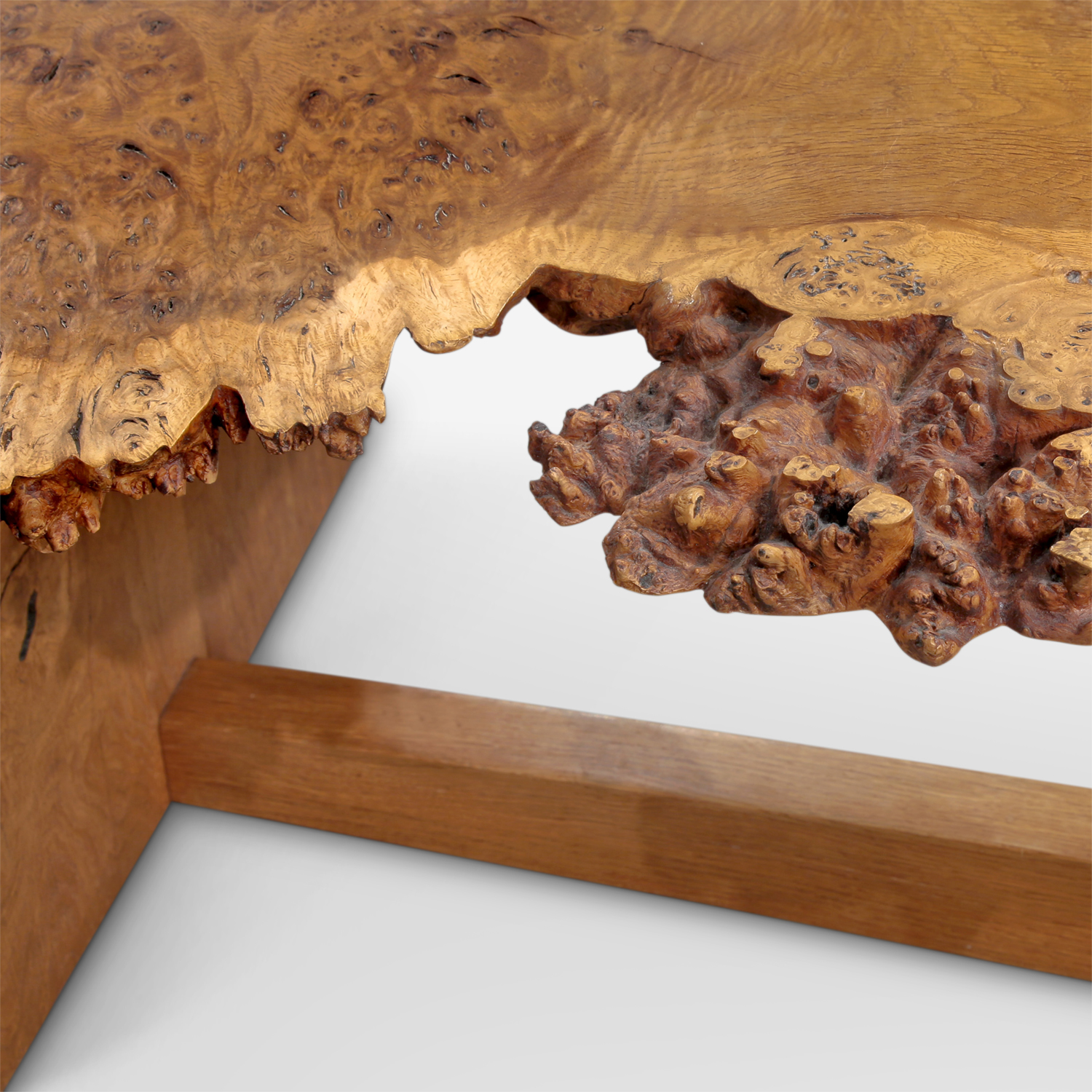
Material: American Black Walnut, Sea-Grass
Chairs: 18.25 x 18.25 x 26.25 in | Seat Height: 16.5 in
Stools: 16 x 18 x 12.5 in
A pair of Grass-Seated Chairs and accompanying Stools by George Nakashima. The set was originally commissioned by Bernardine and I.N. Hagan for their home, the iconic, celebrated “Kentuck Knob” or “Hagan House” by Frank Lloyd Wright.
Commissioned in 1953 by couple I.N. and Bernadine Hagan and completed in 1956, Lloyd Wright’s “Kentuck Knob” was built in the architect’s Usonian style. When Wright accepted the commission, he was 86 years of age and simultaneously working on the Guggenheim Museum in NYC, the Beth Sholom Synagogue in the outskirts of Philadelphia, and the Price Tower in Oklahoma.
The home is located in Fayette County, Pennsylvania, also home to Wright’s “Fallingwater”, and takes its name from Little Kentuck, a hill feature located in the county. Designated as a National Historic Landmark, “Kentuck Knob” is revered as a prime example of Wright’s philosophy of organic architecture adapted for the modern world.
Nakashima’s nature driven design philosophy and approach resonates deeply with Wright’s; the Grass Seated Chair and Stools designs exemplify this connection. Originally executed in 1944, the designs incorporate numerous Nakashima design signatures such as exposed joinery utilized simultaneously in a structural and decorative application as well as the honest use of natural materials, in this case American Black Walnut and twisted sea-grass.
In 1986, “Kentuck Knob” was sold; however, this set has remained in the family since. We are proud to present these important works and to serve as stewards of their exceptional history as they find their next home.
George Nakashima was born in Spokane, Washington in 1905 to Japanese parents who had immigrated to the United States. Educated and trained as an architect at the University of Washington, Nakashima received his Master’s degree in Architecture from M.I.T. in 1930. After working briefly as an architect in the United States he left for Paris seeking the creative energies of one of the great urban centers of the day. From there he traveled extensively, ending up at the home of his grandmother, living on a farm on the outskirts of Tokyo.
| Artist | |
|---|---|
| Style | |
| Material | American black walnut, Sea-Grass |