






George Nakashima
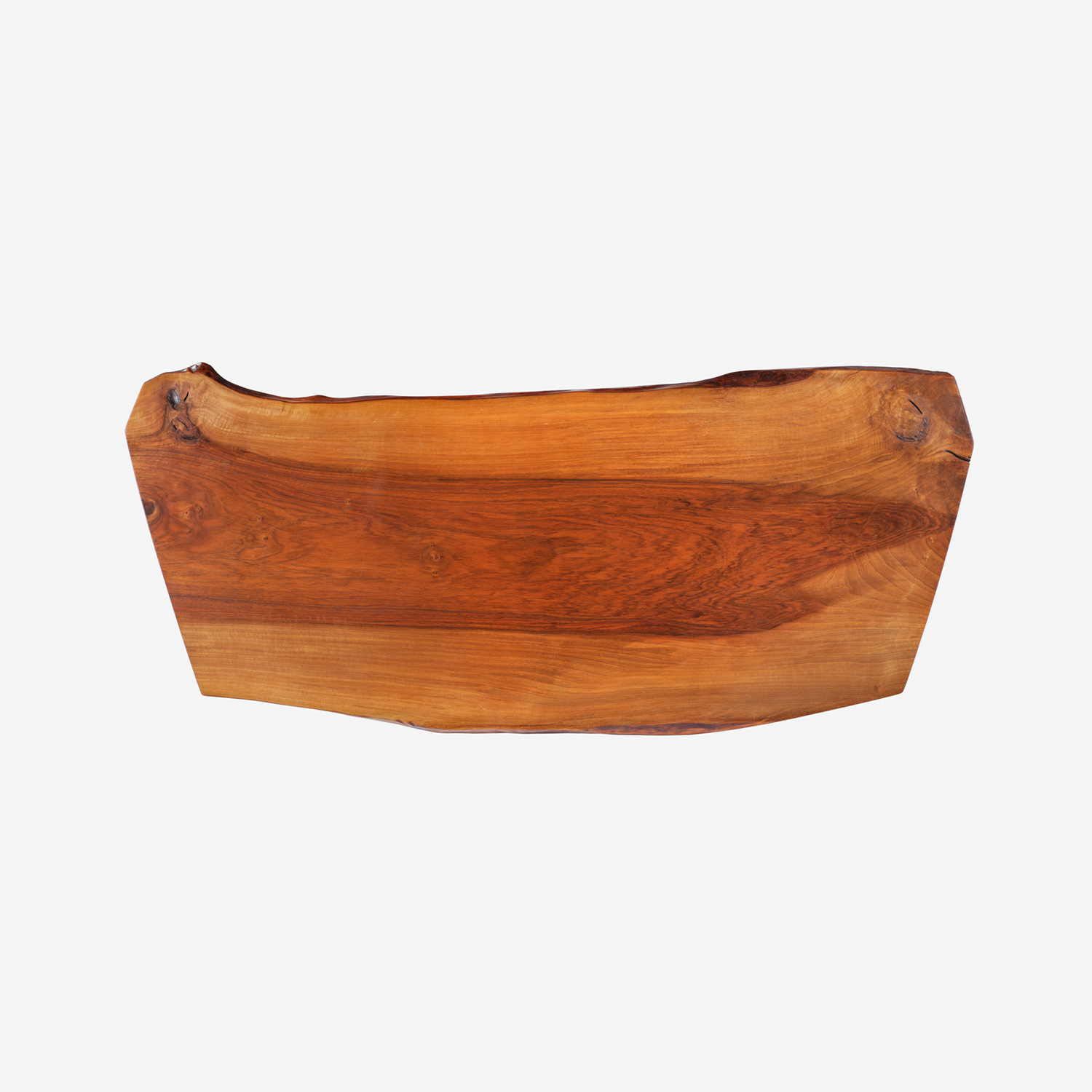
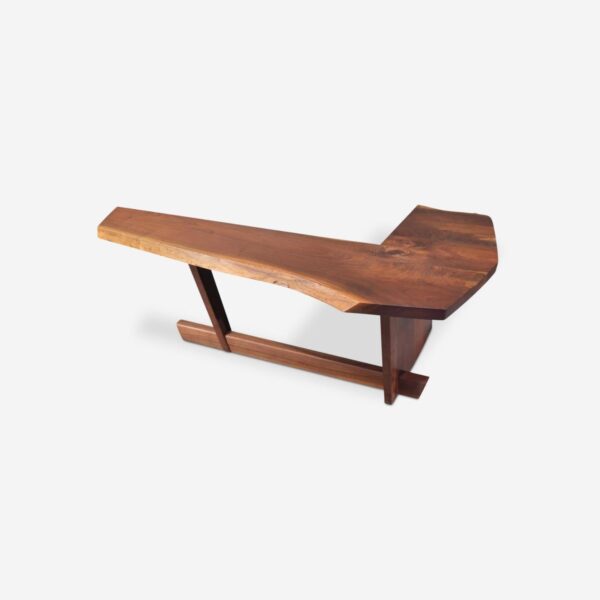
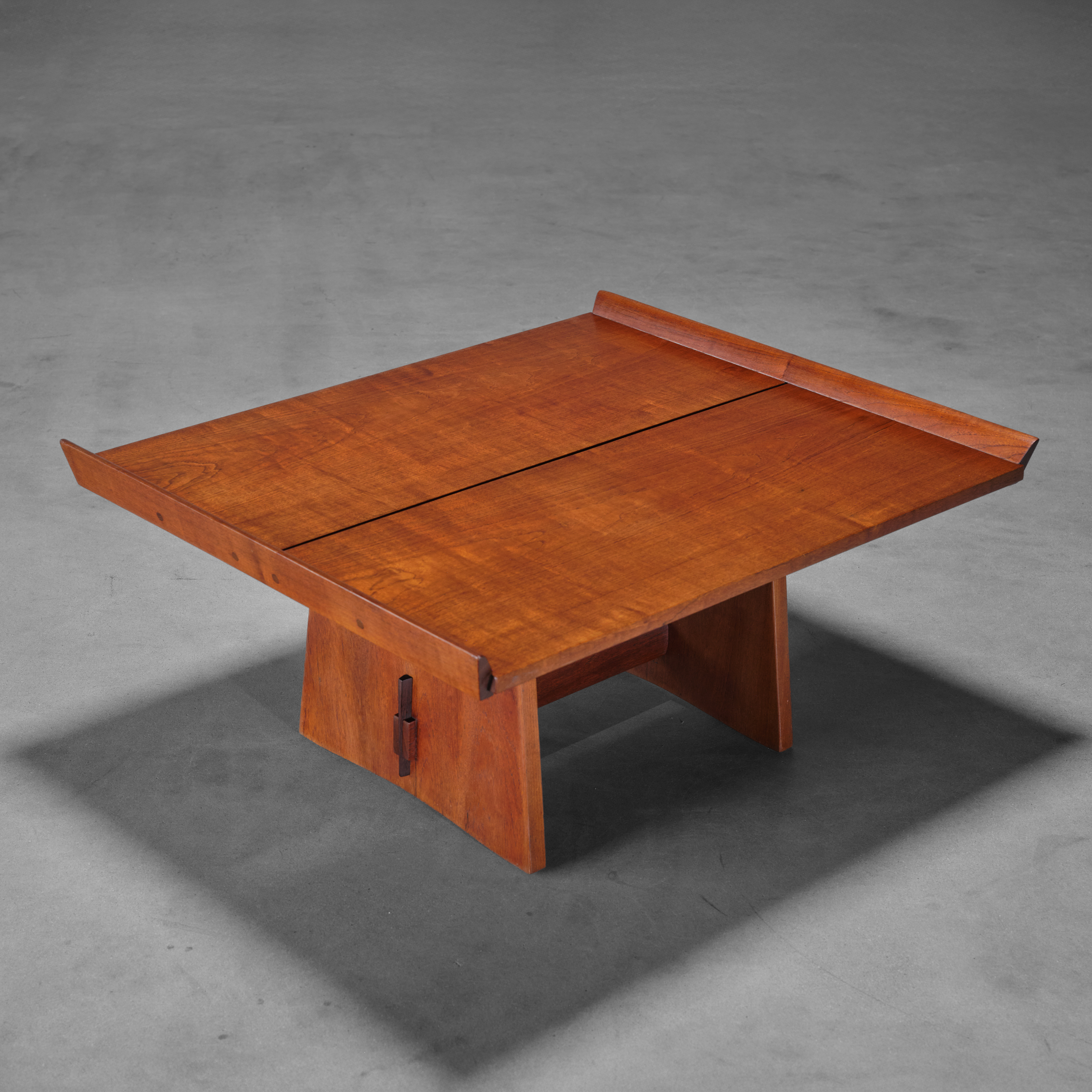
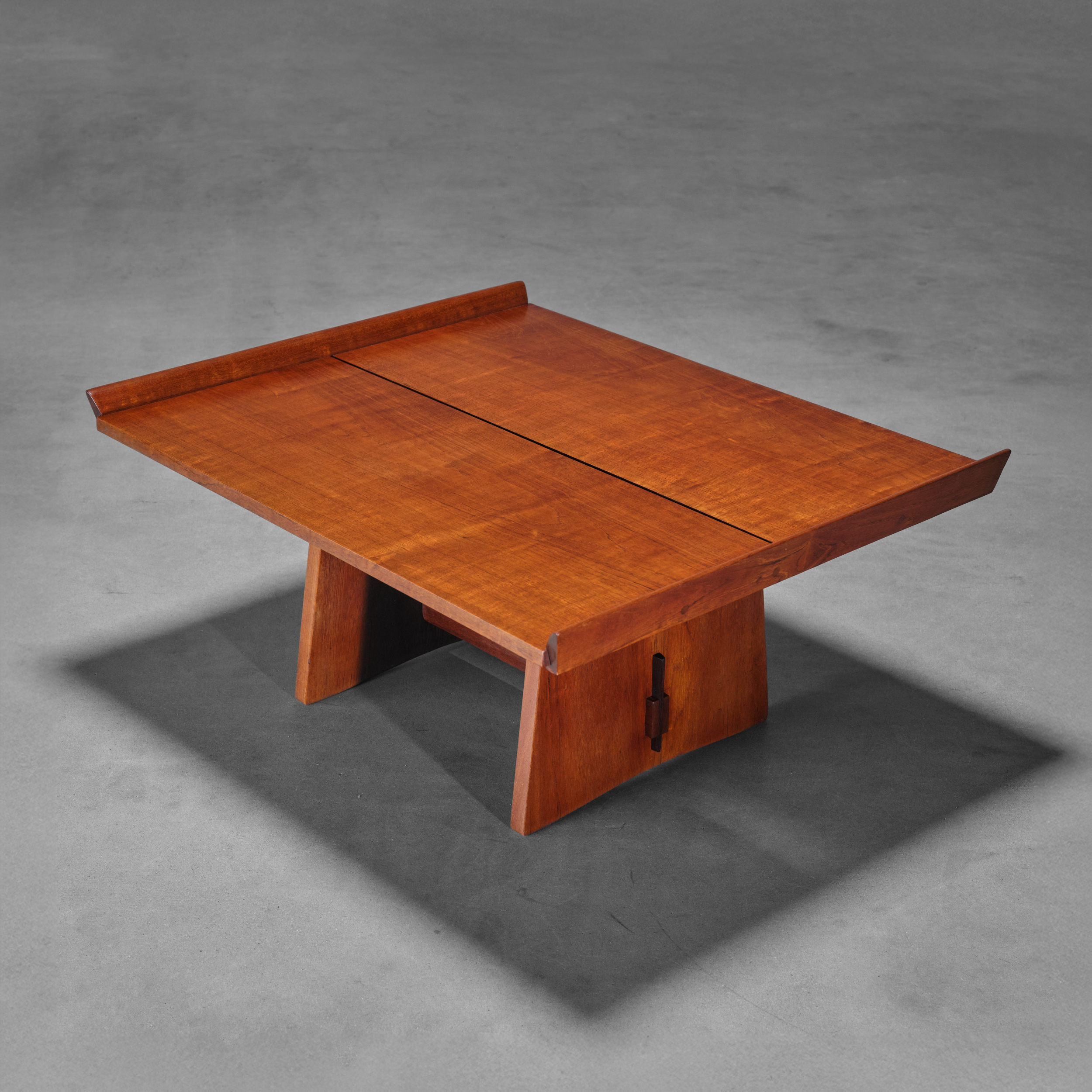
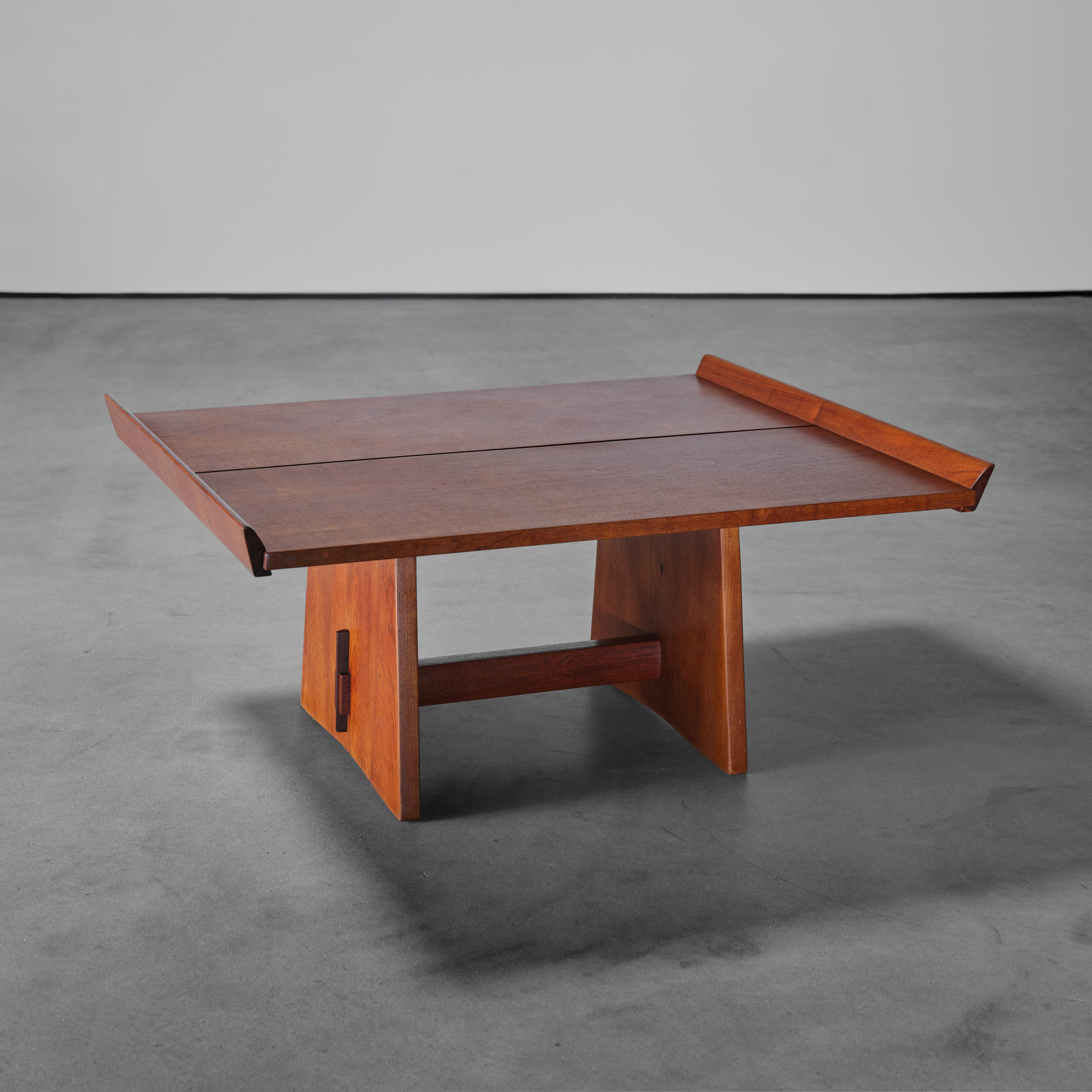
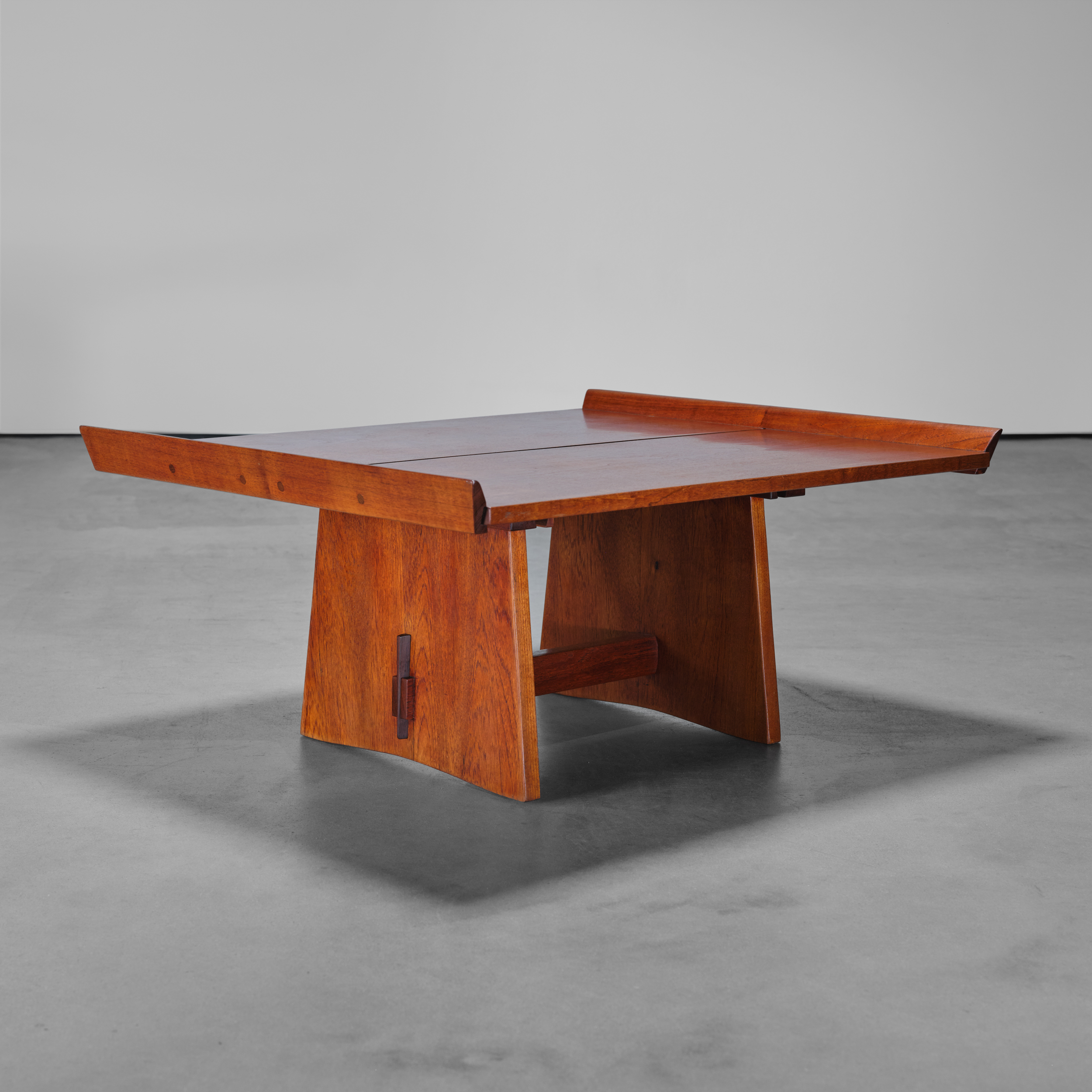
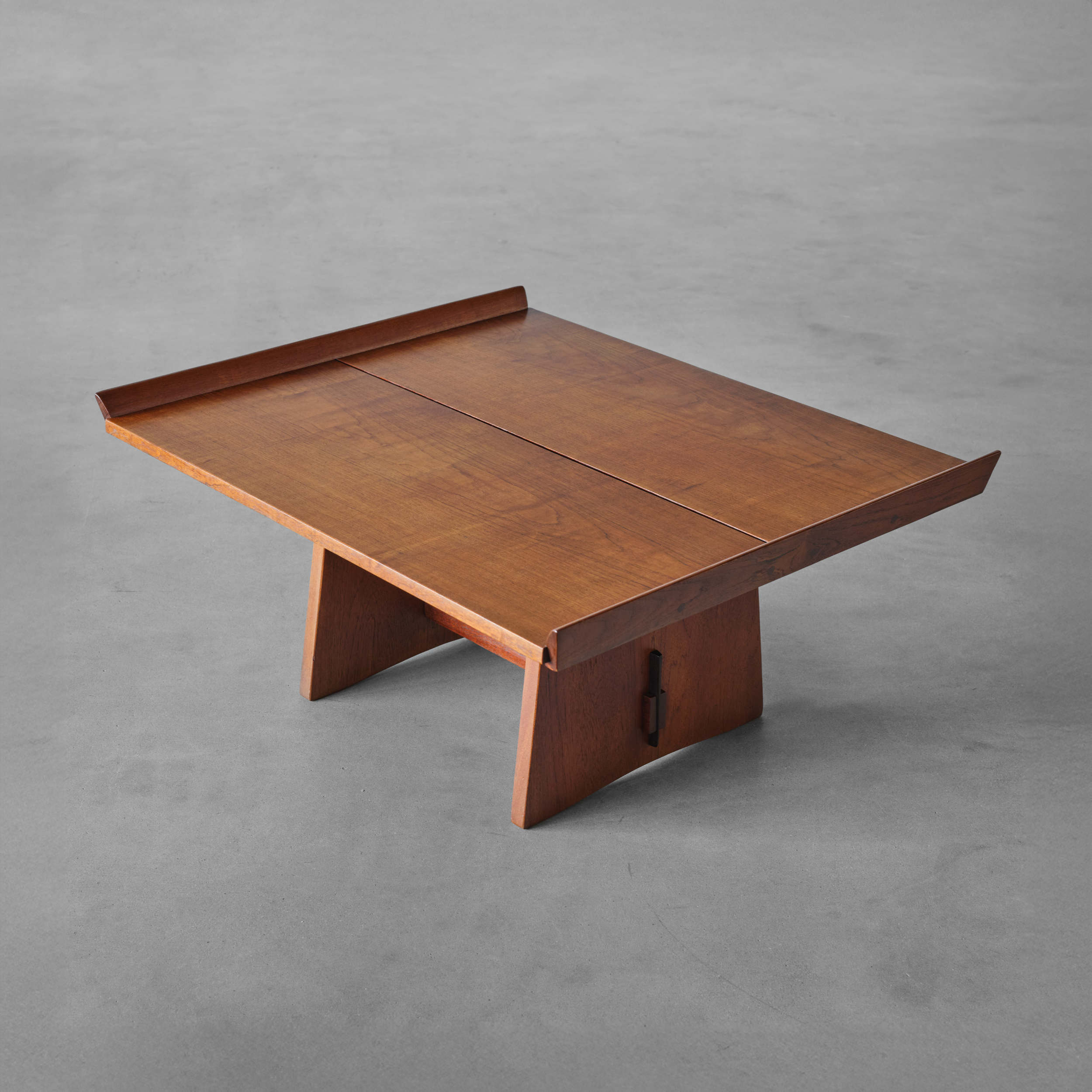
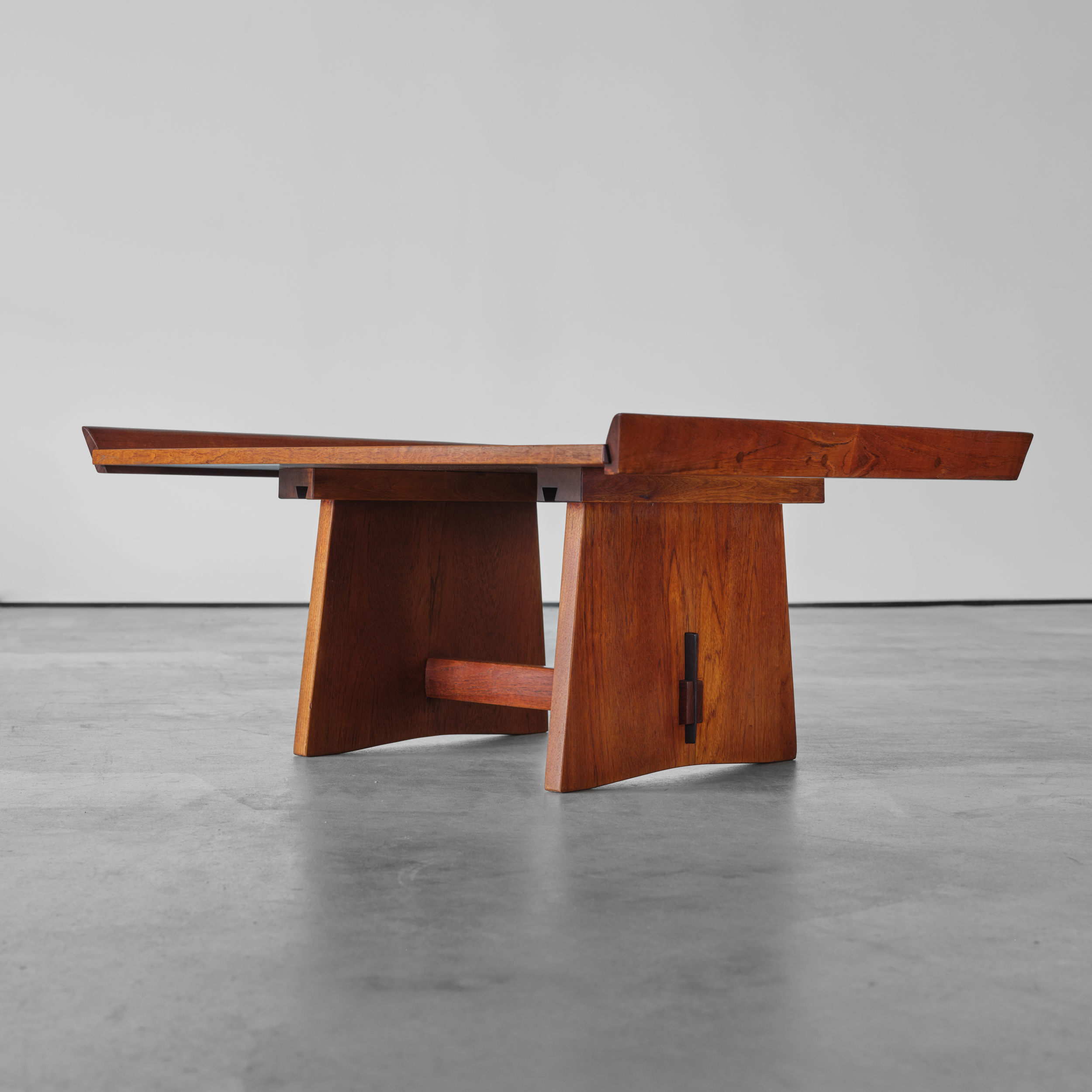
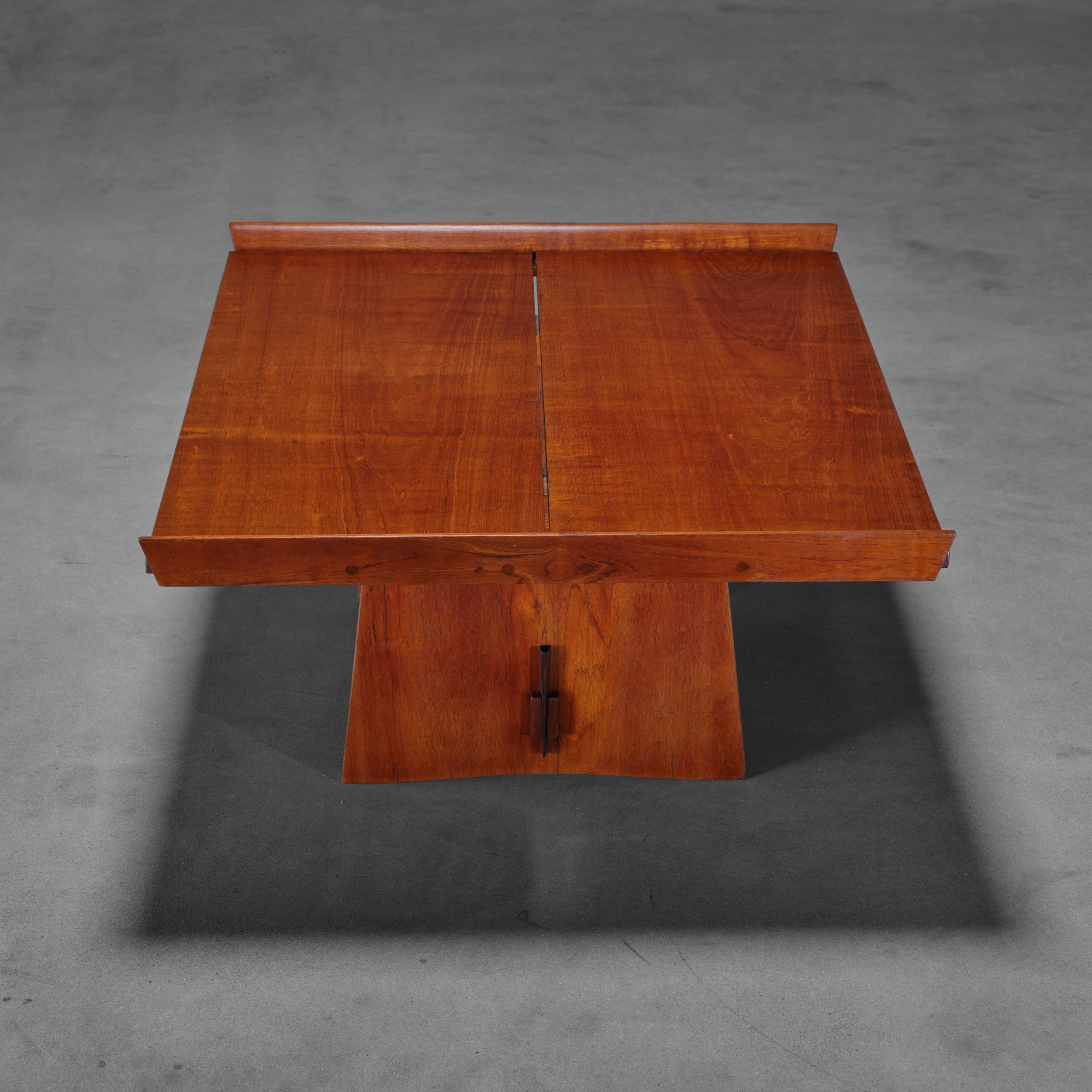
Milk House Coffee Table, 1951
Availability: SOLD
Material: American Black Walnut
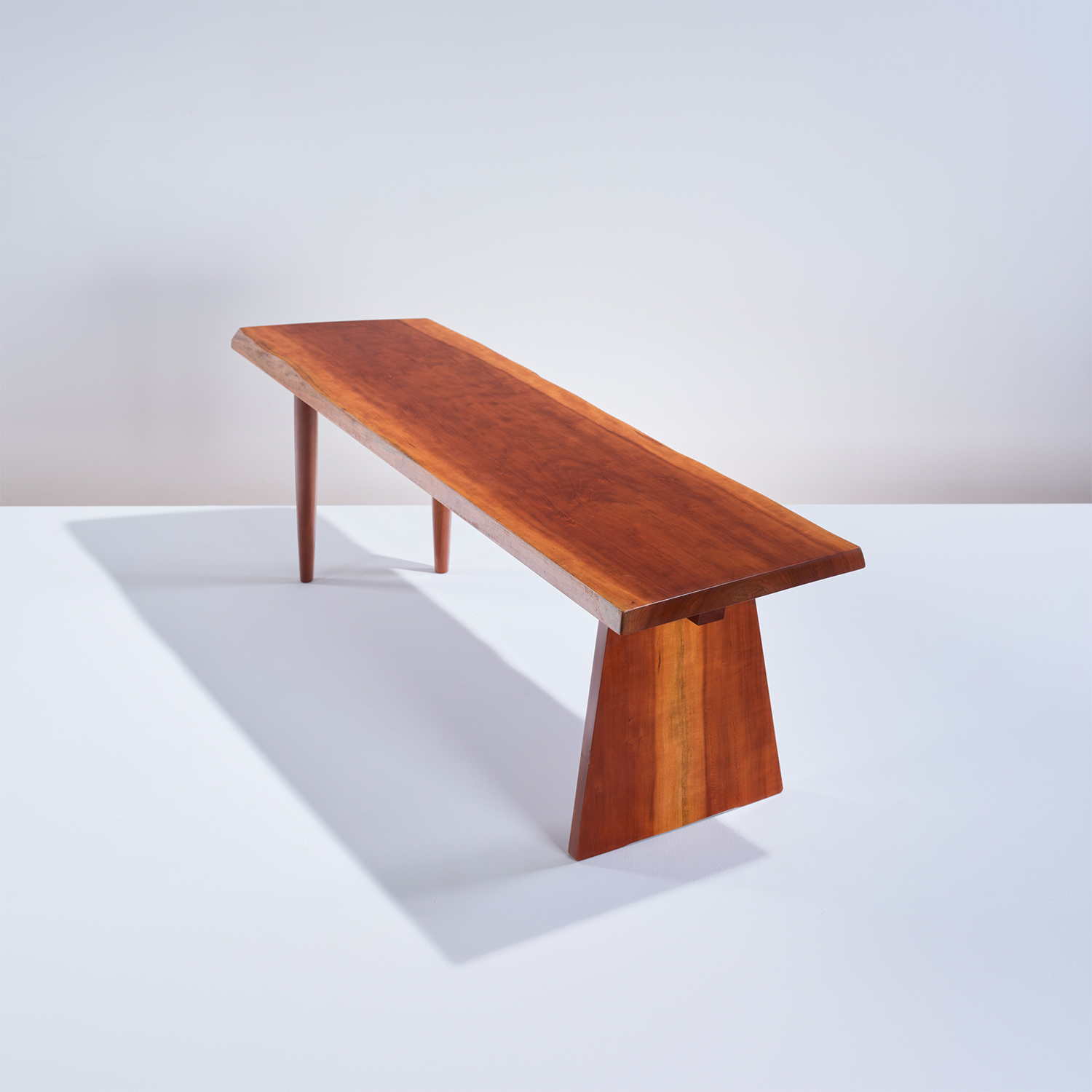
An example of George Nakashima’s Milk House Coffee Table, an early design originally conceived circa 1944 in a small milk house on the farm of Antonin Raymond in New Hope, PA where Nakashima and his family lived in 1943 and 1944 upon their release from a Japanese-American internment camp in Hunt, ID.
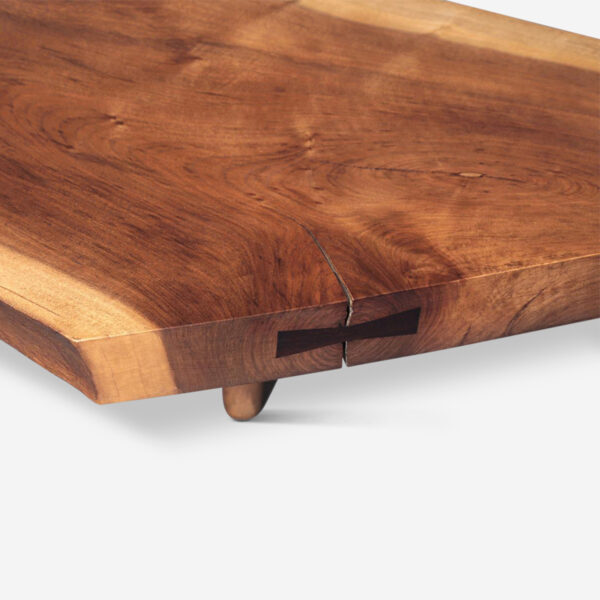
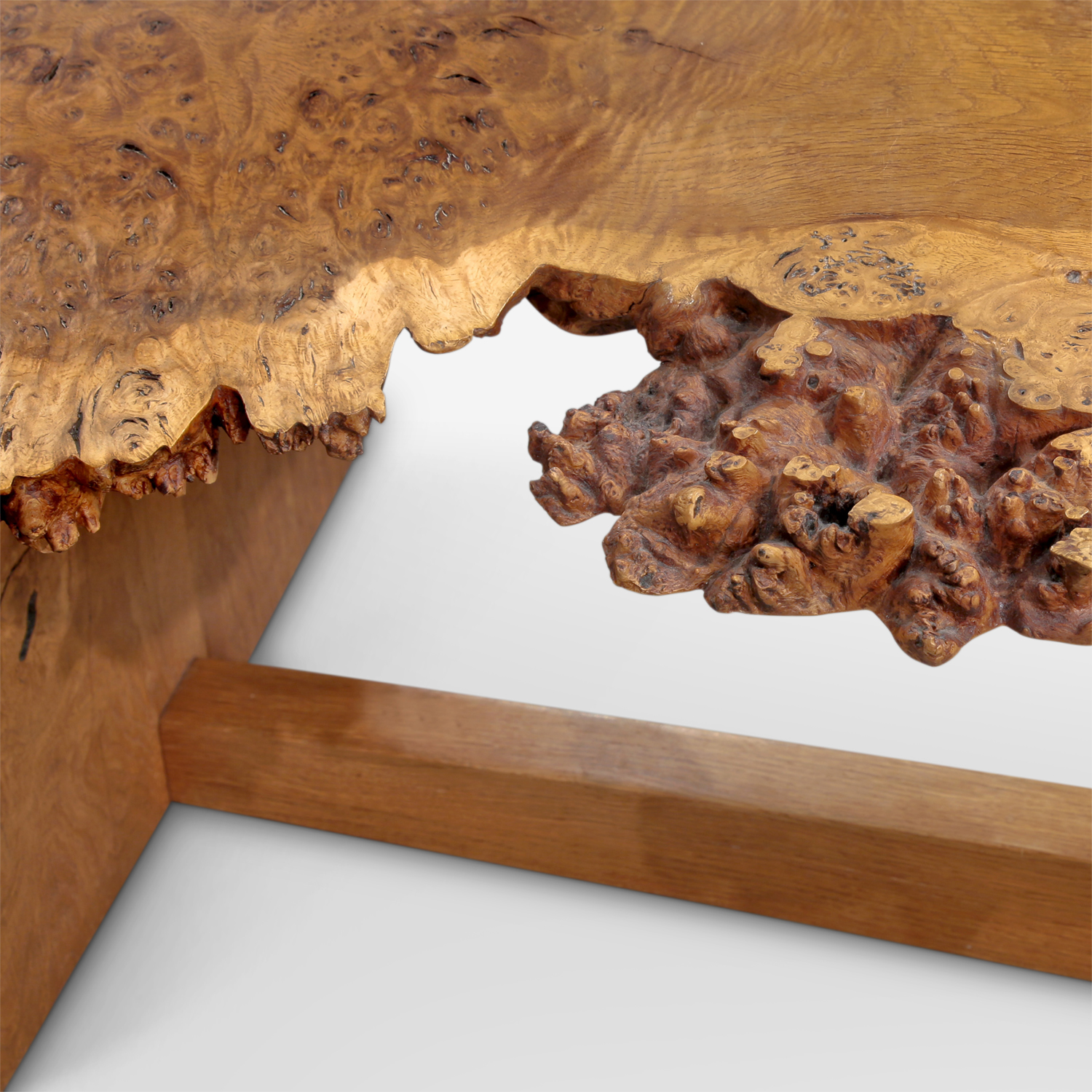
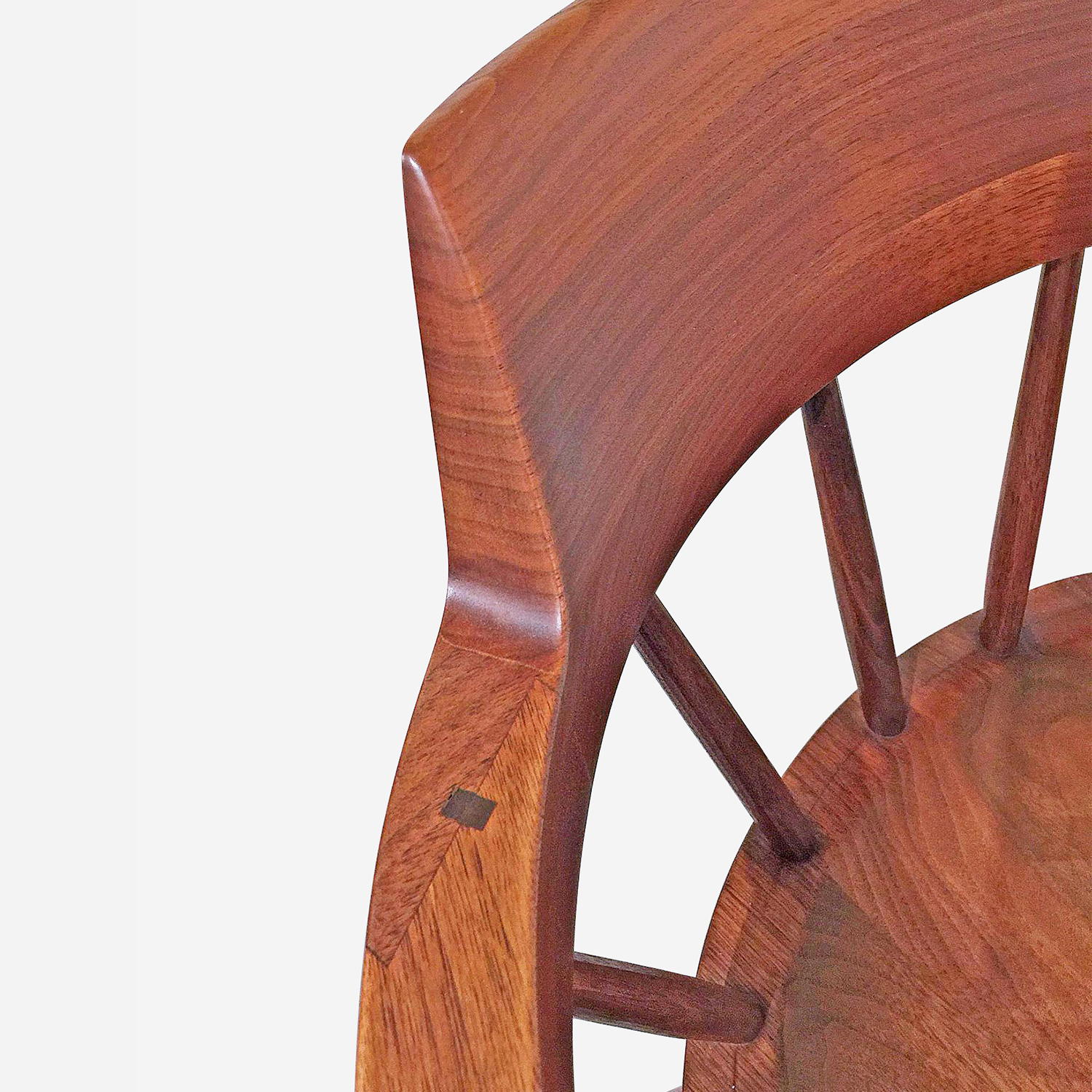
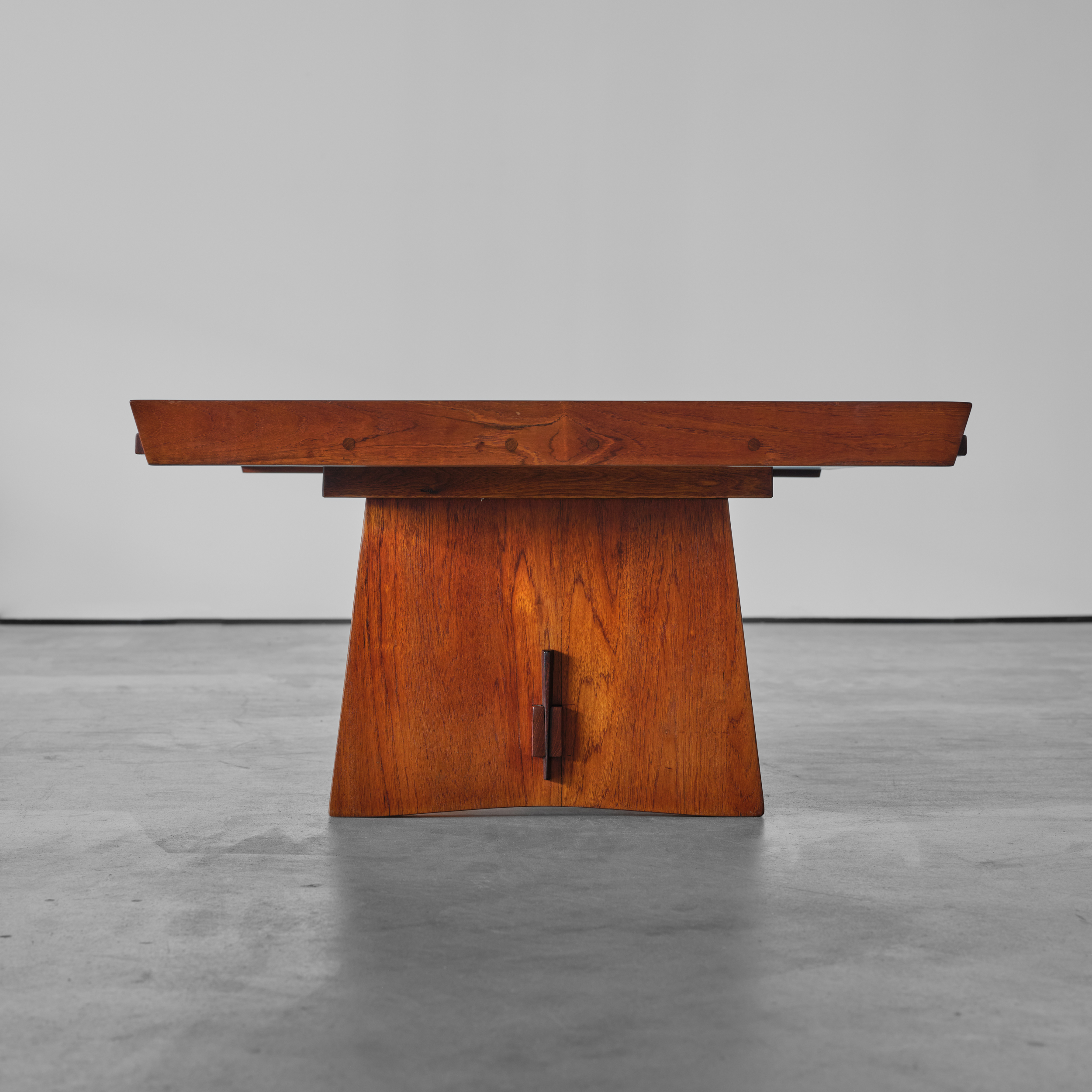
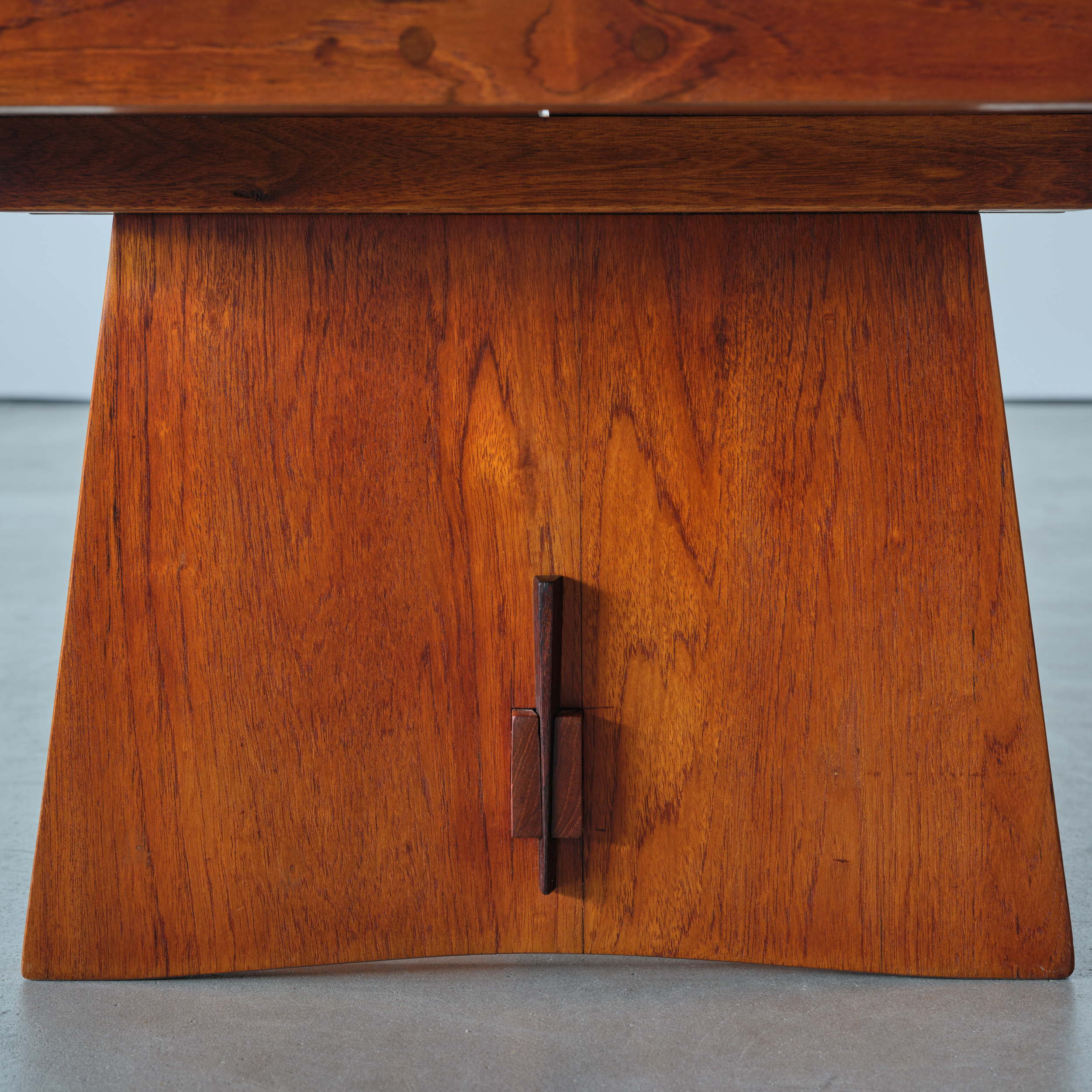
The design of the table features exposed joinery which is simultaneously ornamental and structural – this application foretells what would become a lifelong signature of Nakashima’s design vocabulary. Additionally, the table’s architectonic form introduces numerous dialogues regarding Nakashima’s formal architecture training and work experience in both the East and West and their influence in his design language/process.
Design c. 1944
“This table was the first in a series of designs based on this form. It was crafted by Nakashima in a small milk house on Antonin Raymond’s farm in New Hope, Pennsylvania, where in 1943 and 1944 the Nakashimas stayed briefly after their release from a Japanese-American internment camp in Idaho.
For the top of this table, Nakashima used wood that he had left in Seattle for safekeeping with the painter Morris Graves. Graves shipped the precious teak to the Nakashimas once they had resettled in New Hope. The southern cypress used for the base was a rather common wood in the furniture-making trade, fairly easy to obtain even during the war years.
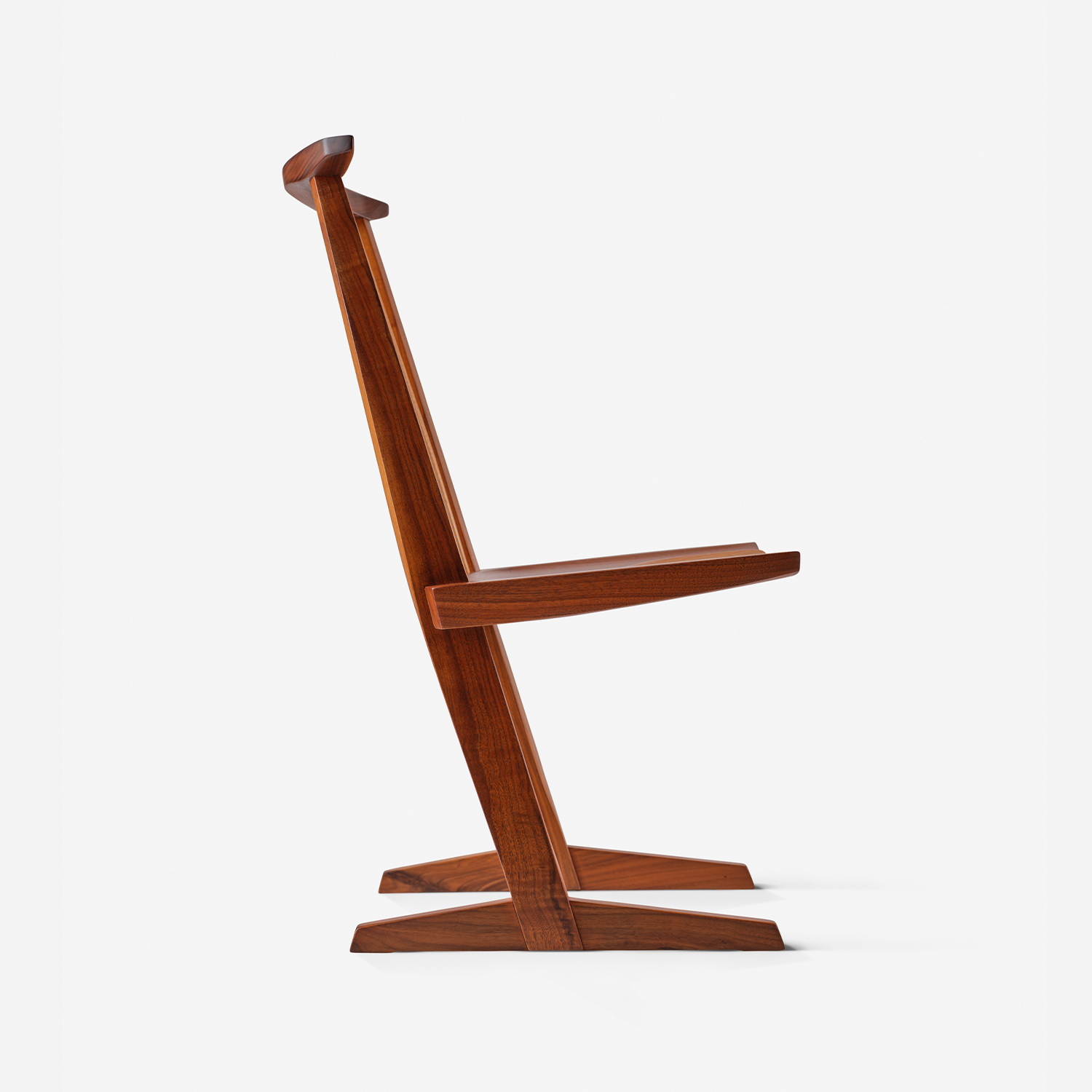
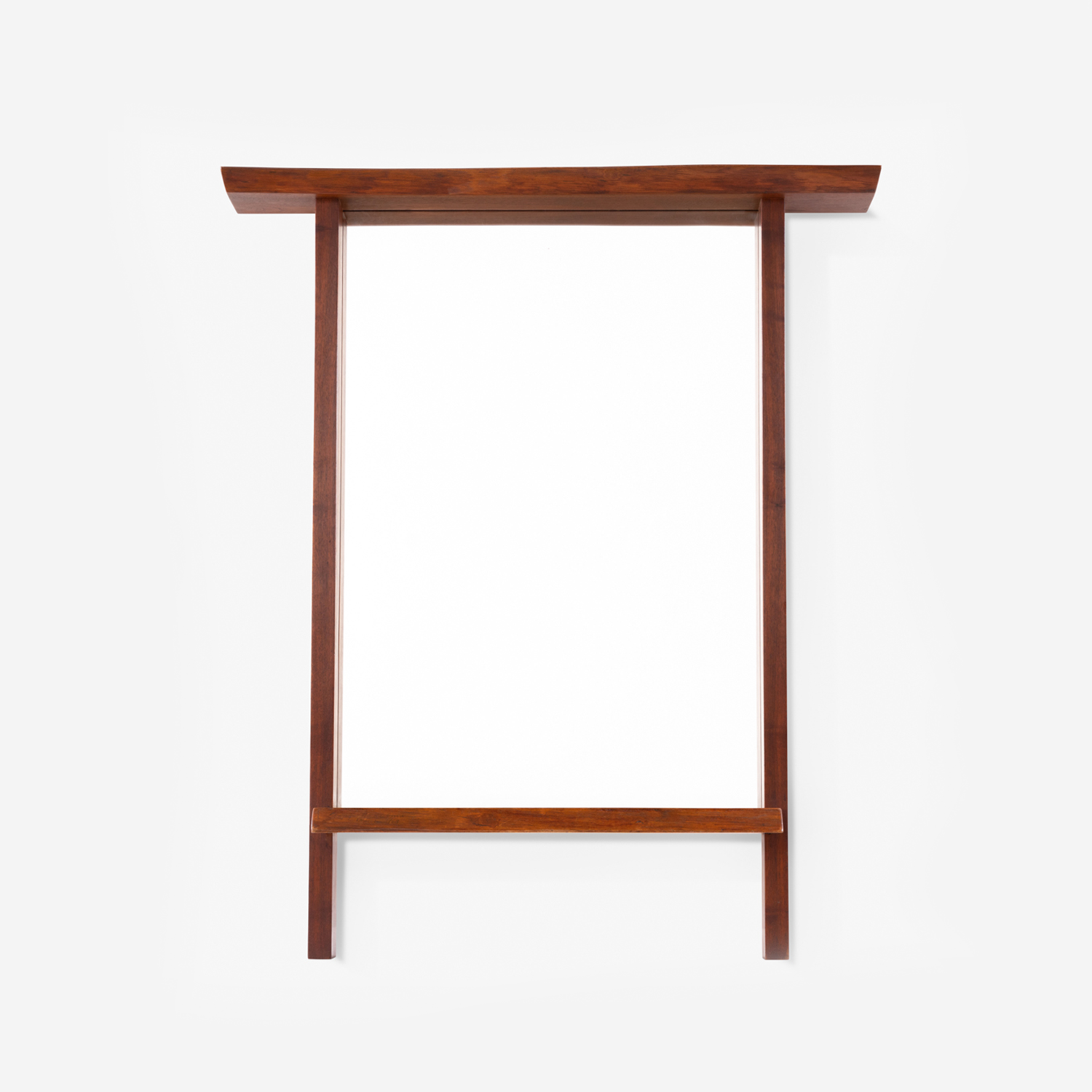
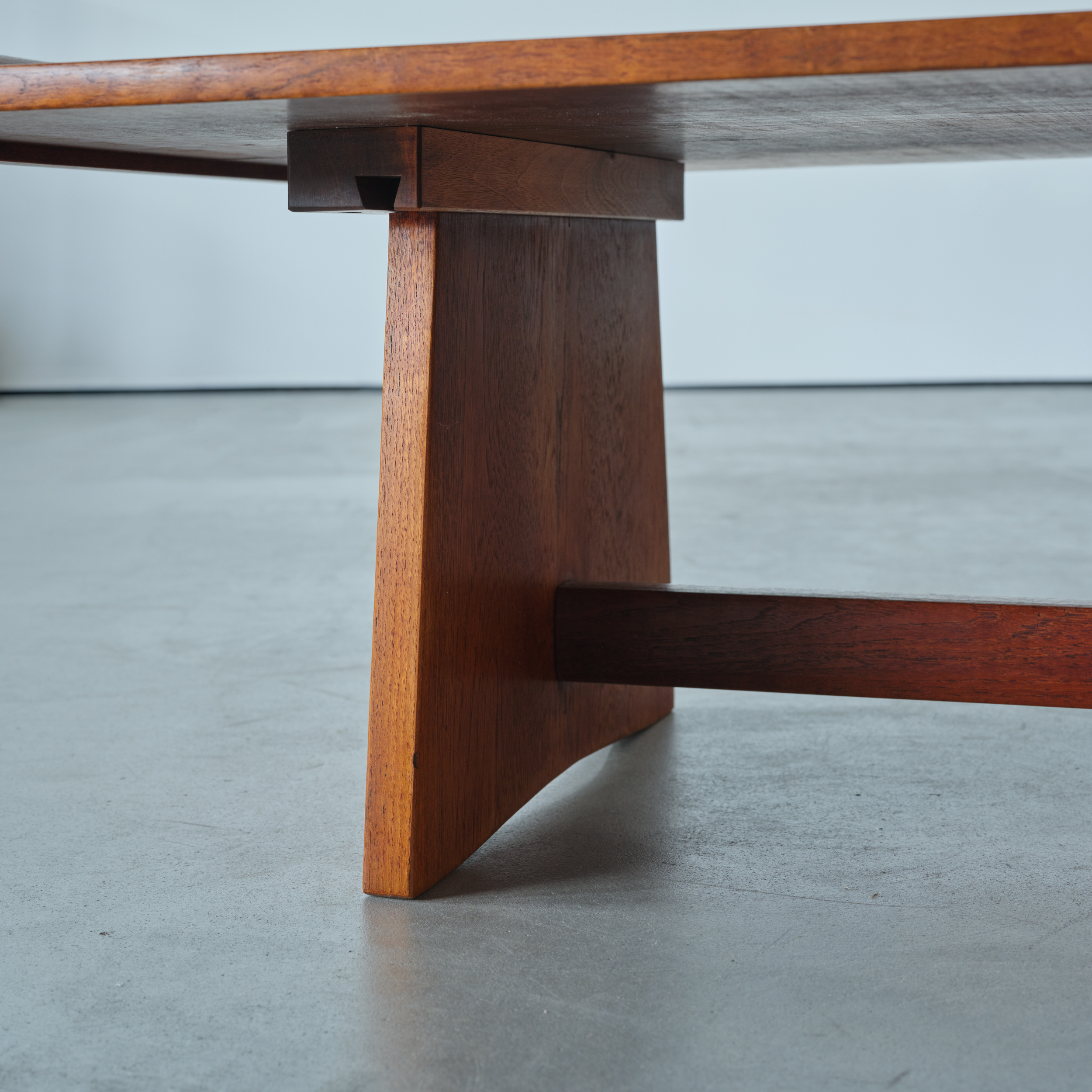
The Milk House Table is similar to a table Nakashima designed and made for André Ligné in Seattle in 1941. The earlier table is more archaic-looking, however, and its support system consists of four square-sectioned legs, whereas the Milk House Table has planar elements connected by a stretcher. The Milk House Table’s base would be used thereafter for all models of this design. Its pylonlike formation is reminiscent of Japanese gateways known as torii, and the applied rims on the opposing sides of the table recall similar devices on late-nineteenth-century Japanese furniture. In all, there is a strong Eastern quality to the design, but, untypical of much of Nakashima’s oeuvre, it includes previously held beliefs.
Indicative of Nakashima’s early work are the through-tenons of the stretcher that are wedged and secured to the pylon forms with a pronounced V-shaped wedge added for stability. Although a structural device, this joint is also ornamental. Nakashima explored the decorative potential of joinery more fully in later designs. He was to include revealed through-dovetails and butterfly joints of woods that contrasted with those they were set into.
In Western Europe, wedged through-tenons were used from the twelfth to the early eighteenth century for furniture that would be moved from place to place—a reflection of transient elements in society. The wedging allowed a piece to be taken apart so that it could be transported easily. The device was most frequently used in Japanese furniture but is often found on vernacular designs produced in the United States in the seventeenth and eighteenth centuries” (‘George Nakashima Full Circle’, Derek E. Ostergard, 1989, p.114).
George Nakashima was born in Spokane, Washington in 1905 to Japanese parents who had immigrated to the United States. Educated and trained as an architect at the University of Washington, Nakashima received his Master’s degree in Architecture from M.I.T. in 1930. After working briefly as an architect in the United States he left for Paris seeking the creative energies of one of the great urban centers of the day. From there he traveled extensively, ending up at the home of his grandmother, living on a farm on the outskirts of Tokyo.
| Dimensions | 37 × 31 × 16.5 in |
|---|---|
| Artist | |
| Date | 1951 |
| Material | American black walnut |
| Style |