






George Nakashima
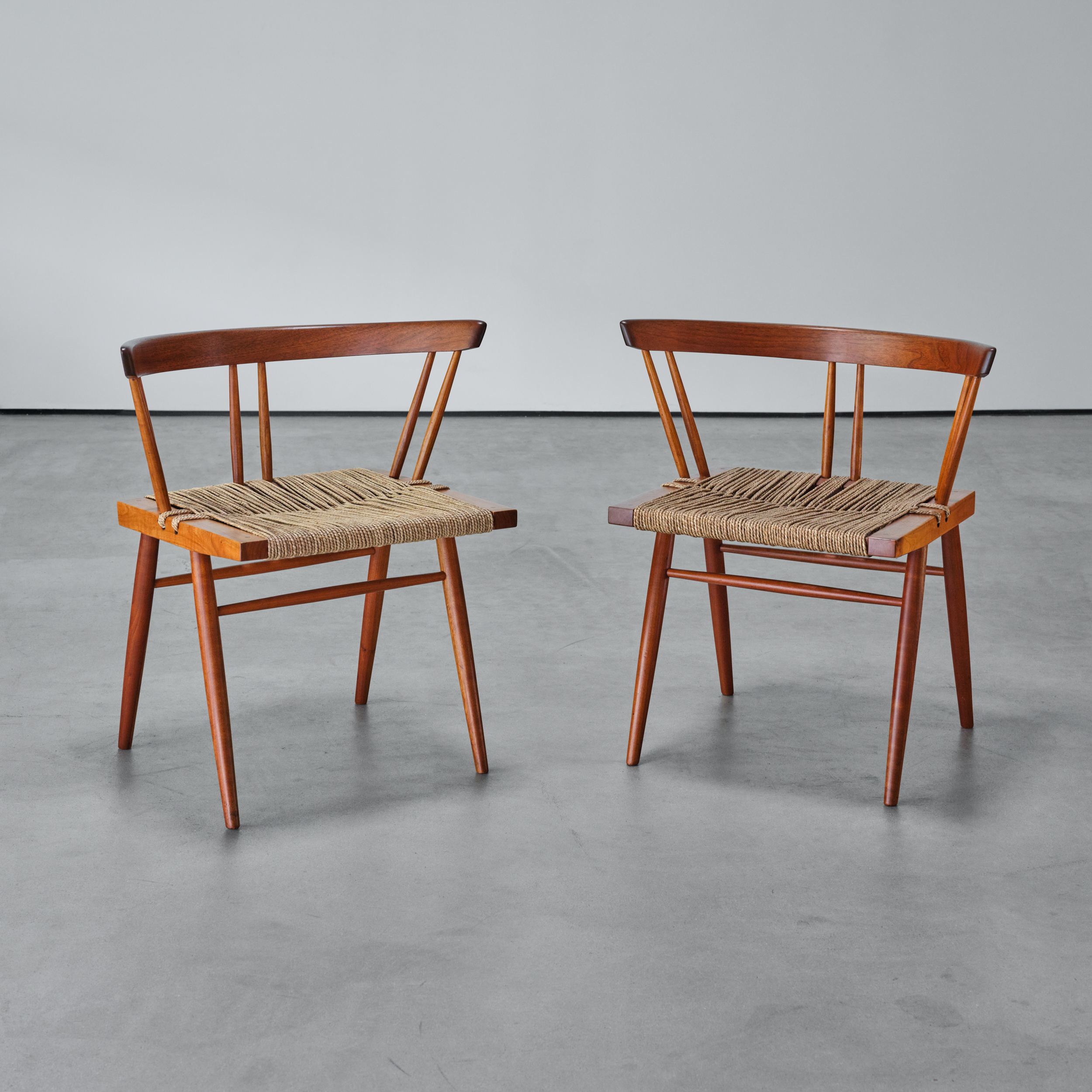
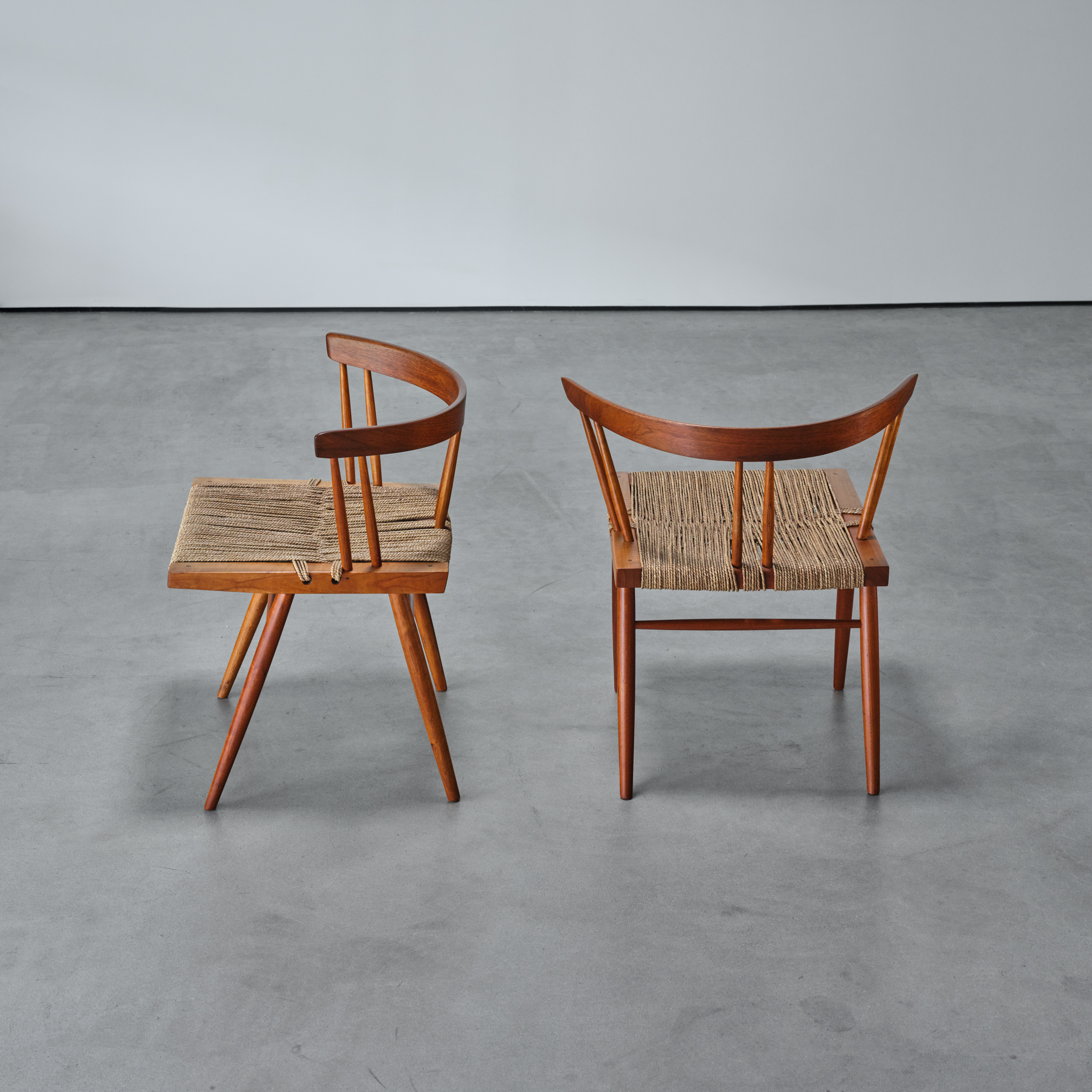
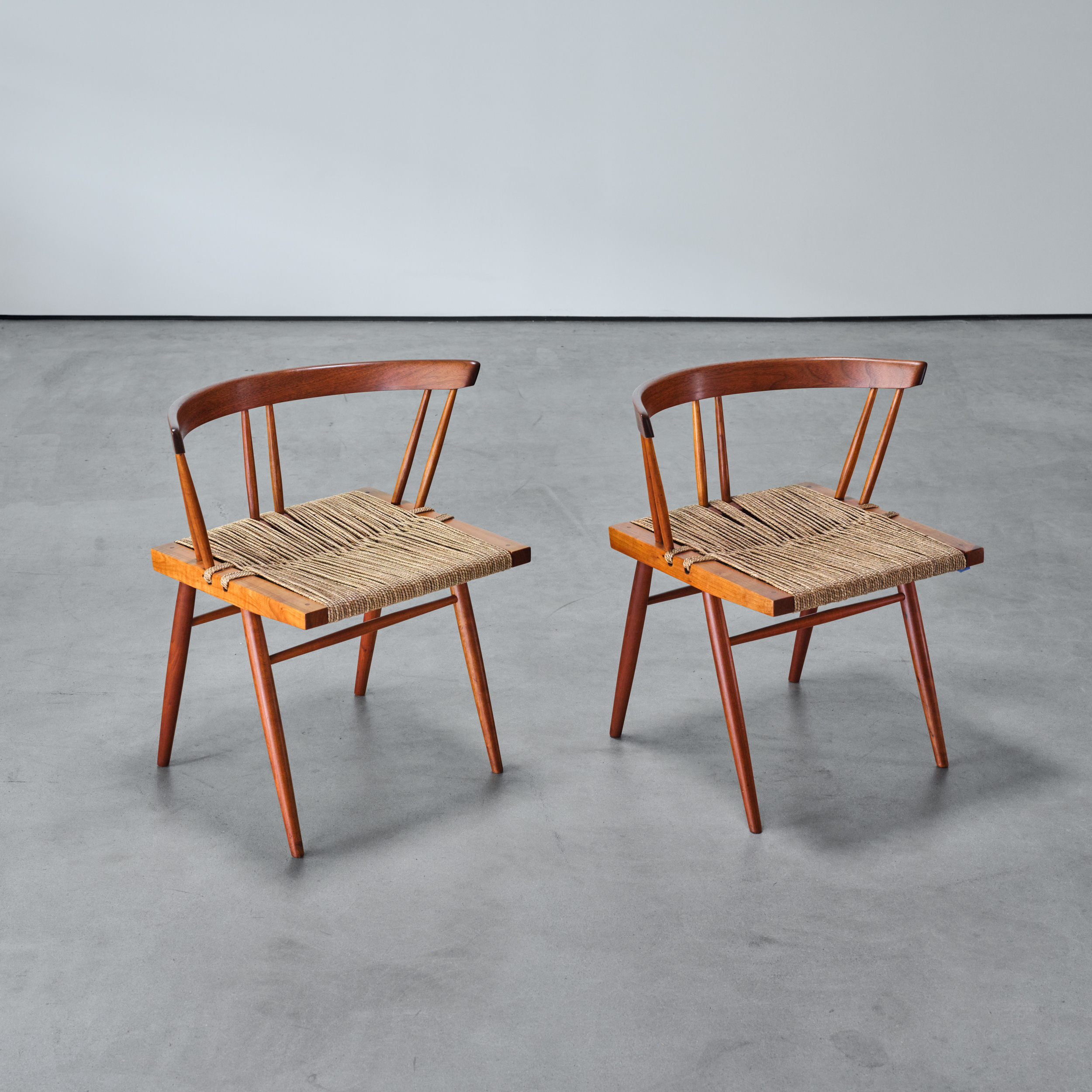
Grass-Seated Chairs | Pair, 1951
Material: Cherry, American Black Walnut, Sea Grass
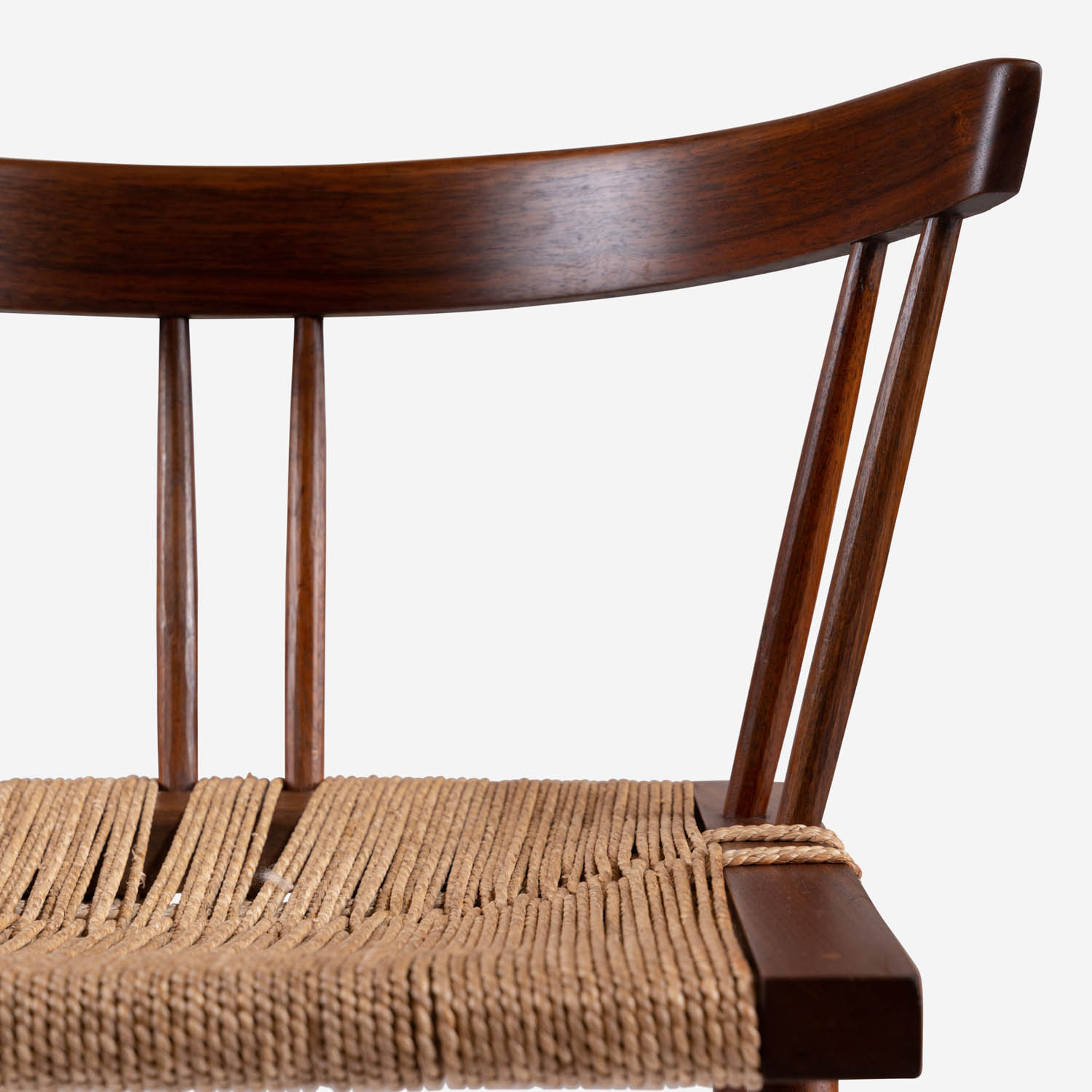
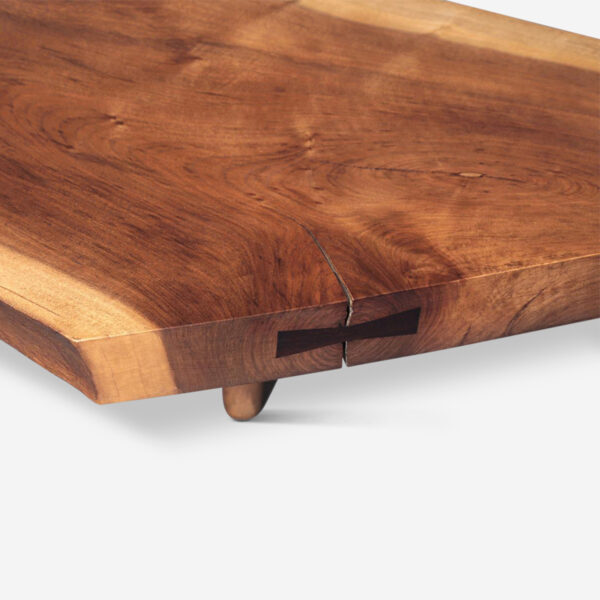
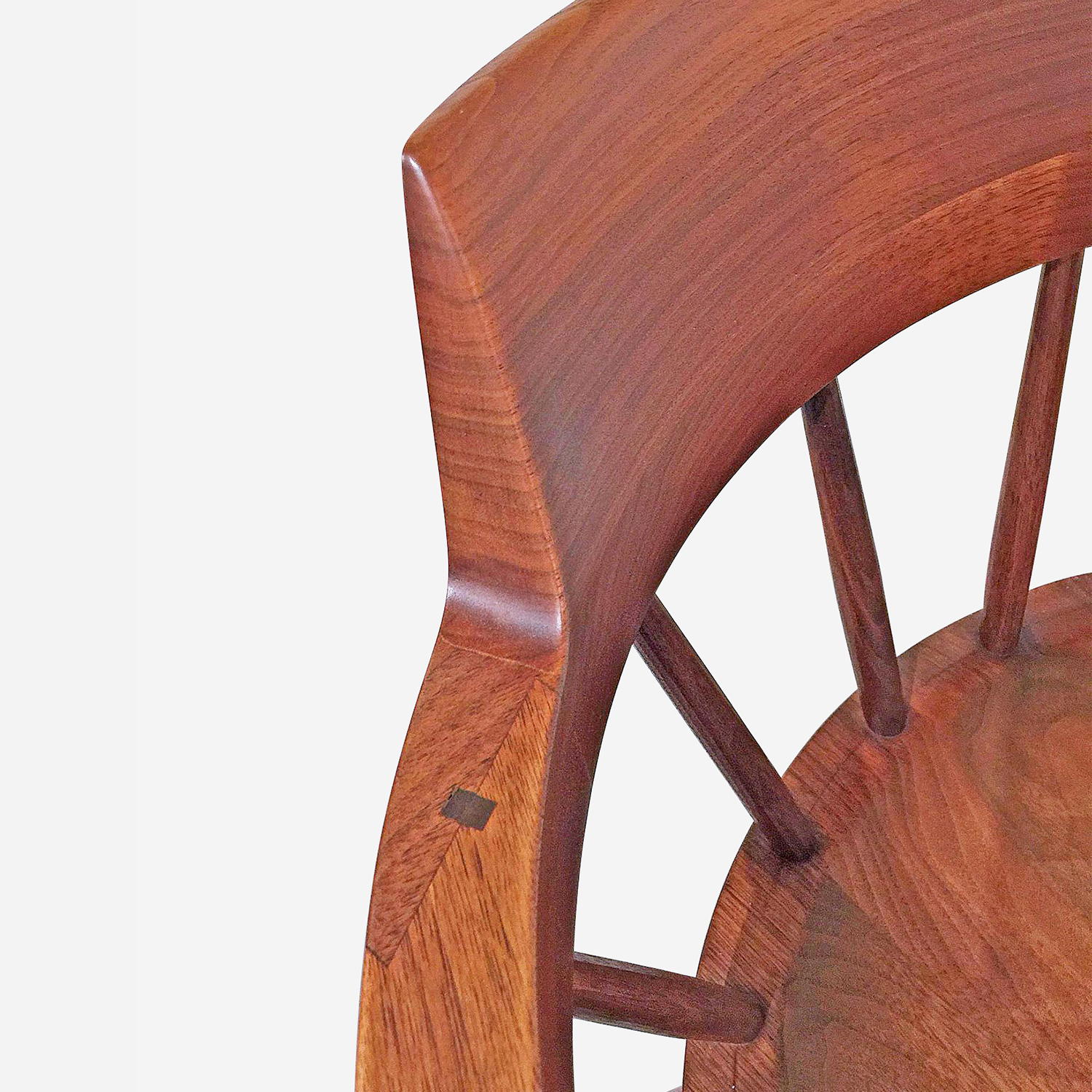
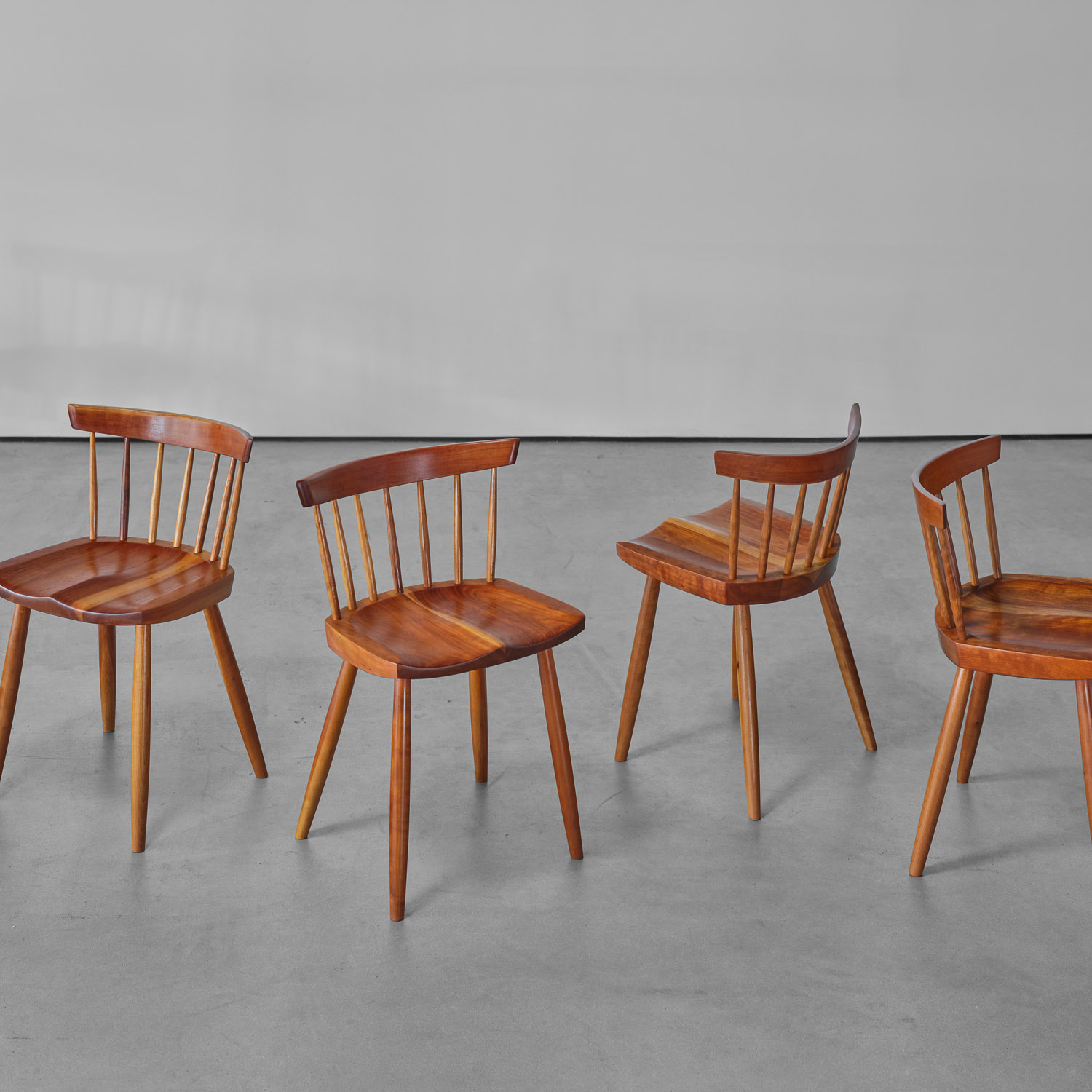
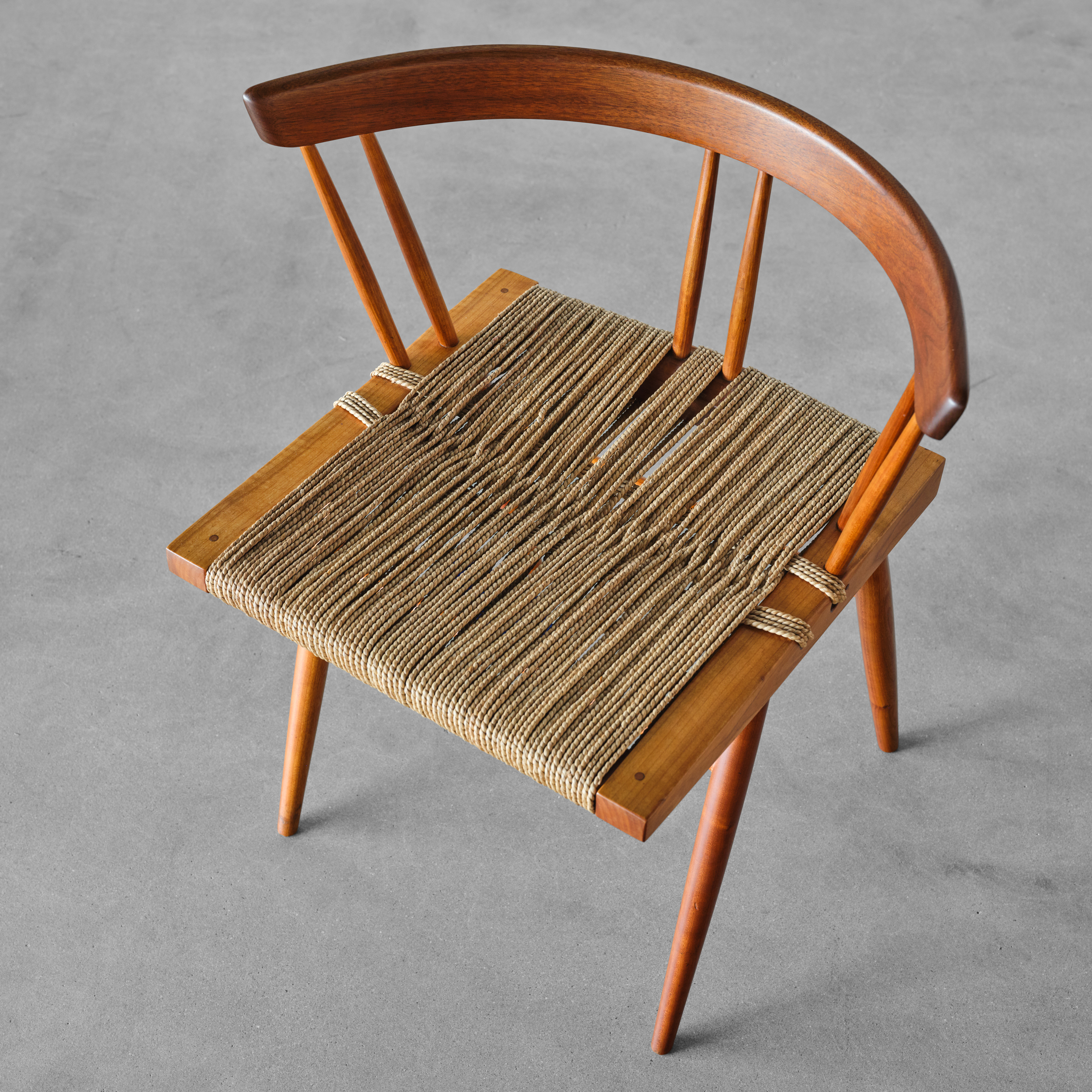
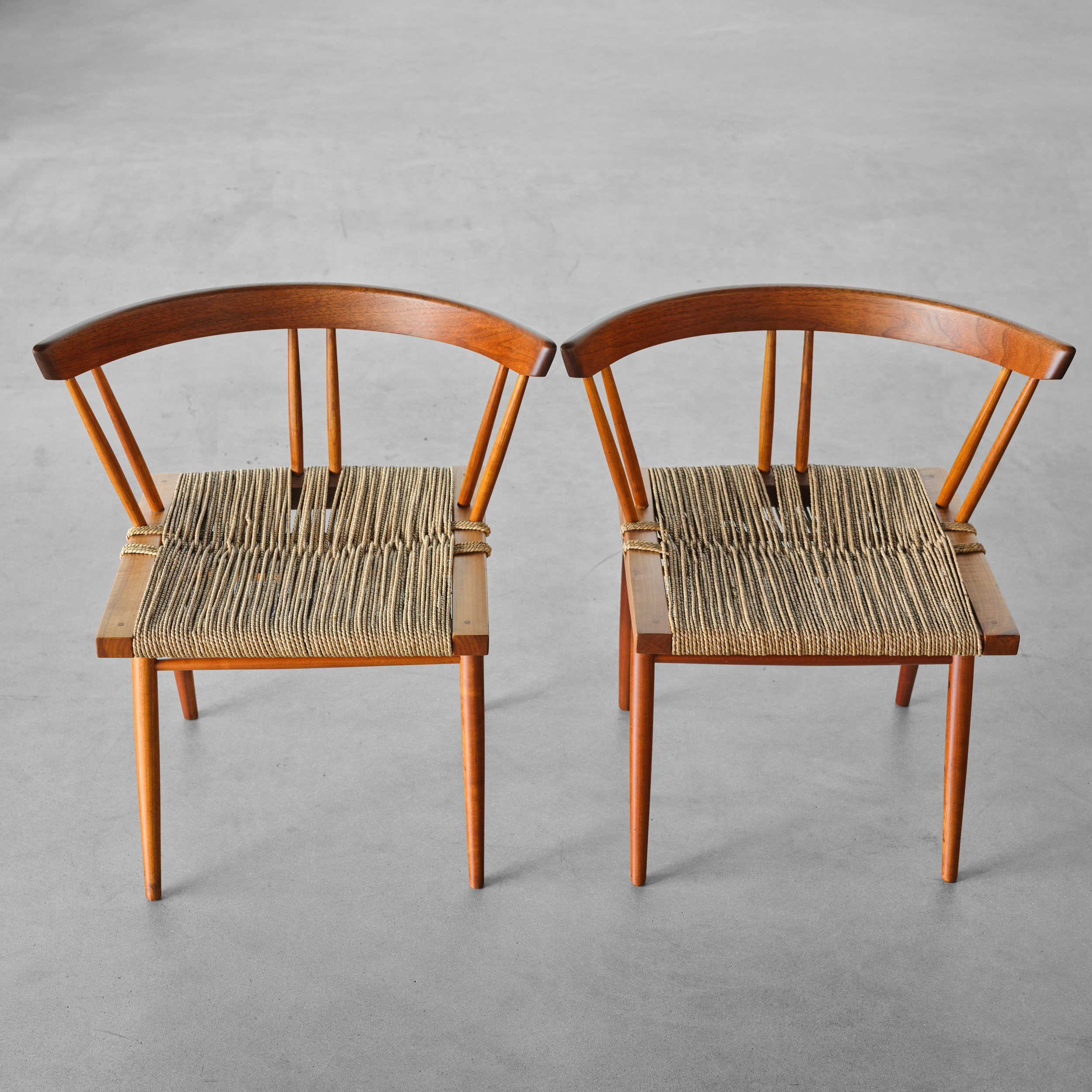
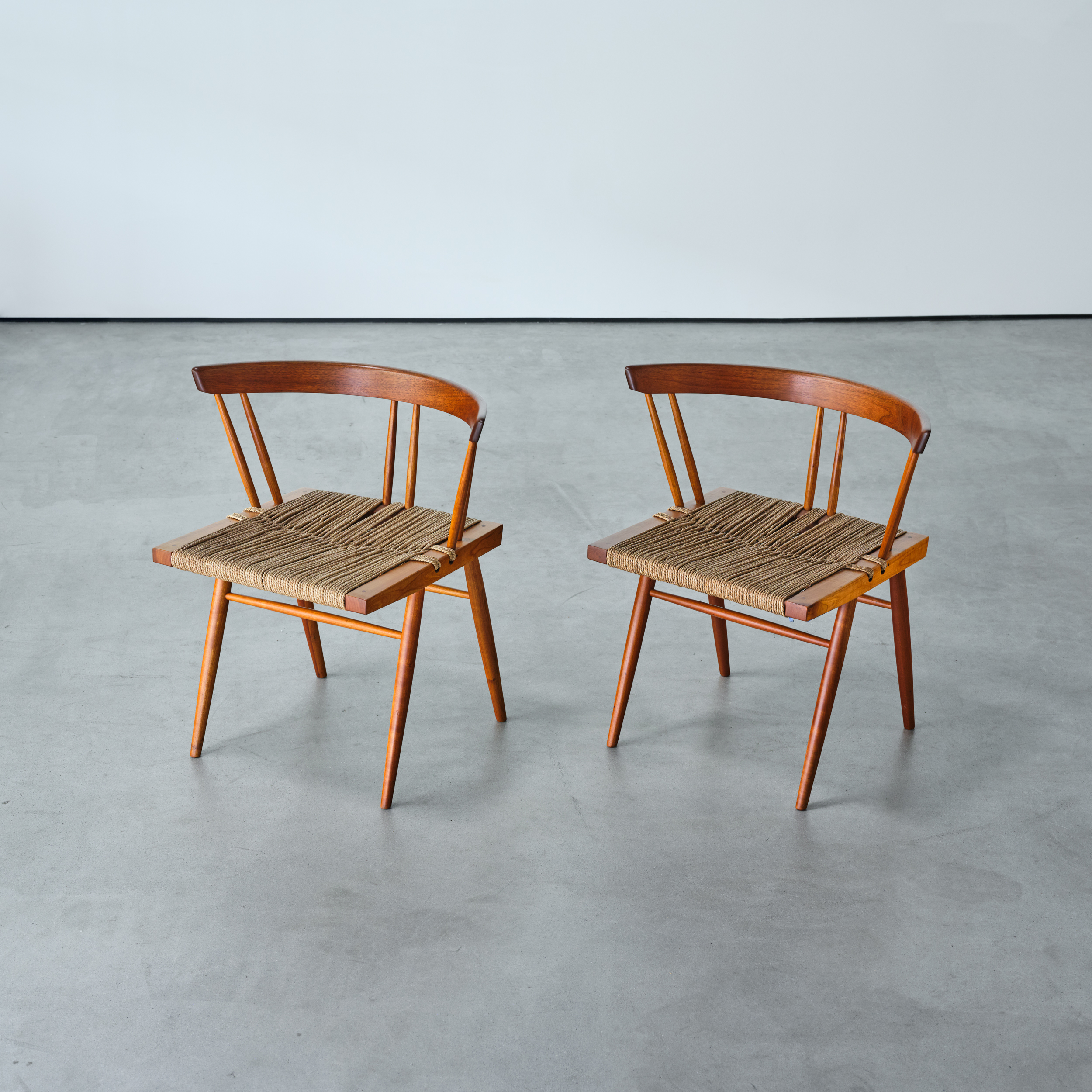
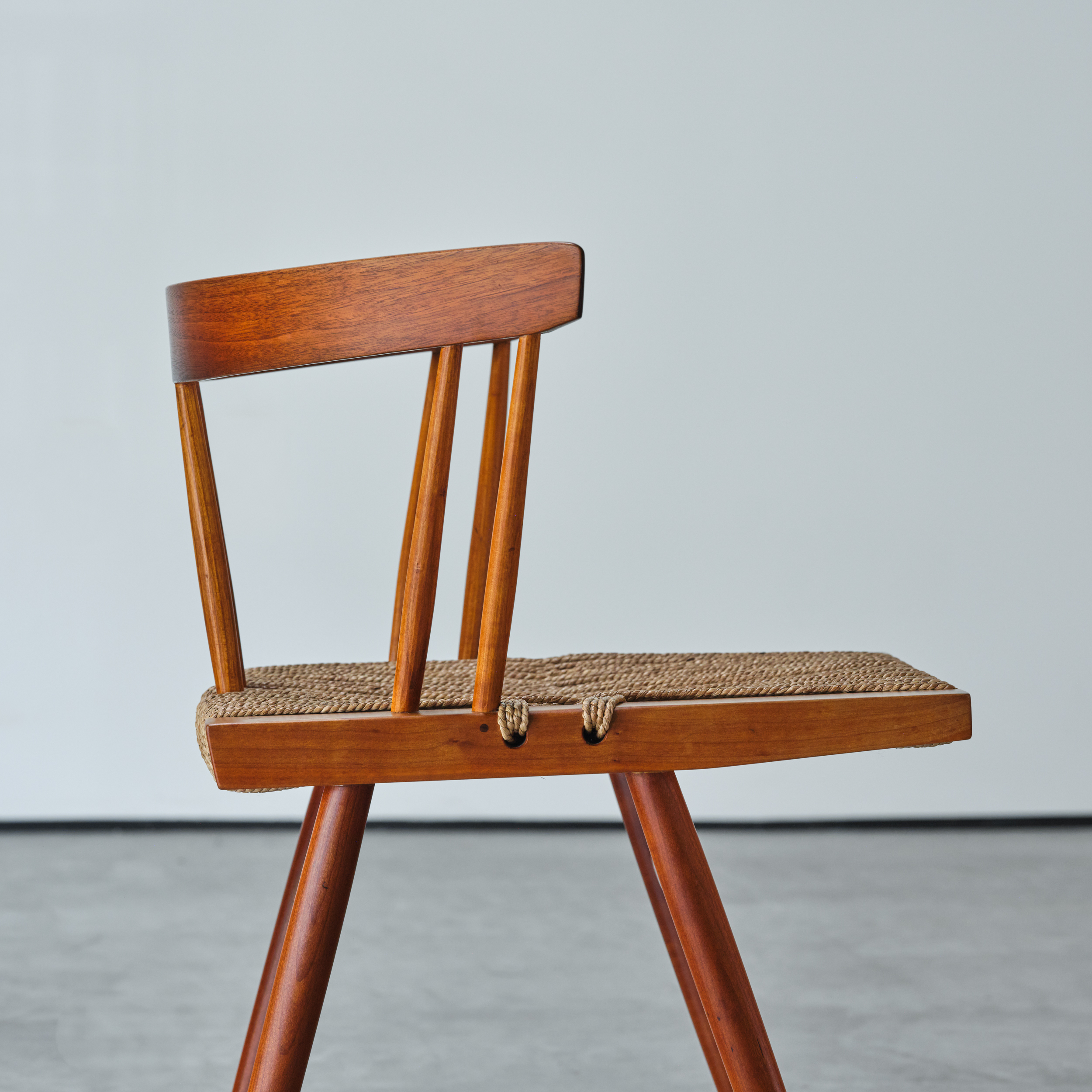
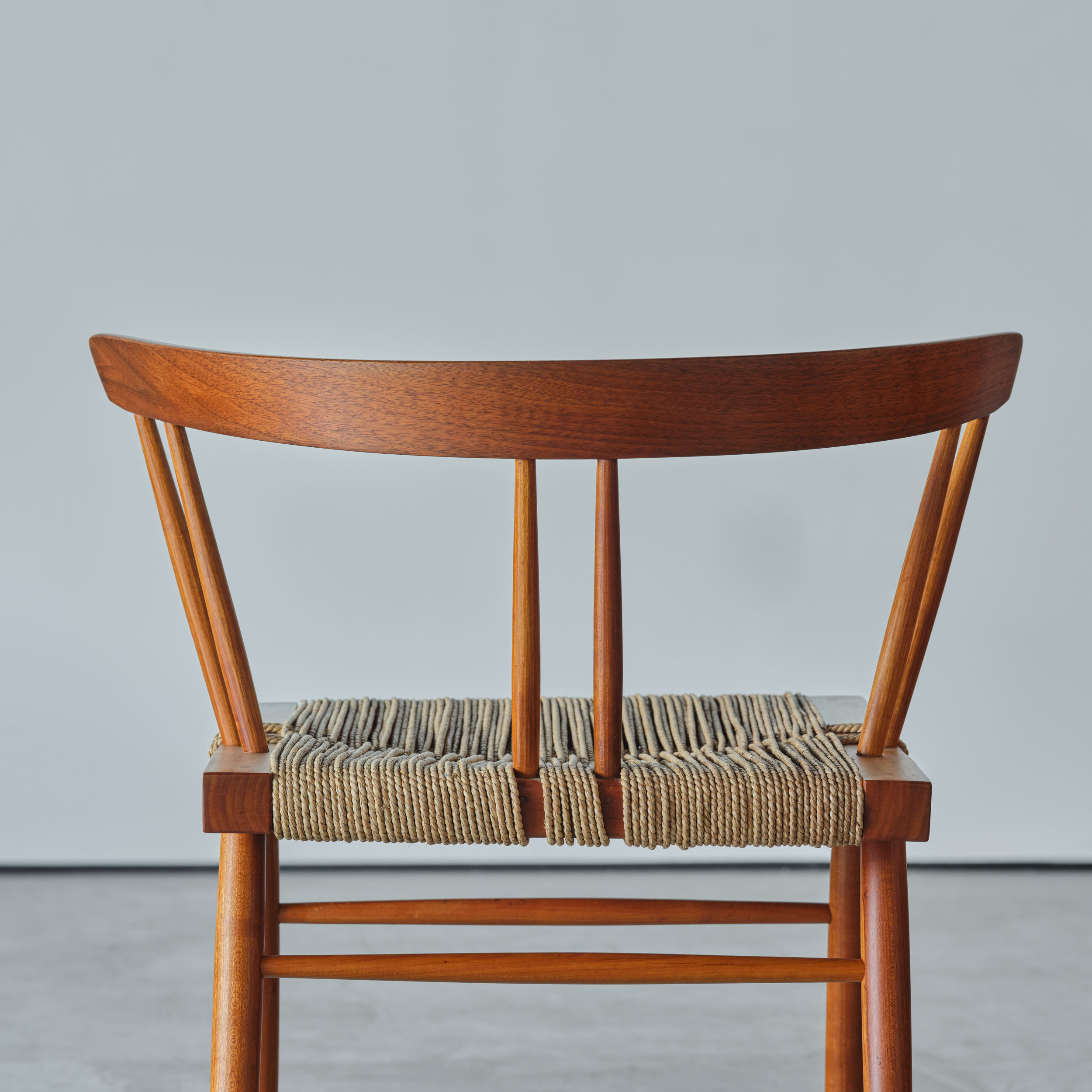
A pair of George Nakashima’s iconic Grass Seated Chairs – an early George Nakashima design which incorporates numerous Nakashima design signatures such as exposed joinery utilized simultaneously in a structural and decorative application as well as the honest use of natural materials, in this case, Cherry, American Black Walnut and twisted sea-grass.
Design 1944
“The … [use of] revealed joinery indicate[s] Nakashima’s early concern with the decorative possibilities of constructional devices. Other than Wharton Esherick, the dean of American woodworkers, Nakashima was the only furniture designer in the United States at the time so intrigued with the potential of expressive joinery.
The articulation of the mortis-and-tenon joints with dowels had been an essential element of furniture making for centuries. The dowel had originally been used solely for technical assistance in securing the frames of chairs and case pieces. A dissolution of guild restriction in France in 1791, a better understanding of furniture construction, and better-quality glues negated the need for dowels. Slowly the device disappeared.
Revealed joinery was revived after 1850 by many designers and craftsmen of the Arts and Crafts Movement in England and American. To a degree, progressive German designers in the early twentieth century also chose revealed joinery for both aesthetic and philosophical reasons. However, after the First World War this manner of articulation again disappeared. Progressive designers and architects considered it effete, dishonest and inappropriate to the needs of furniture design and manufacture. In fact, by the late 1930s it was used only in replating historicist designs that had once needed such additions.
Nakashima’s use of revealed joinery was prompted in part by a strong philosophical need to reiterate structure. Like earlier Arts and Crafts designers, he was expressing displeasure with the sate of the design and manufacture of contemporary furniture. Nakashima’s pride in painstaking, but often technically unnecessary, joinery constitutes a strong element of his aesthetic. The use of dowels on the Grass-Seated Chair and Grass-Seated Stool is considerably more extravagant than on Nakashima’s other seating pieces. Dowels are used to secure the mortise-and-tenon joints at the junction of the rails and to reinforce the intersection of spindles and rails. They were not used in later seating designs.
In terms of design, the Grass-Seated Chair owes considerably less to the Windsor chair that do other Nakashima designs. The Conoid chairs, the New Chair, and the Armchair all employ a solid plank seat similar to the Windsor design. The use of resilient twisted sea grass in the stool and chair contrast not only with Nakashima’s own designs but also with the molded plywood seats of the shell aesthetic that dominated mass-produced progressive design in the postwar period. The curved crest rail of the Grass-Seated Chair, still steamed and bent, is another vestige of Nakashima’s persistent hand-craftsmanship” (‘George Nakashima Full Circle’, Derek E. Ostergard, 1989, p.138).
George Nakashima was born in Spokane, Washington in 1905 to Japanese parents who had immigrated to the United States. Educated and trained as an architect at the University of Washington, Nakashima received his Master’s degree in Architecture from M.I.T. in 1930. After working briefly as an architect in the United States he left for Paris seeking the creative energies of one of the great urban centers of the day. From there he traveled extensively, ending up at the home of his grandmother, living on a farm on the outskirts of Tokyo.
| Dimensions | 23.75 × 19.5 × 28 in |
|---|---|
| Artist | |
| Date | 1951 |
| Material | American black walnut, cherry, Sea-Grass |
| Style |