











George Nakashima
Conoid Room Divider, 1987
Material: American Black Walnut, Pandanus Cloth
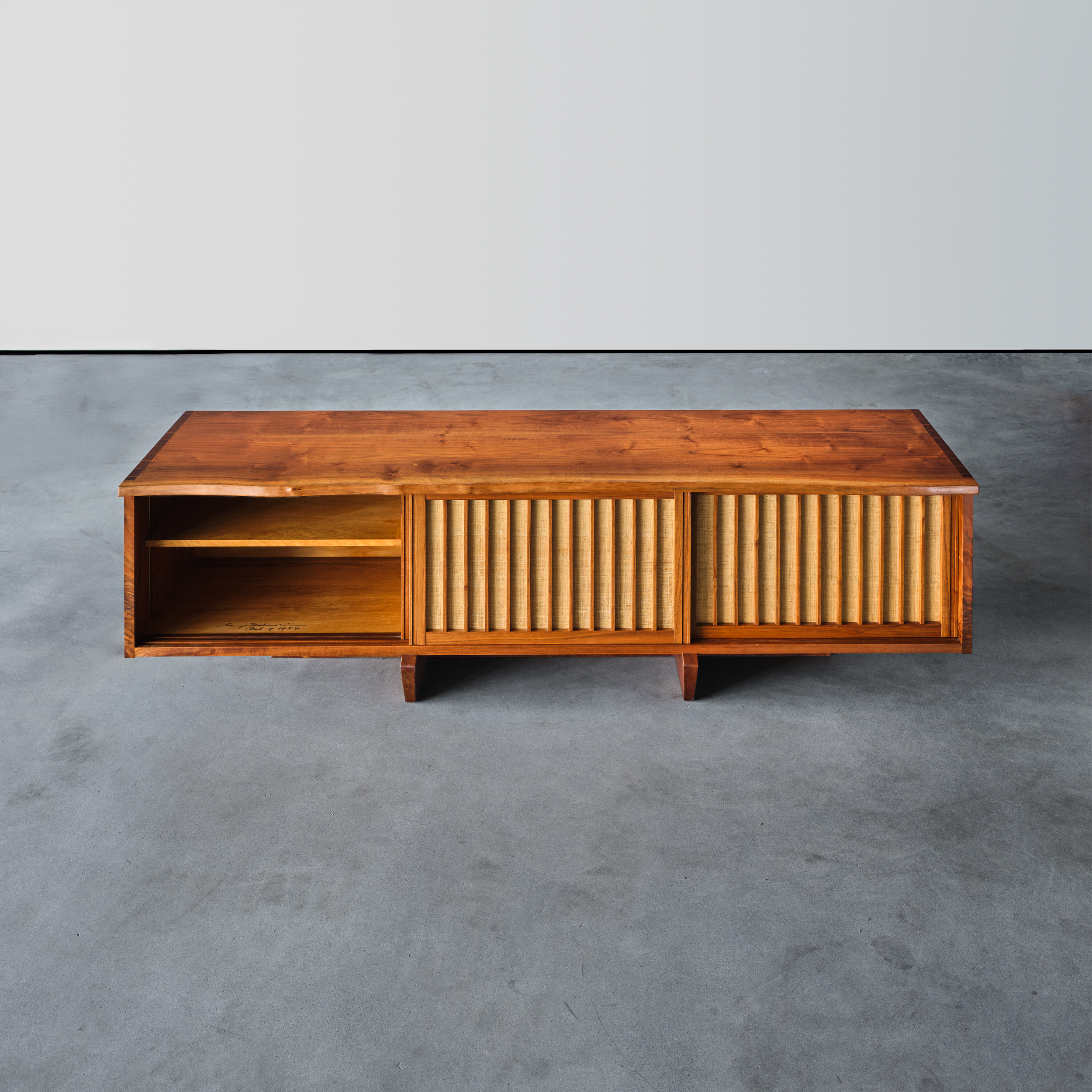
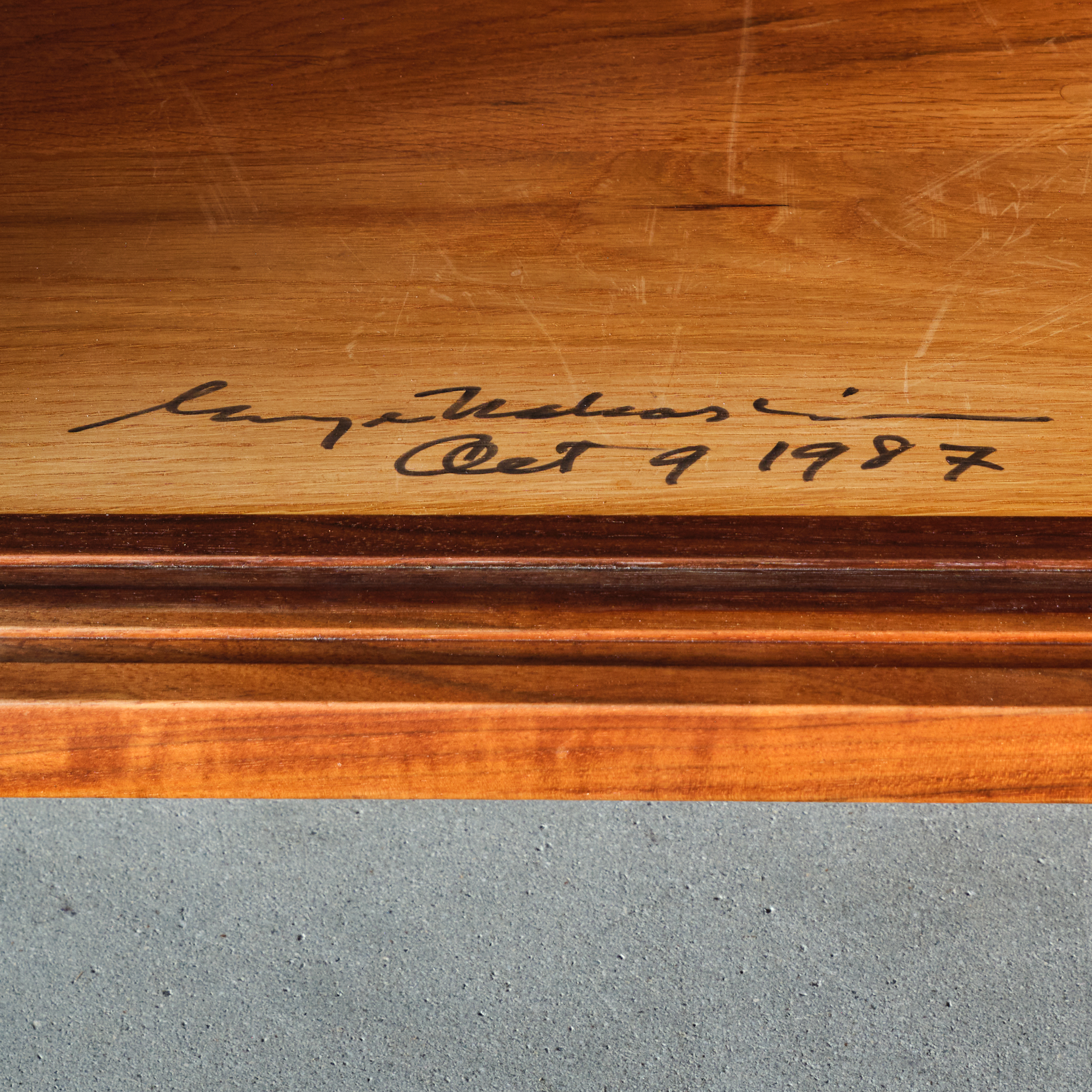
Signed “George Nakashima Oct 9 1987”
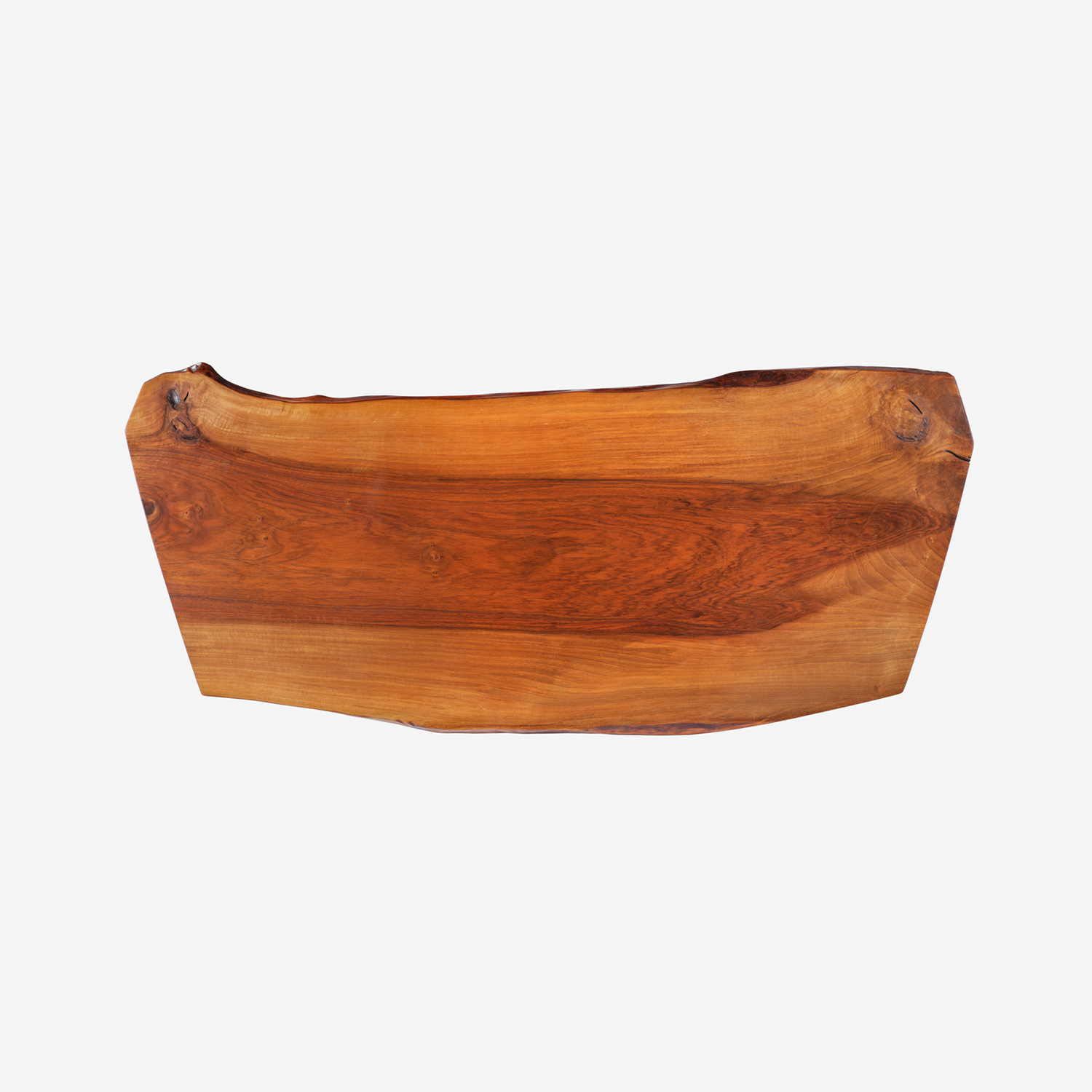
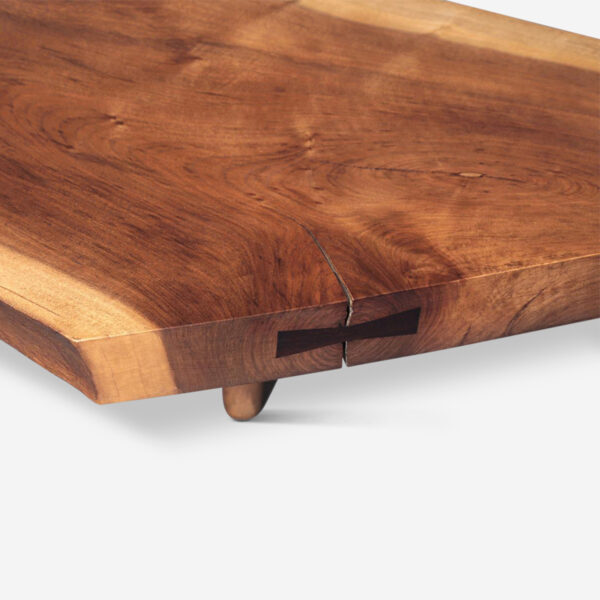
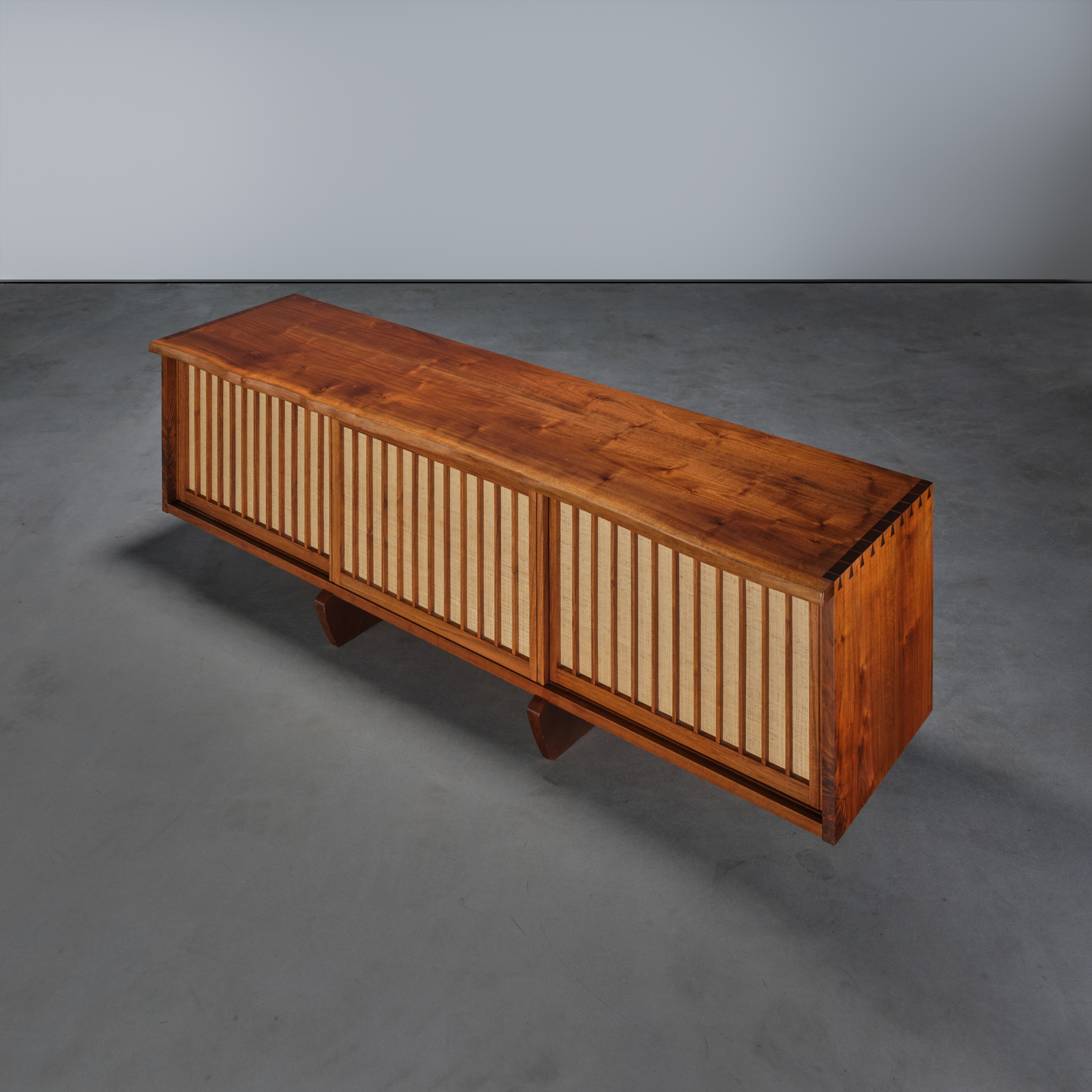
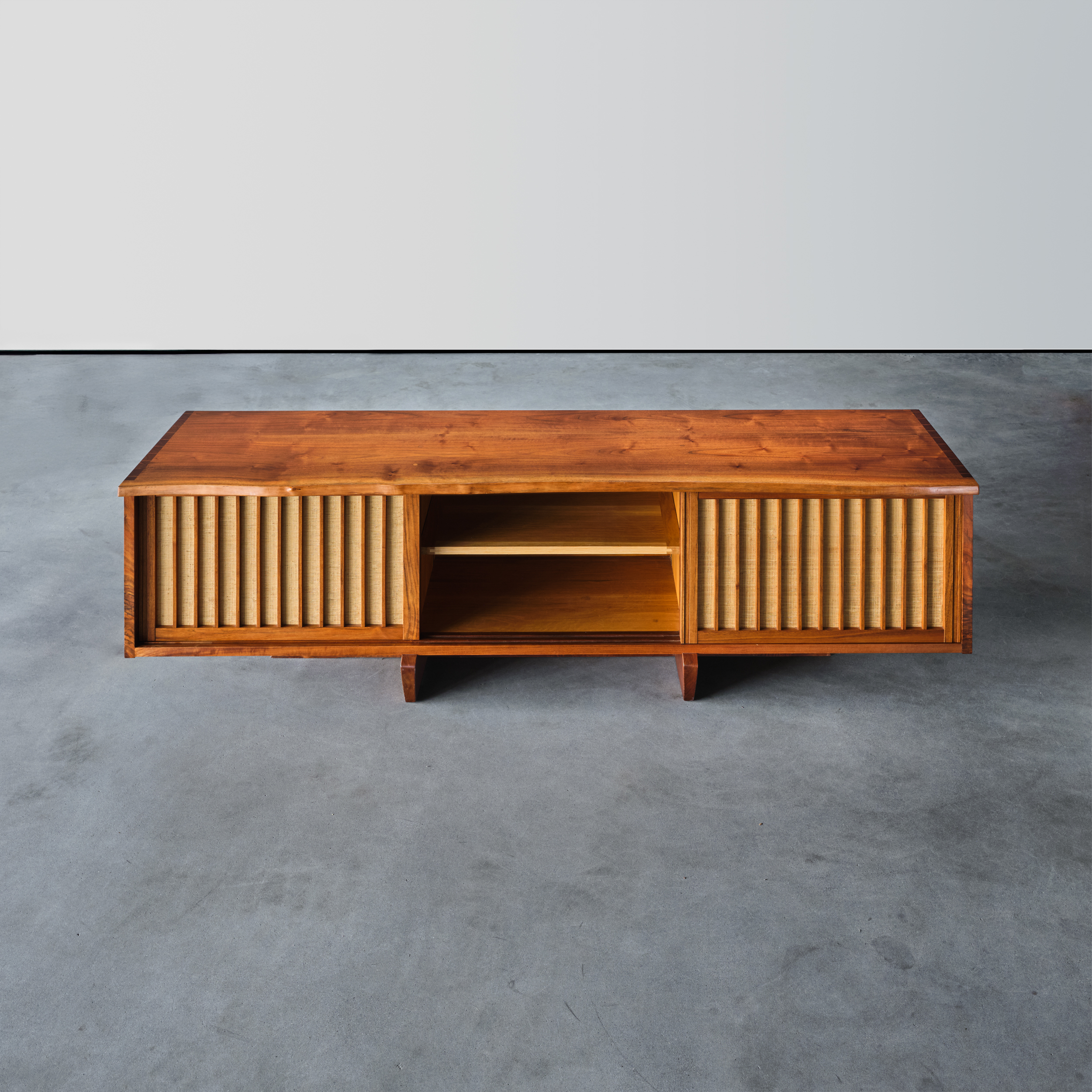
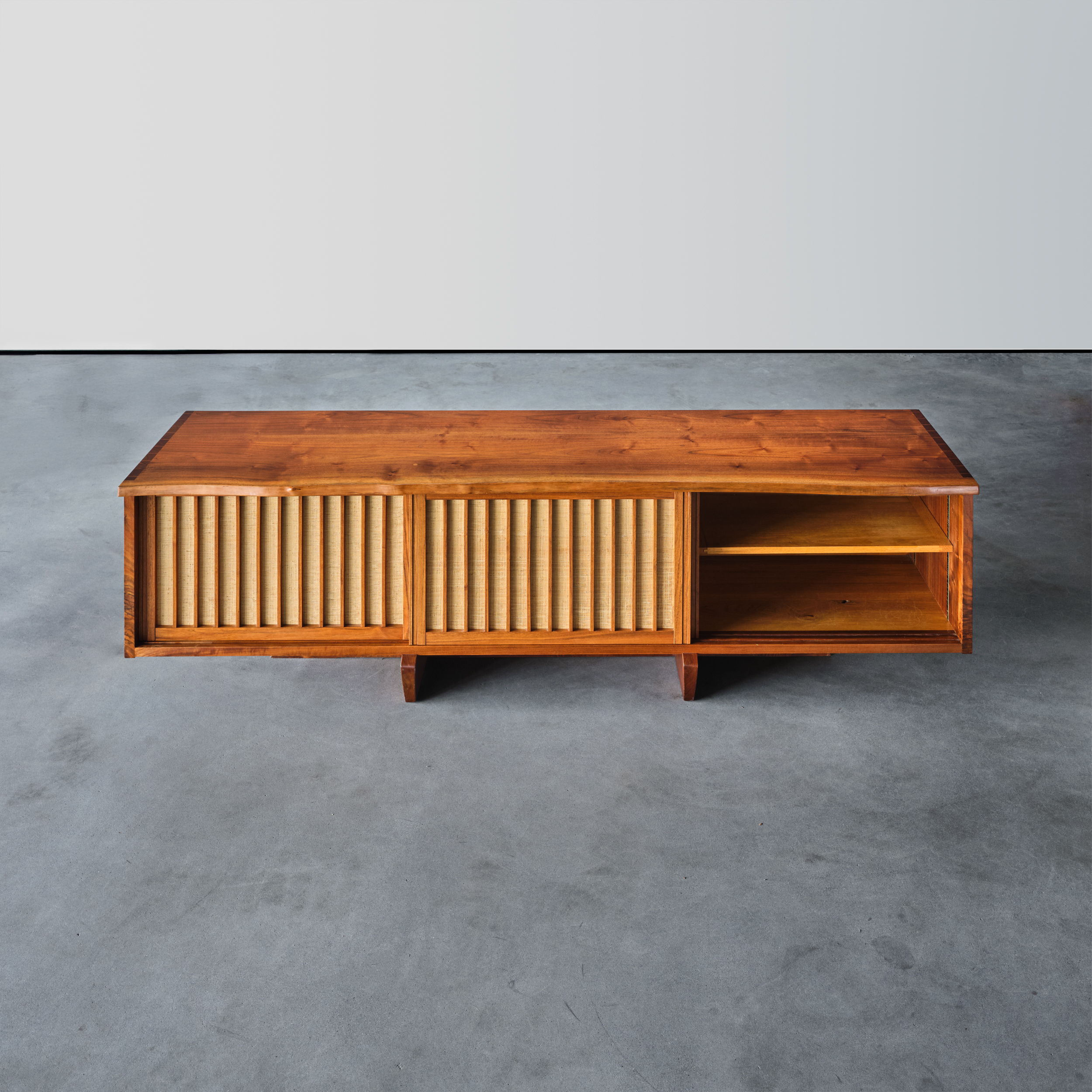
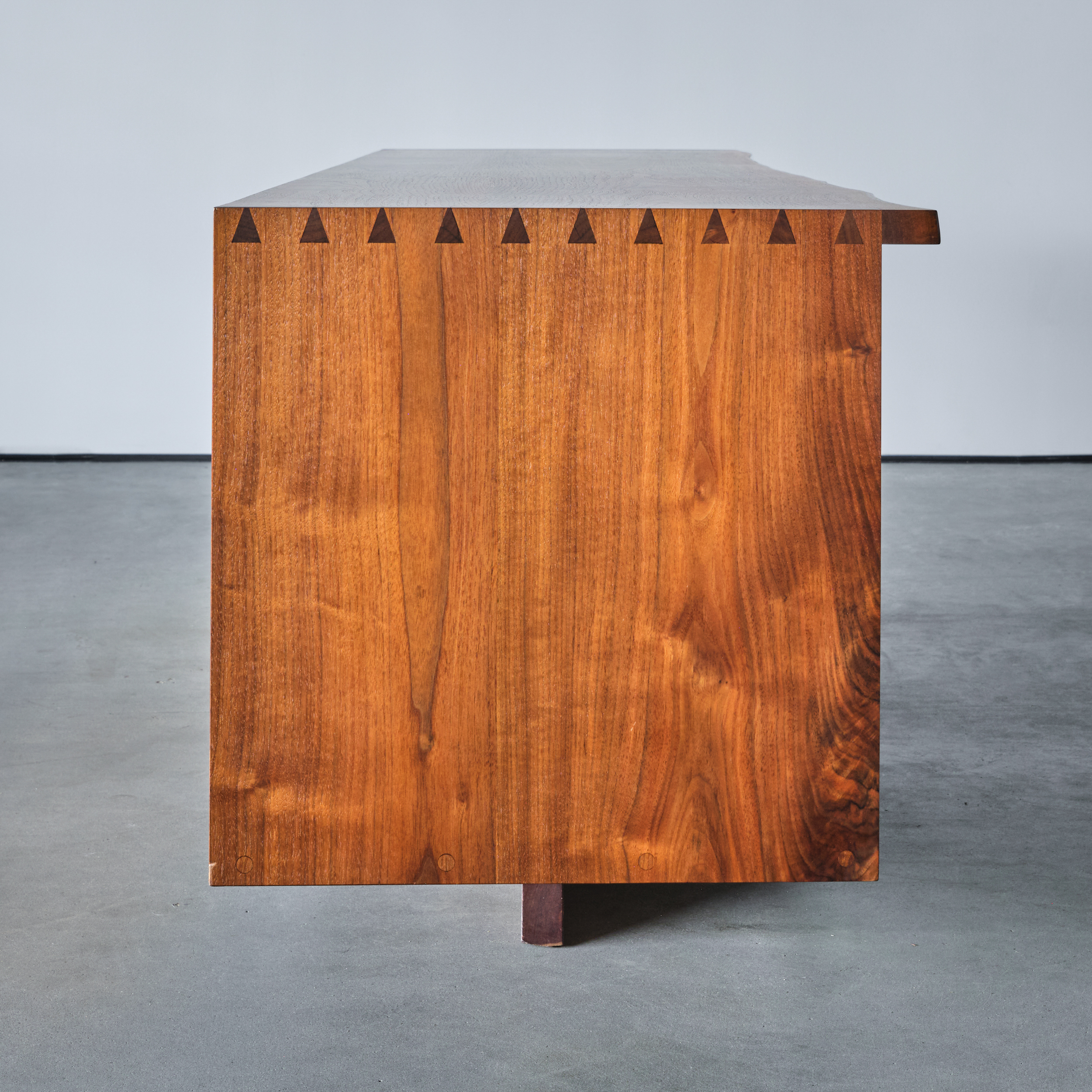
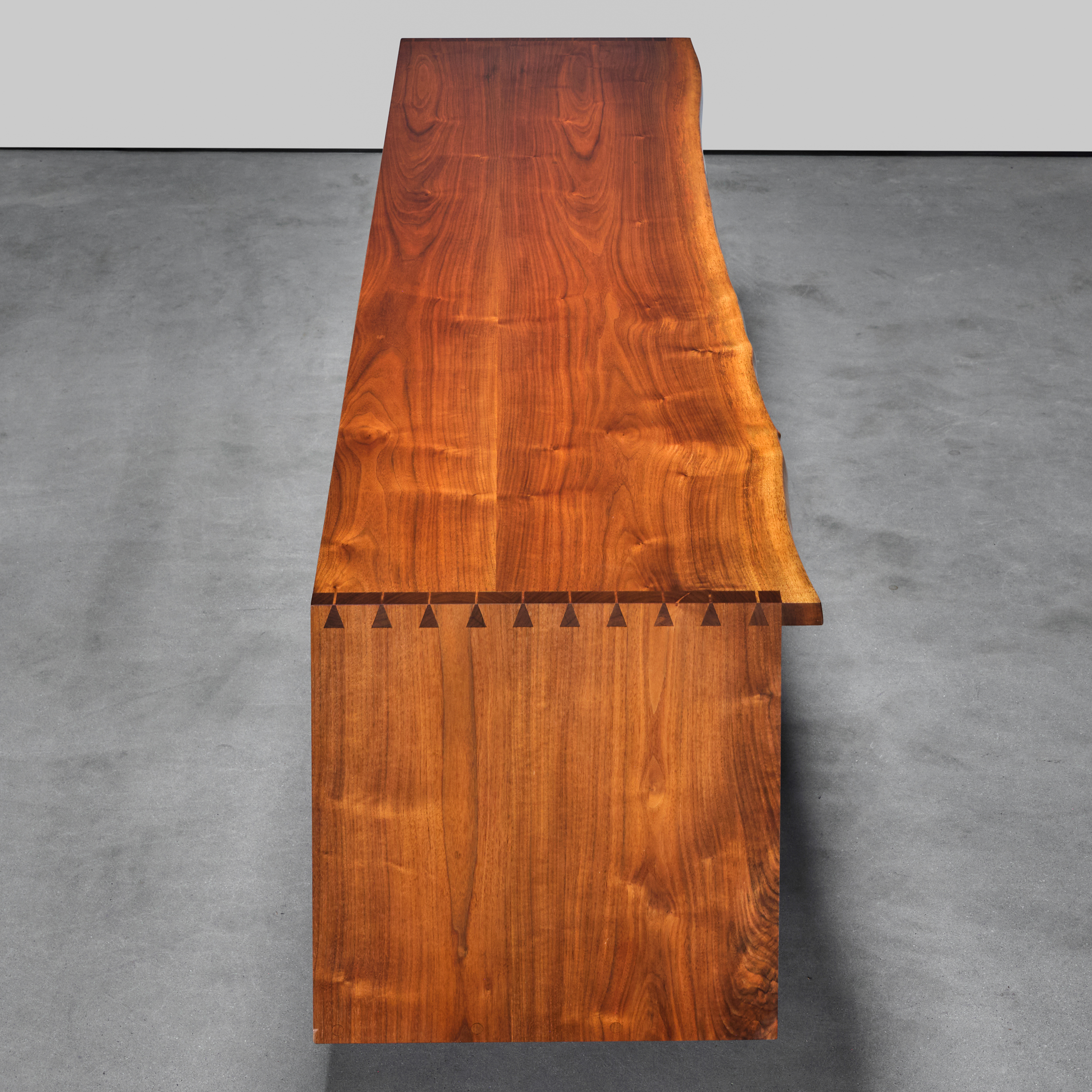
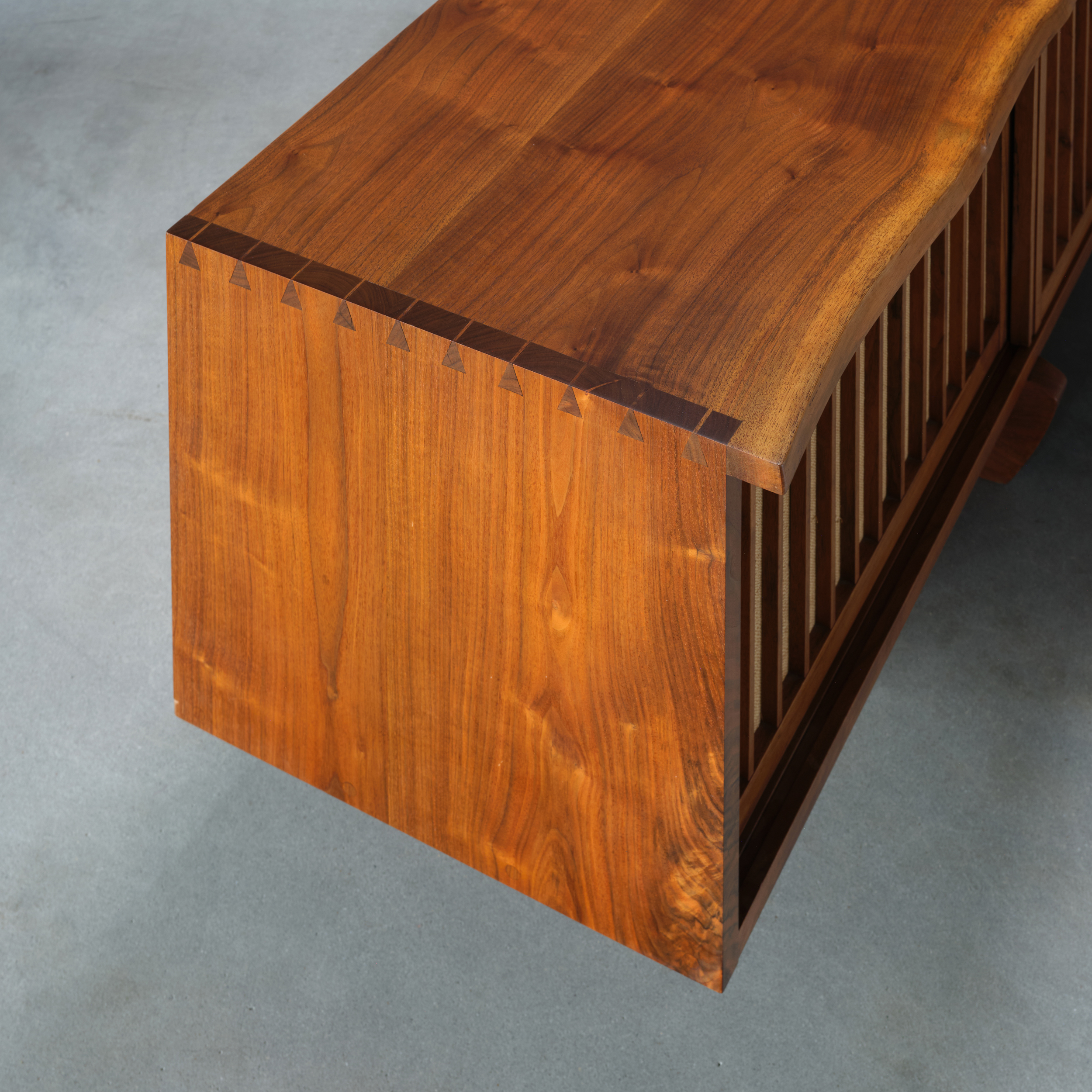
An exceptional example of a Conoid Room Divider by George Nakashima featuring an American Black Walnut top with a front overhanging free edge. The Room Divider also showcases Nakashima’s signature exposed, hand-worked dovetail joinery along the juncture of the top and sides of the case form.
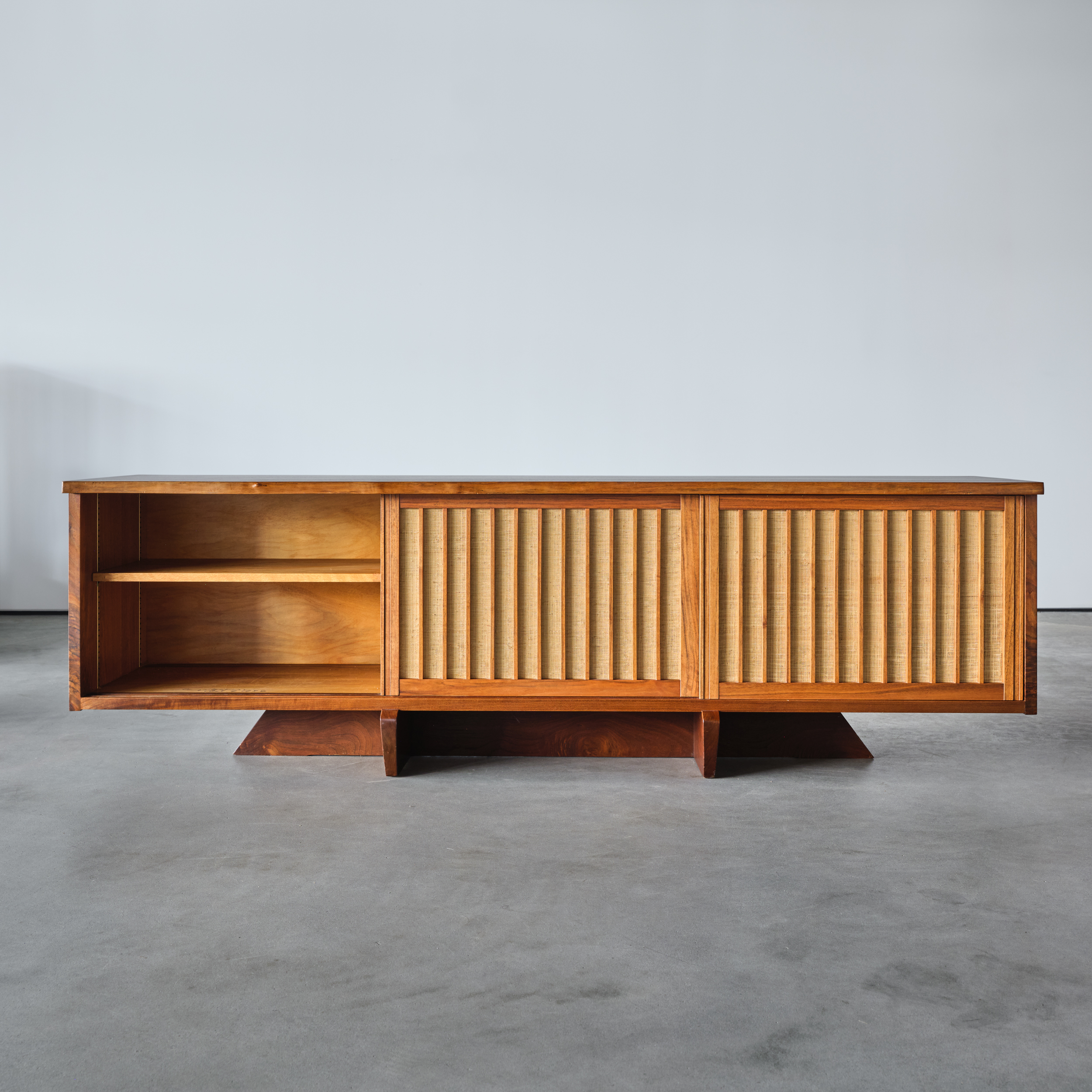
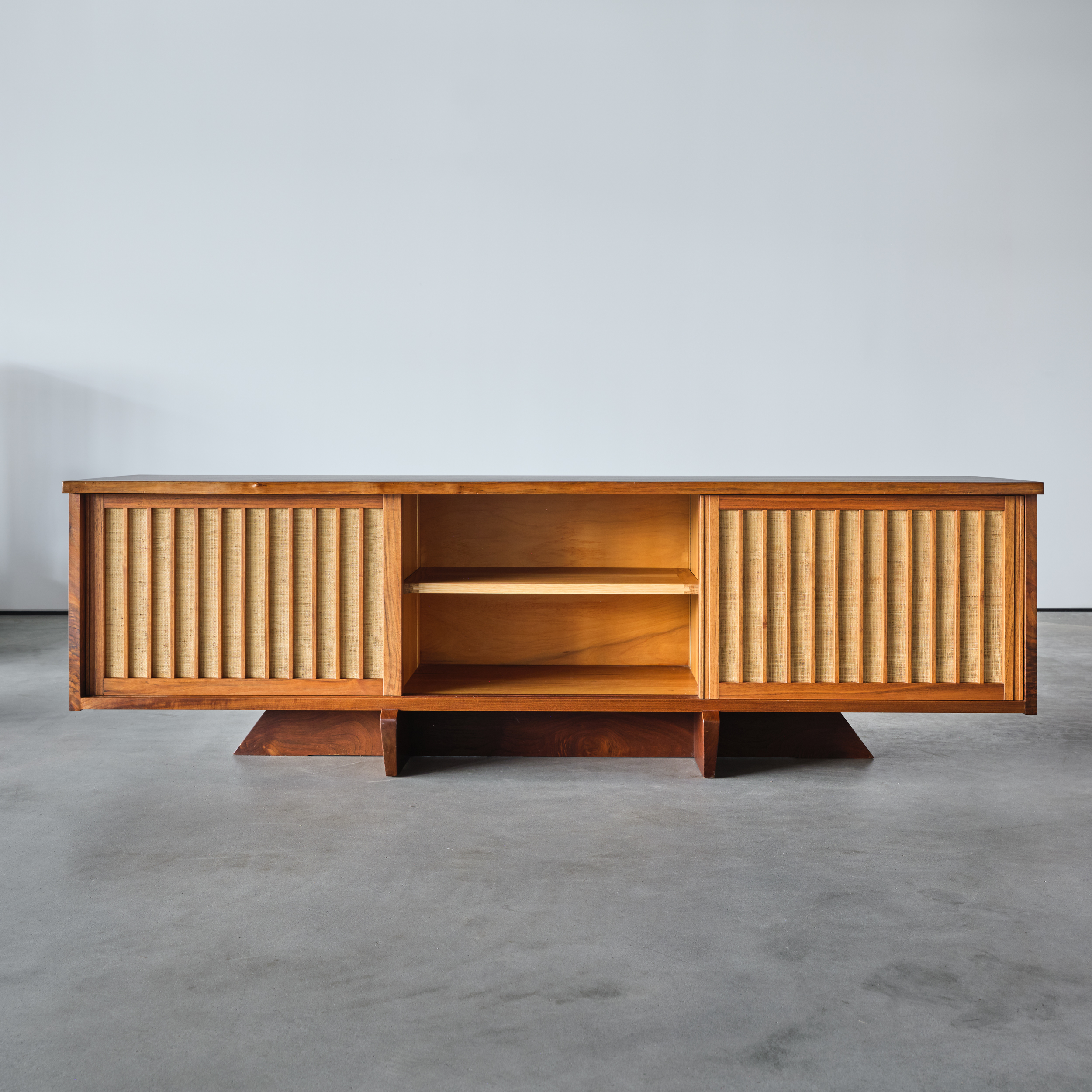
The cabinet is outfitted with three sliding, pandanus cloth doors and features adjustable open shelving in its interior.
Design c. 1970
“Throughout the 1950s and 1960s Nakashima’s designs for case pieces may be said to be modern in design—simple in overall form, devoid of superfluous ornament, and space-efficient. Even the use of sliding doors was in concert with the prevailing progressive taste of the postwar era. The containment of all movement of the doors within the structure of the case was also space-saving, unlike traditional hinged doors that swing out into a room.
However, while these issues aligned Nakashima with mainstream modernity of the 1950s, they were tempered by his choice of traditional materials and use of traditional construction methodology.
In addition, Nakashima, like his contemporaries in the world of modern design, was faced with the dilemma of efficiency versus design. If efficiency was the major determinant of form, then the rectilinear shape would dominate the furniture industry. Since the 1940s subtle curves had been employed in Nakashima’s chair designs, and more dramatic curves had been used in the designs for his tabletops. His case pieces, however, like those of so many of his peers, were exclusively planar.
Within a decade of the introduction of his first case pieces in the early 1950s, Nakashima had remedied this situation by applying his free edge to the tops of many of them. This brought his case pieces into concert with his tables employing a free edge.
In the Conoid Room Divider, the free edge is employed on two long sides and one short side of the piece, suggesting that it was meant from the beginning to be a room divider and not to be used exclusively against the wall. Its interlocking base cradles the storage unit itself and recalls the massive support elements used by Le Corbusier on his Pavillon Suisse building in Paris, completed in 1930 and probably seen by Nakashima when he was a student. In that building the bold revelation and contrast of the support elements and the elements being supported were applauded by many critics and architects as the essence of rational design.
Rather than suggest that Nakashima was resurrecting and interpreting a design seen forty years earlier, the similarity simply reflects his training as an architect. He was infused with many of the rationalist principles that motivated other designers and architects of modernist direction” (‘George Nakashima Full Circle’, Derek E. Ostergard, 1989, p.167).
George Nakashima was born in Spokane, Washington in 1905 to Japanese parents who had immigrated to the United States. Educated and trained as an architect at the University of Washington, Nakashima received his Master’s degree in Architecture from M.I.T. in 1930. After working briefly as an architect in the United States he left for Paris seeking the creative energies of one of the great urban centers of the day. From there he traveled extensively, ending up at the home of his grandmother, living on a farm on the outskirts of Tokyo.
| Dimensions | 84 × 22 × 26 in |
|---|---|
| Artist | |
| Date | 1987 |
| Material | American black walnut, Pandanus Cloth |
| Style |