







George Nakashima
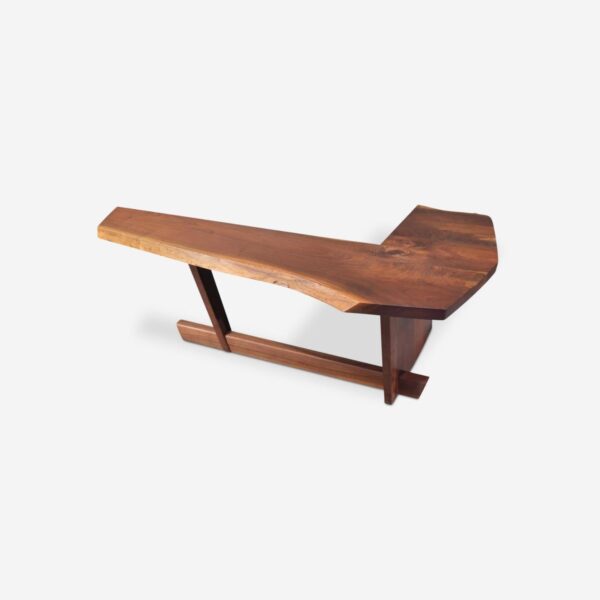
Conoid Bench, 1963
Material: American Black Walnut, Hickory
Dimensions: 84 x 38 1/2 x 29 1/2 in | Seat Height 12 ½ in
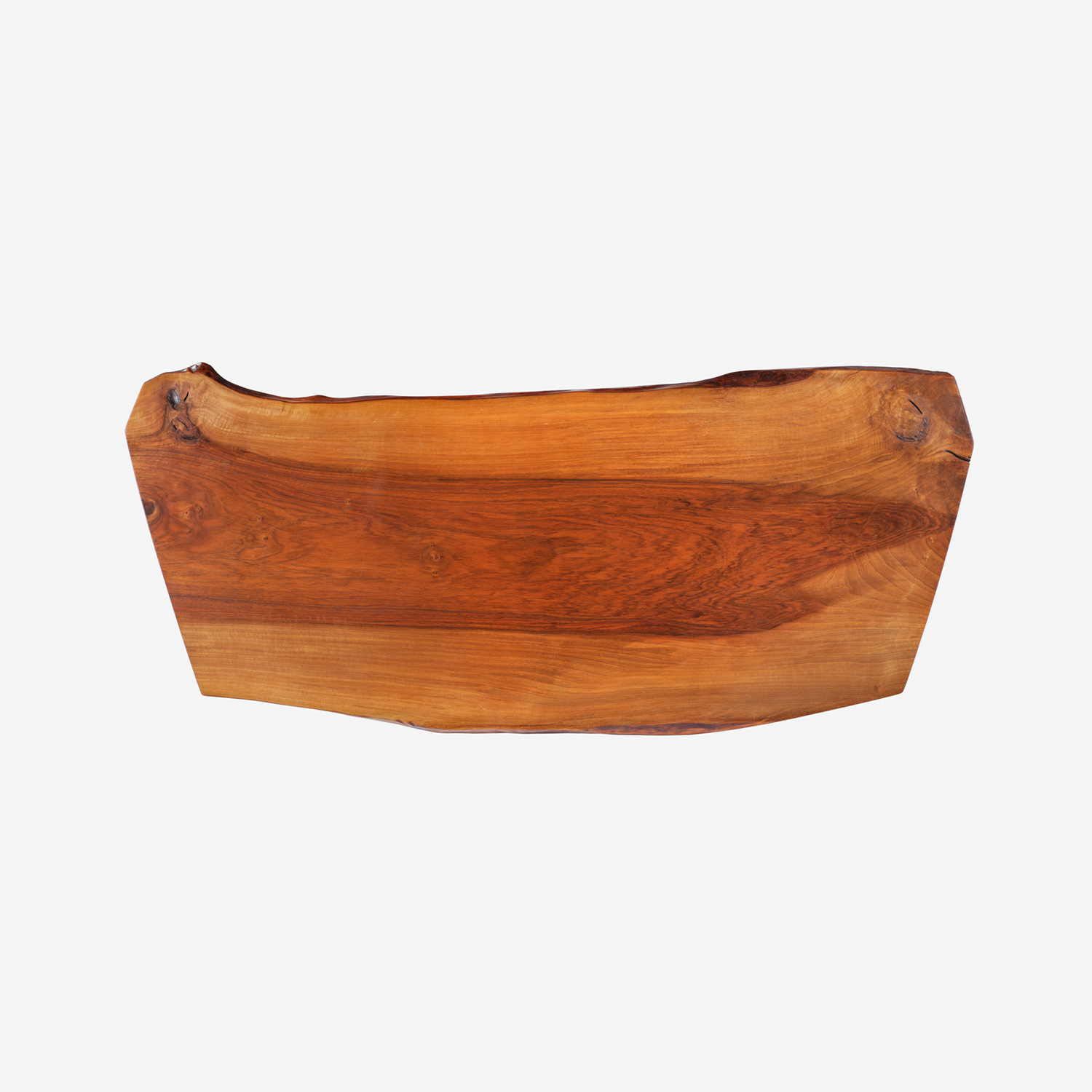
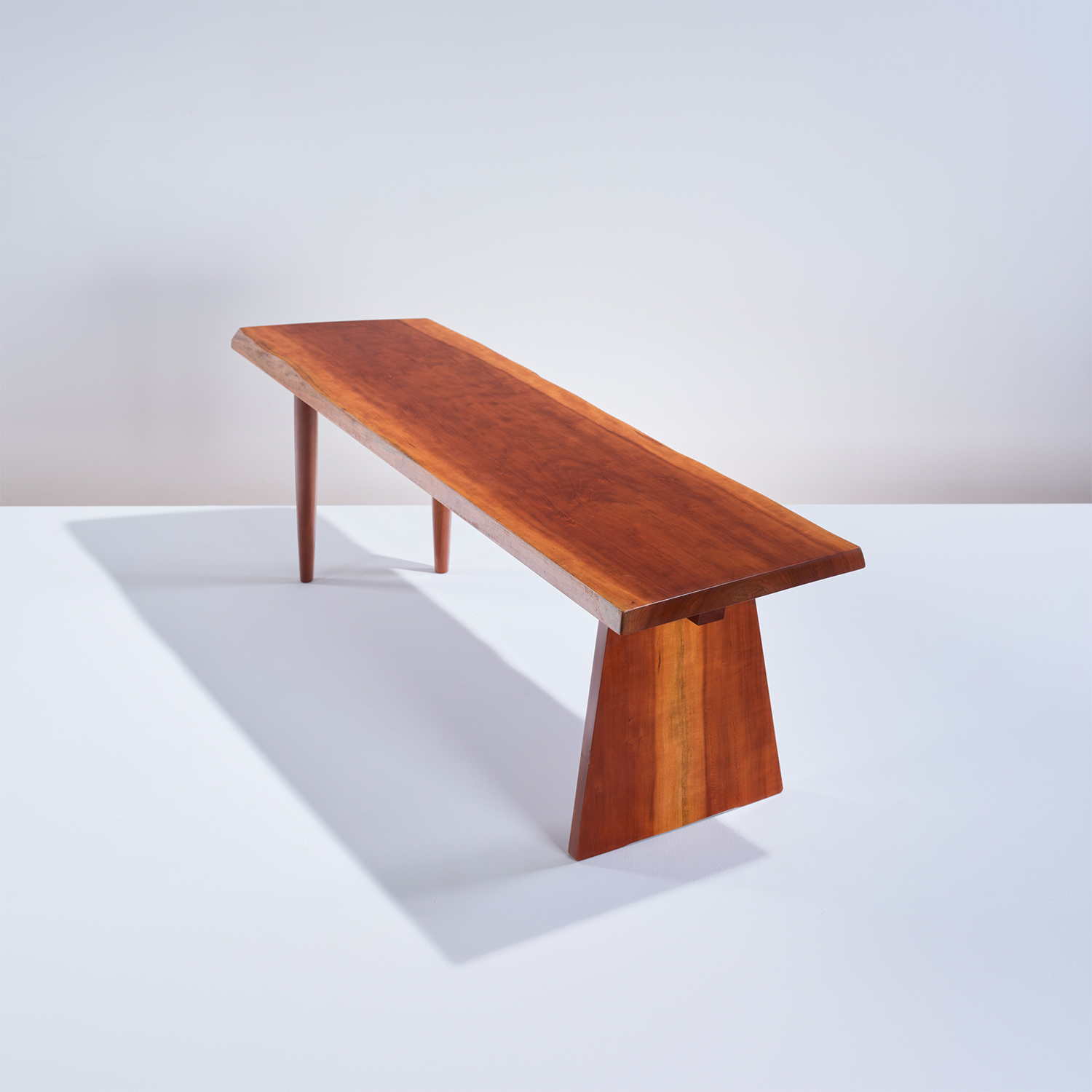
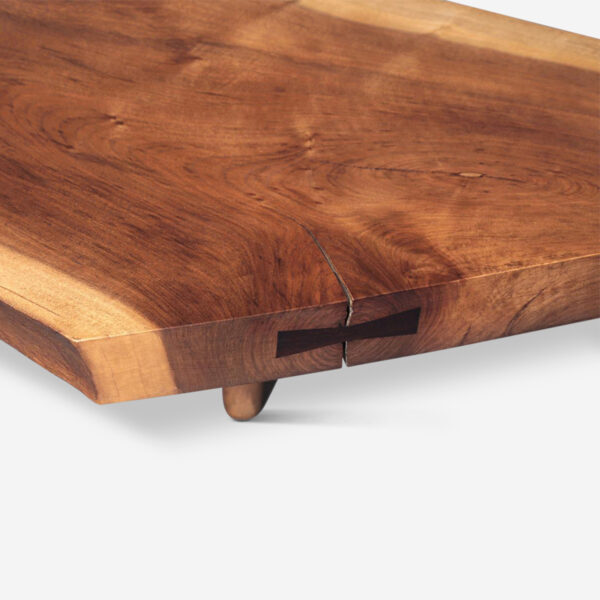
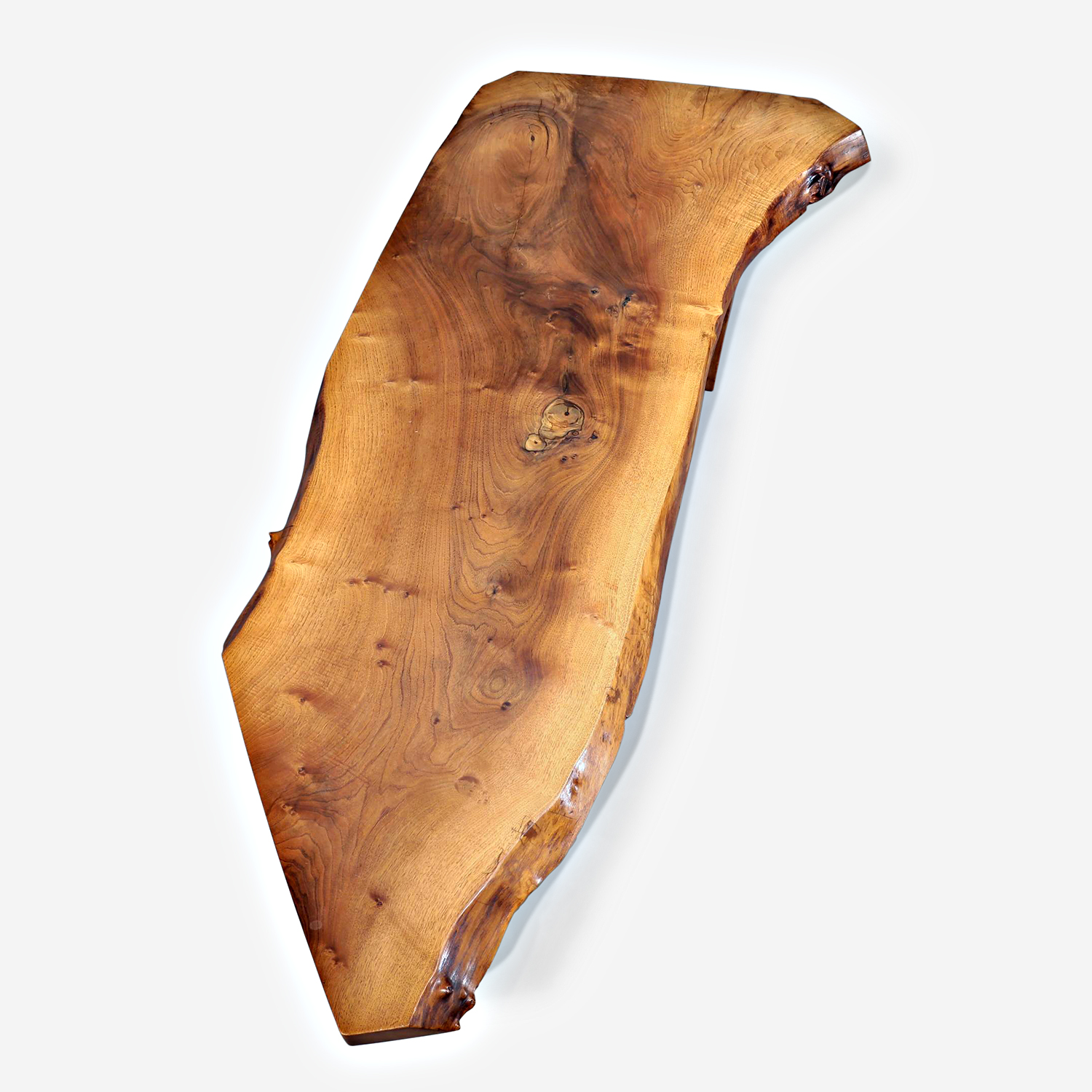
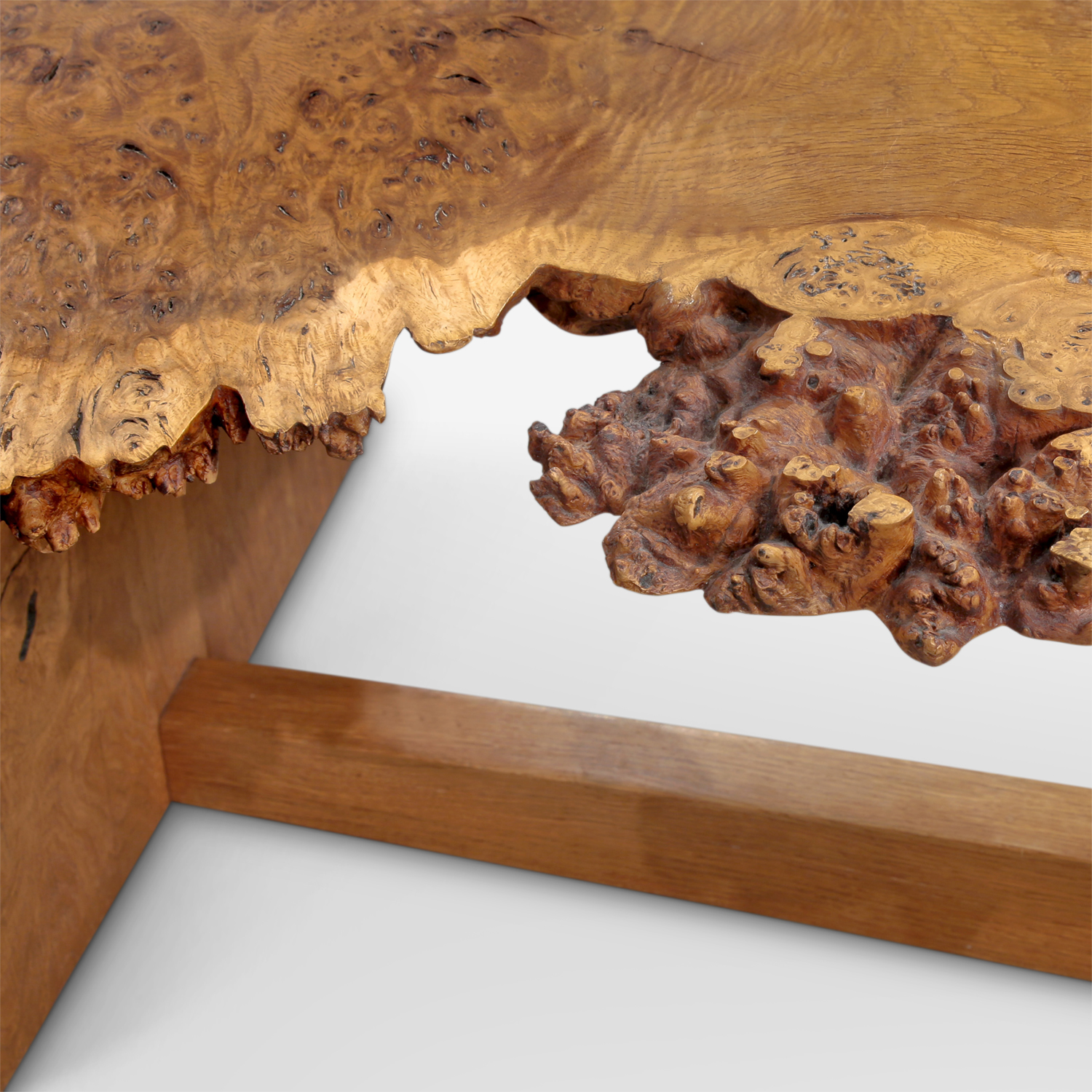
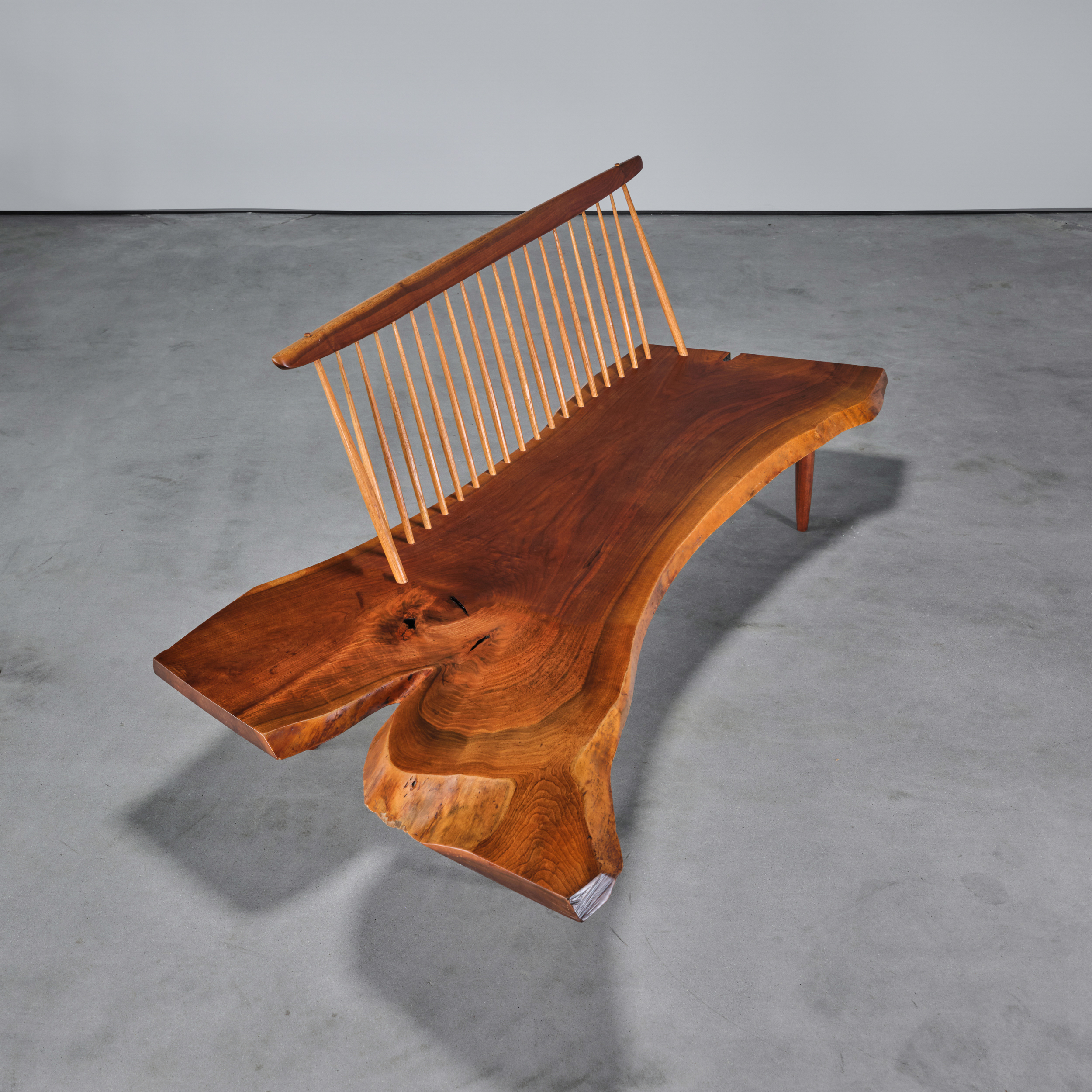
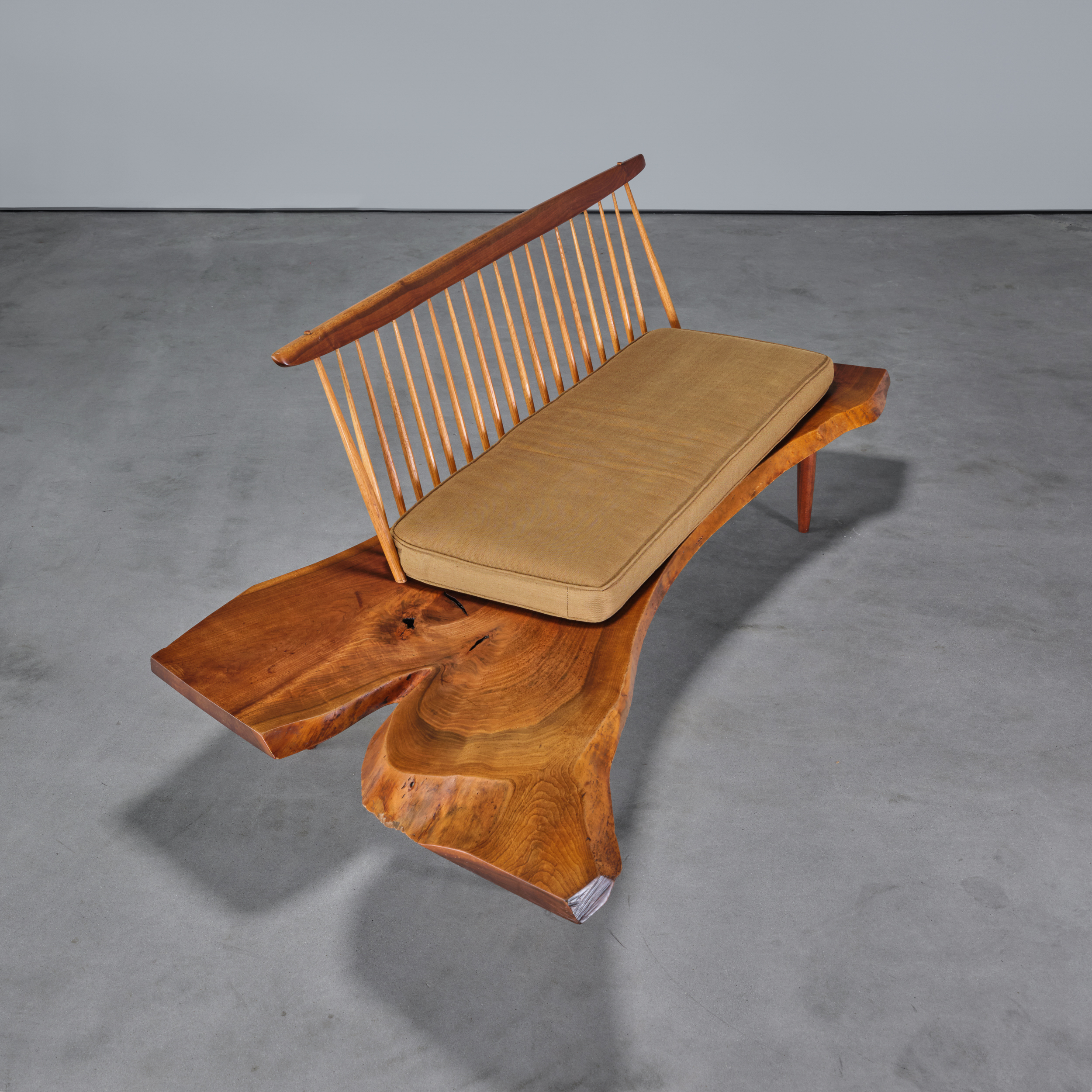
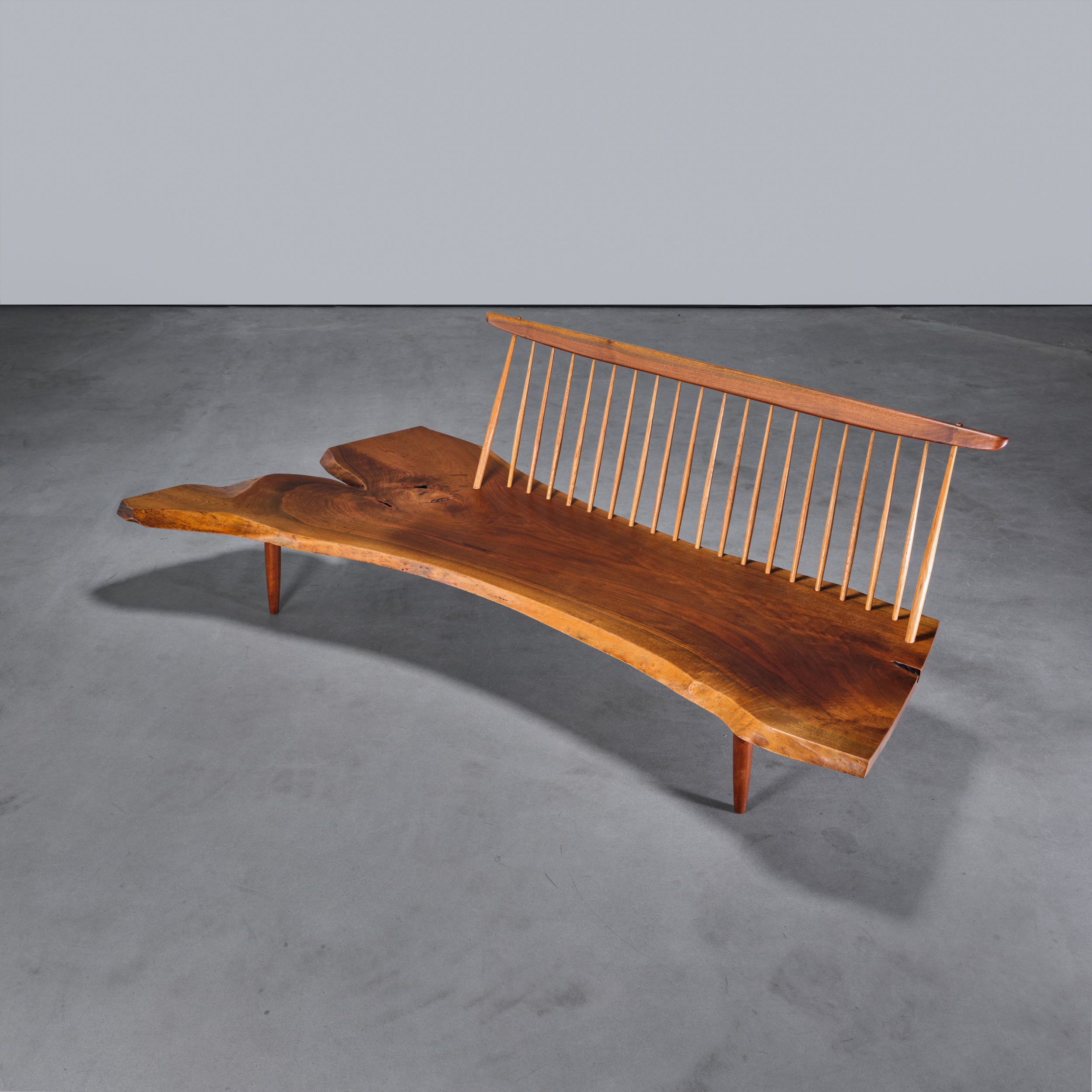
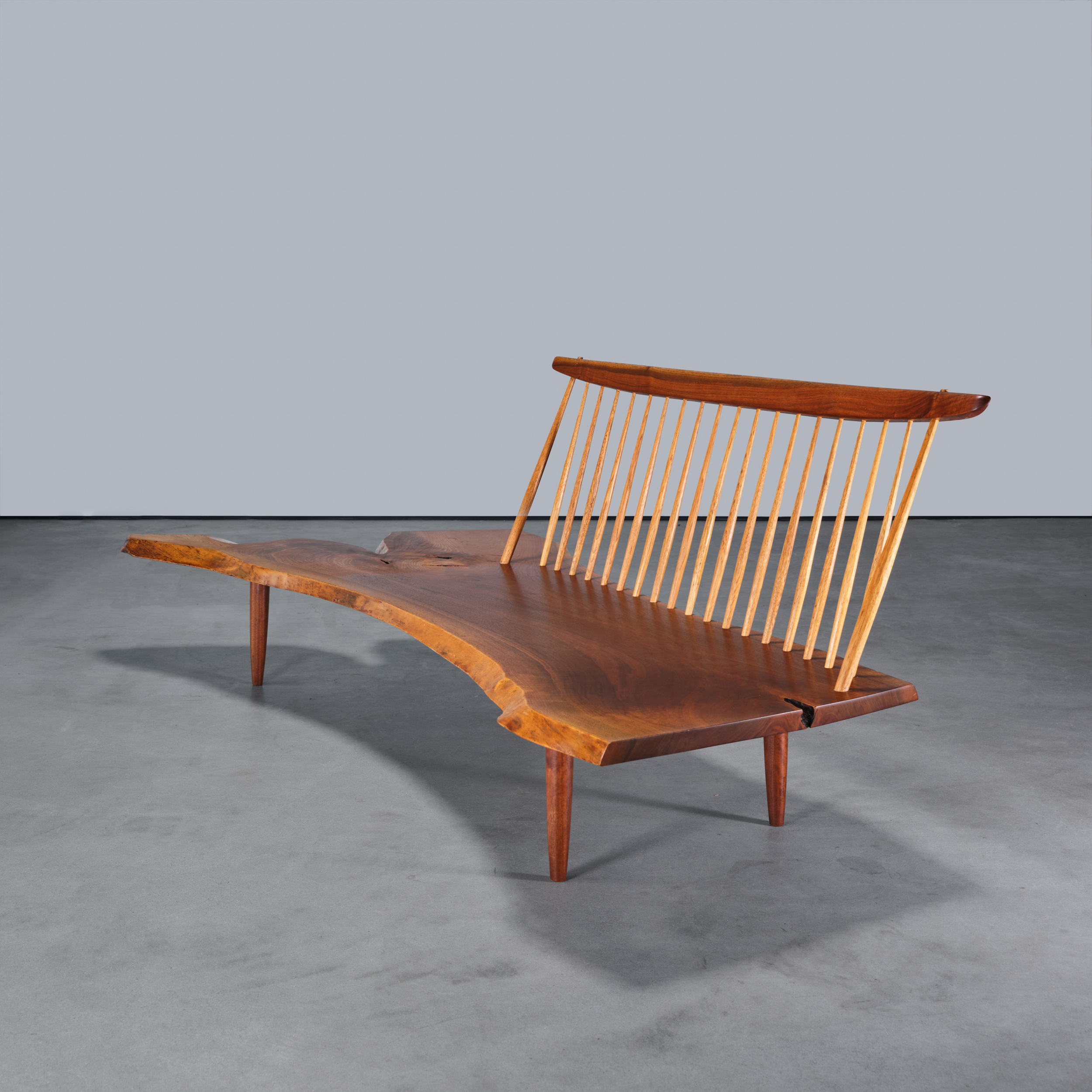
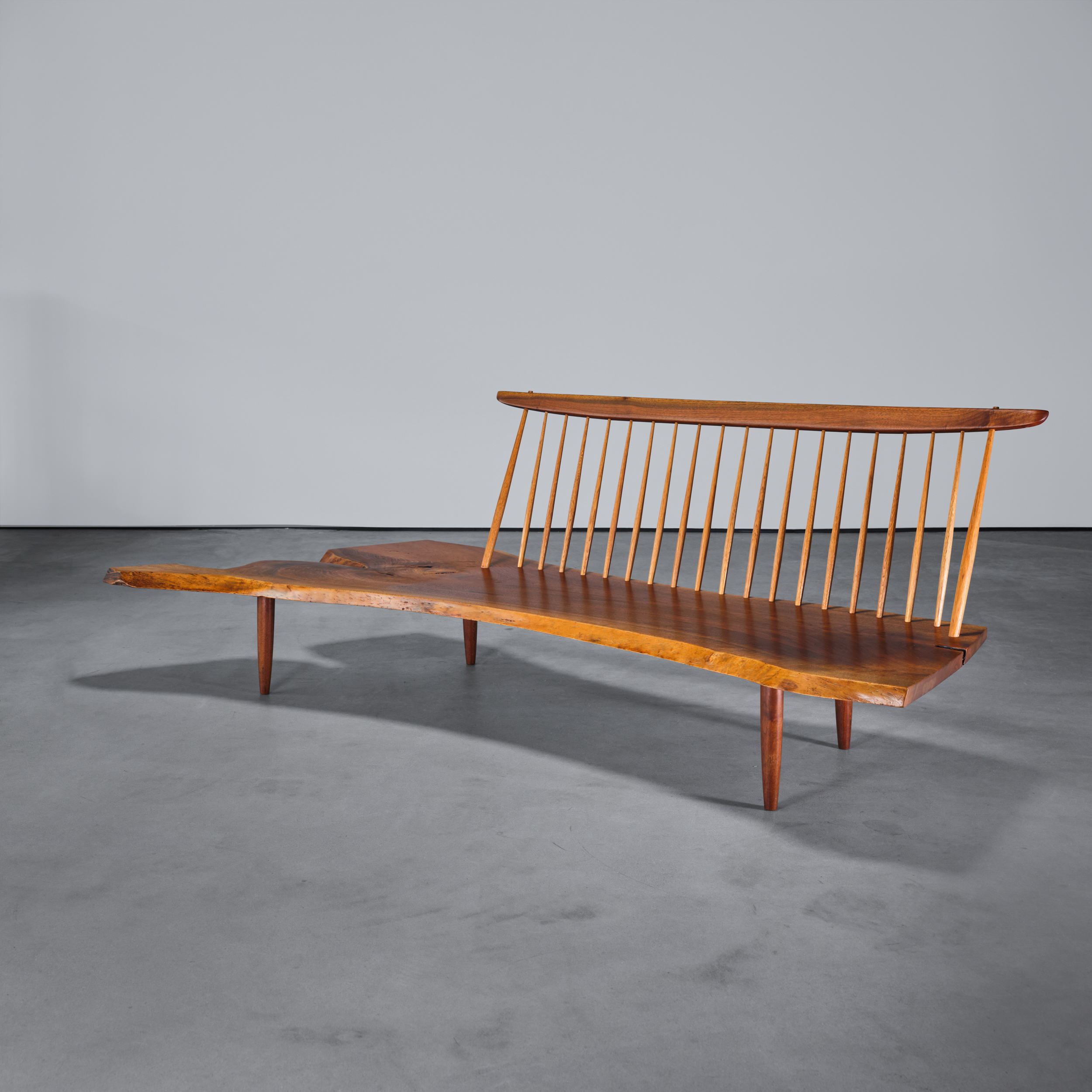
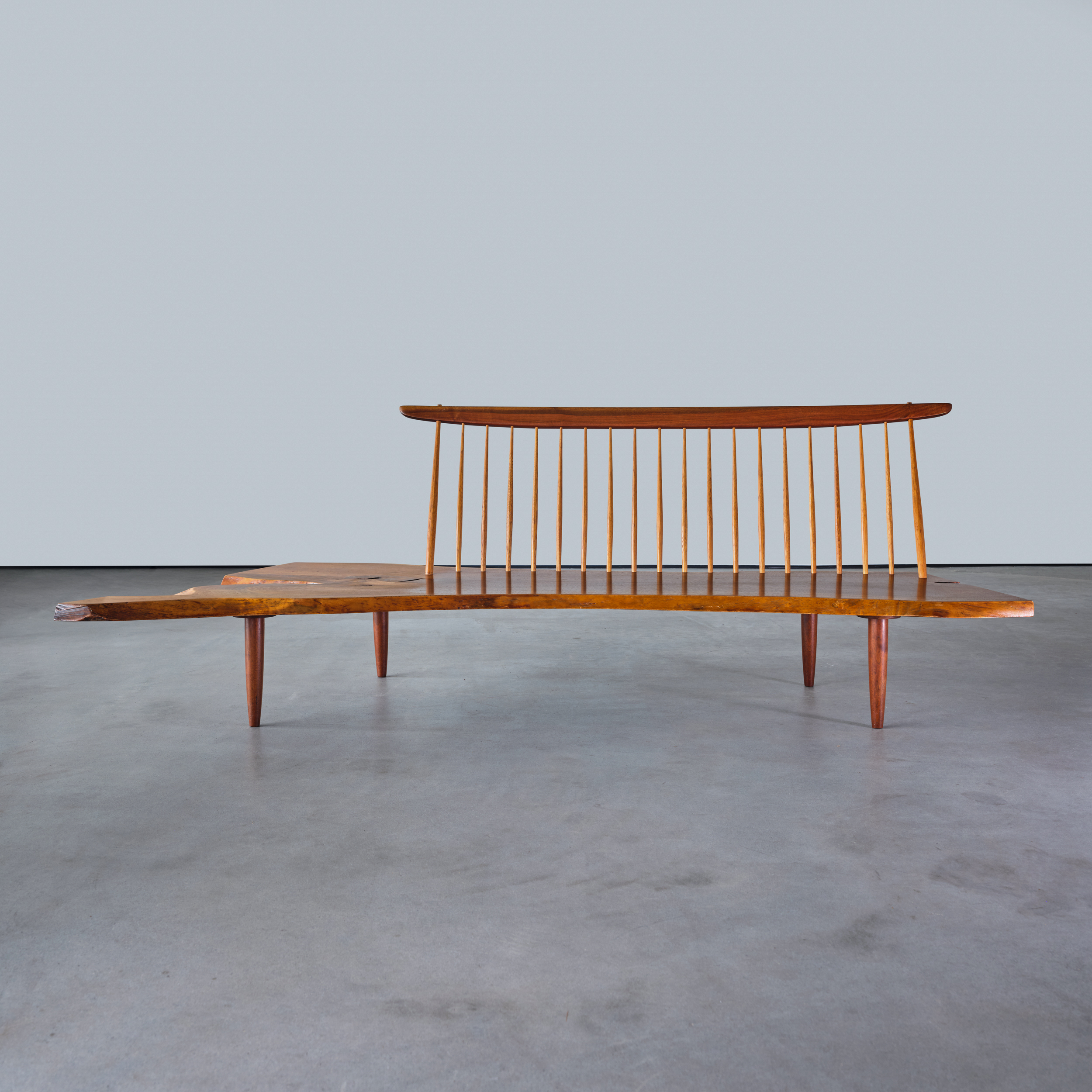
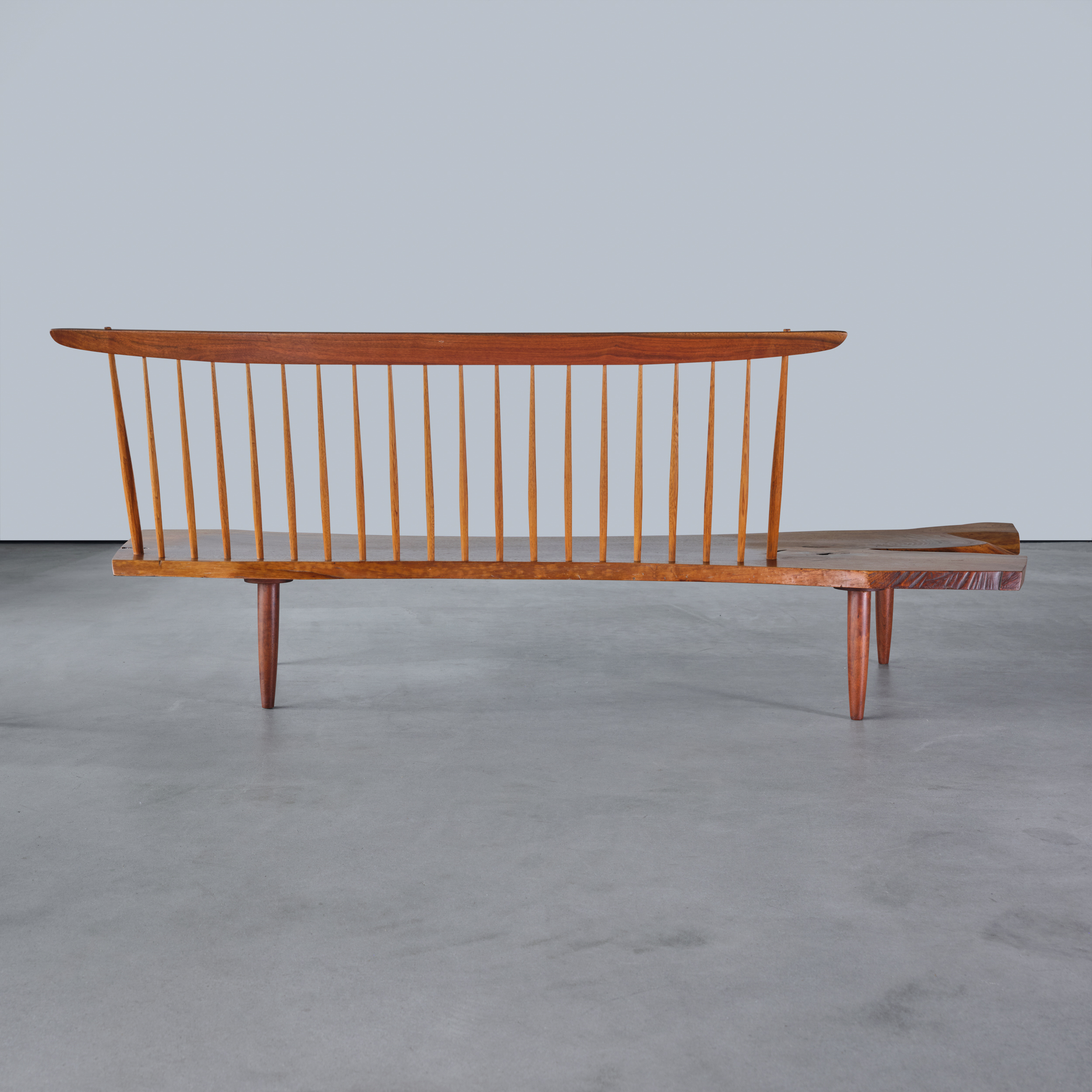
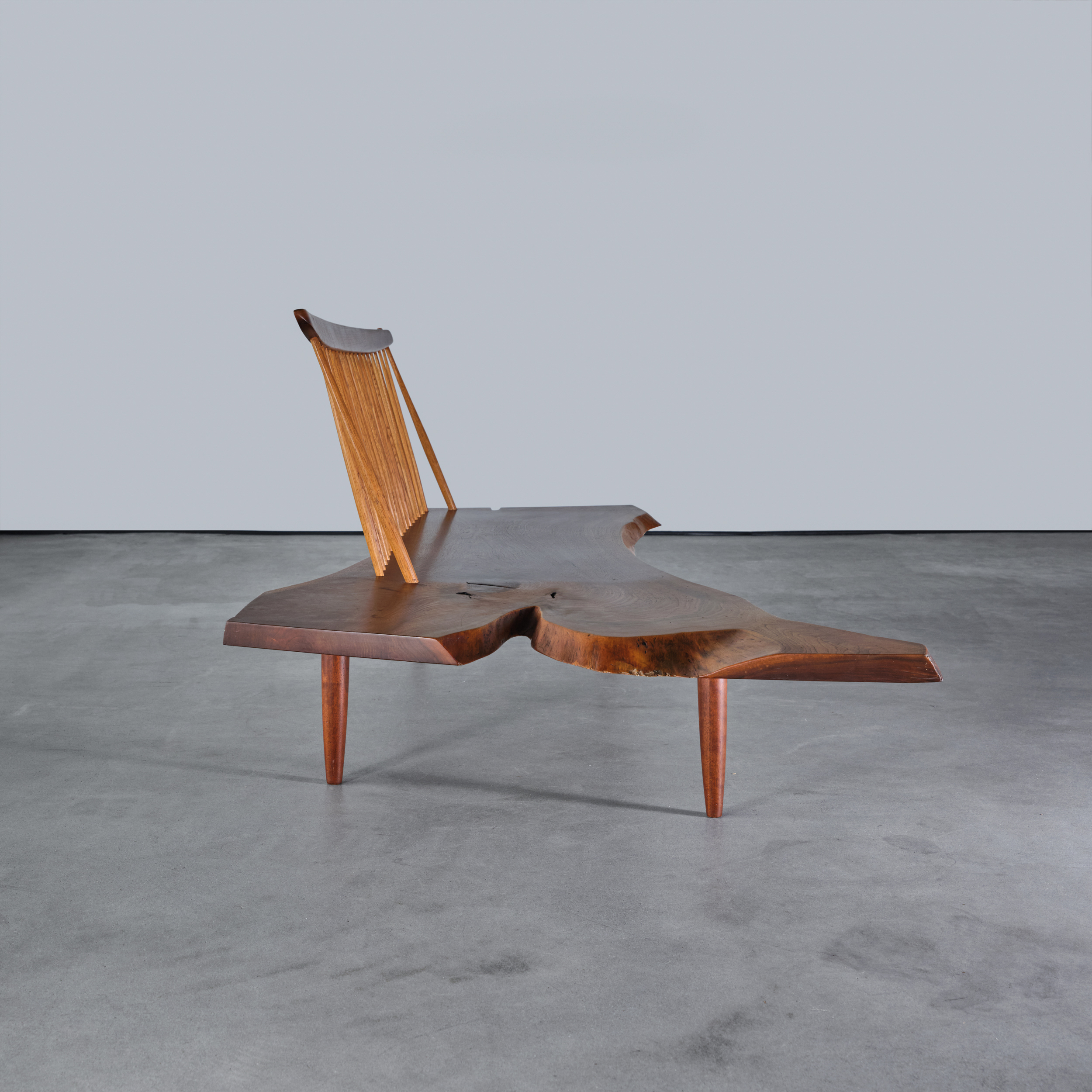
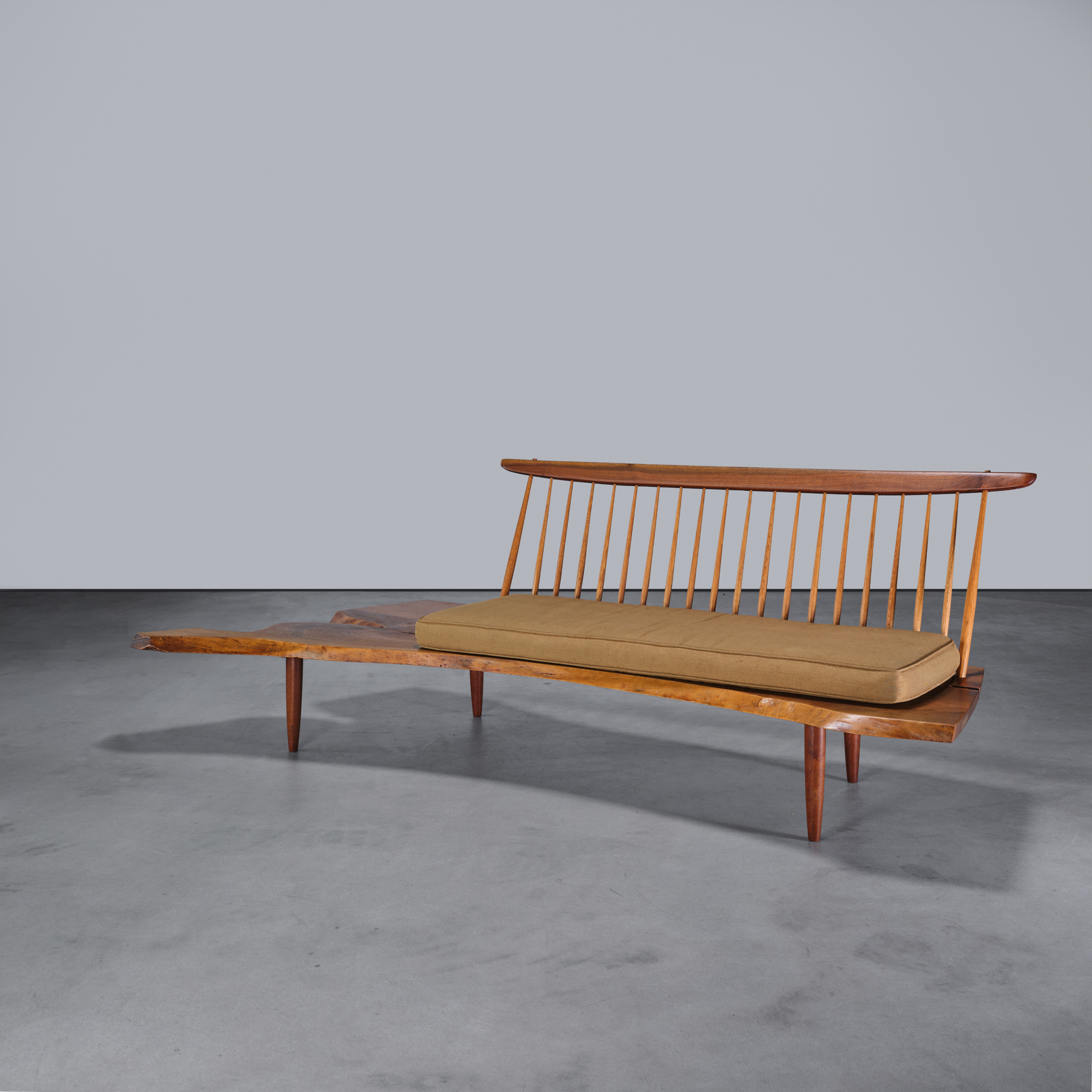
A 1963 Conoid Bench by George Nakashima which features a seat crafted from a single slab of American Black Walnut. The left side of the board also features a cross section of a crotch form of the tree from which the slab originated. The bench is also accompanied by its original upholstered cushion.
Design c. 1961
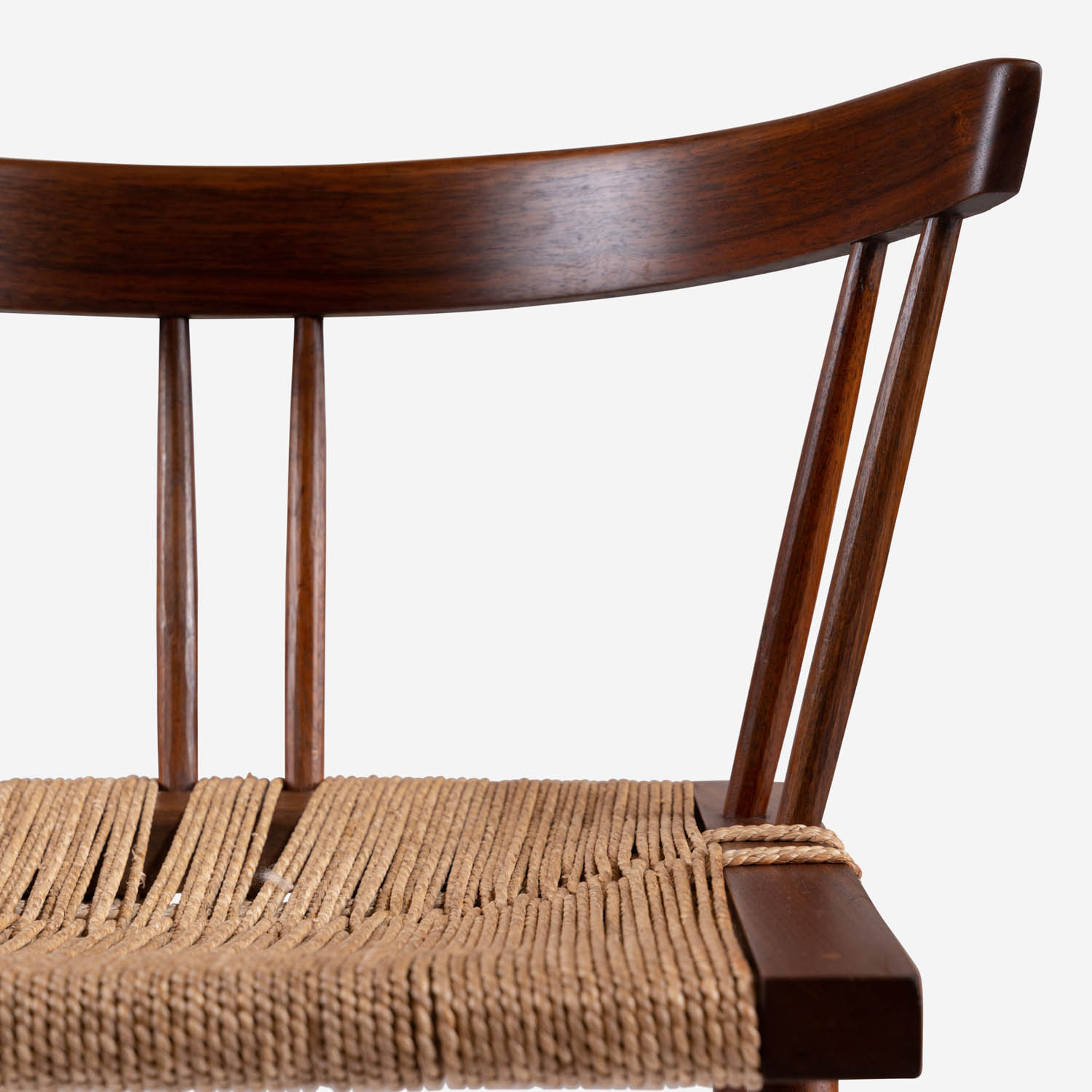
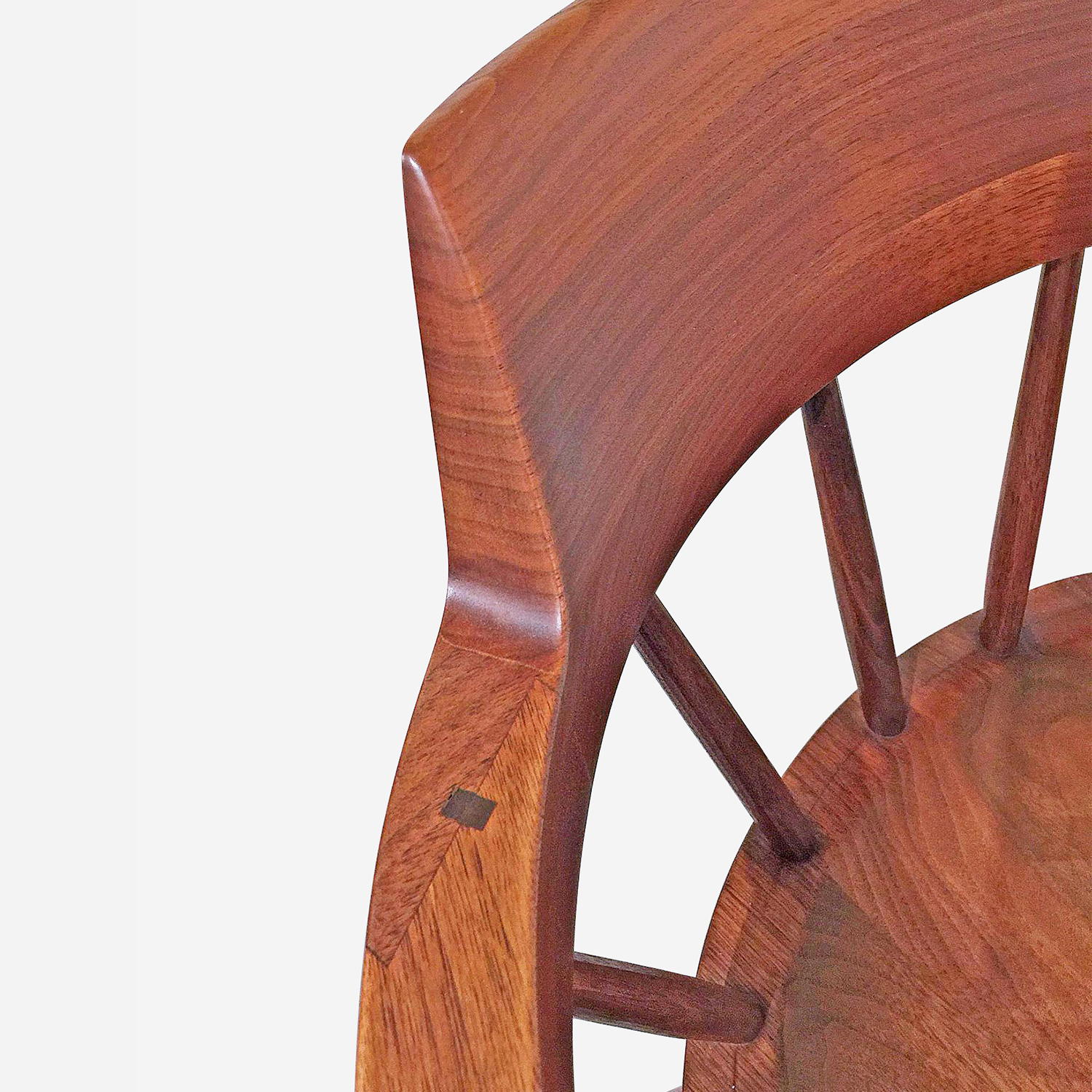
“Without doubt, the Conoid Bench with Back, the most dynamic seating ever designed by Nakashima, reveals his baroque tendencies as he slowly penetrated the material and began to allow language of natural form to speak more eloquently in his work. These designs were typified by an expansive use of the free edge for tabletops, armrests on chairs, and even the tops on case pieces. However, the initial source of inspiration for the bench lies in the slat-back Windsor bench created in America and England during the eighteenth and early nineteenth centuries. While the old chairmakers respected the nature of their material, they always subjugated it to design. Nakashima allowed the unusually large plank of American black walnut to dominate his design, revealing his deep respect for wood. Another dramatic difference between the imperial Chinese furniture of the sixteenth century lies in the yoke-back configuration of the crest rail, reminiscent of color wedges; this tenon underscores the visual and sculptural element of the Conoid Bench with an additional power through a protruded through-tenon at the junction of the rail with the outermost spindle. The subtle accent of a contrasting articulation of the crest rail with the disposition of the stiles in the plank seat.
The arrangement of the spindles across the expanse of the seat platform reveals Nakashima freeing himself from an academic replication of the Windsor aesthetic. Nakashima introduced an artistic tension into these bench designs, revealing an Eastern sensibility for this portion of the design. In traditional Windsor design, the crest rail, spindles, and back follow essentially the same line. In Nakashima’s bench the spindles conform neither to the traditional crest rail line nor to the highly irregular edges of the walnut plank. Instead, they establish a line between the two that acts as an intermediary. To assure a tight fit of spindles in the walnut, Nakashima heats their tips before inserting them in place. The heat causes the wood to contract; as it cools, it expands to fit snugly in the hole” (‘George Nakashima Full Circle’, Derek E. Ostergard, 1989, p.156-7).
George Nakashima was born in Spokane, Washington in 1905 to Japanese parents who had immigrated to the United States. Educated and trained as an architect at the University of Washington, Nakashima received his Master’s degree in Architecture from M.I.T. in 1930. After working briefly as an architect in the United States he left for Paris seeking the creative energies of one of the great urban centers of the day. From there he traveled extensively, ending up at the home of his grandmother, living on a farm on the outskirts of Tokyo.
| Dimensions | 84 × 38.5 × 29.5 in |
|---|---|
| Artist | |
| Date | 1963 |
| Material | American black walnut, Hickory |
| Style |