





Edward Moulthrop Turned Wood: What to Know
- March 11, 2025
- -
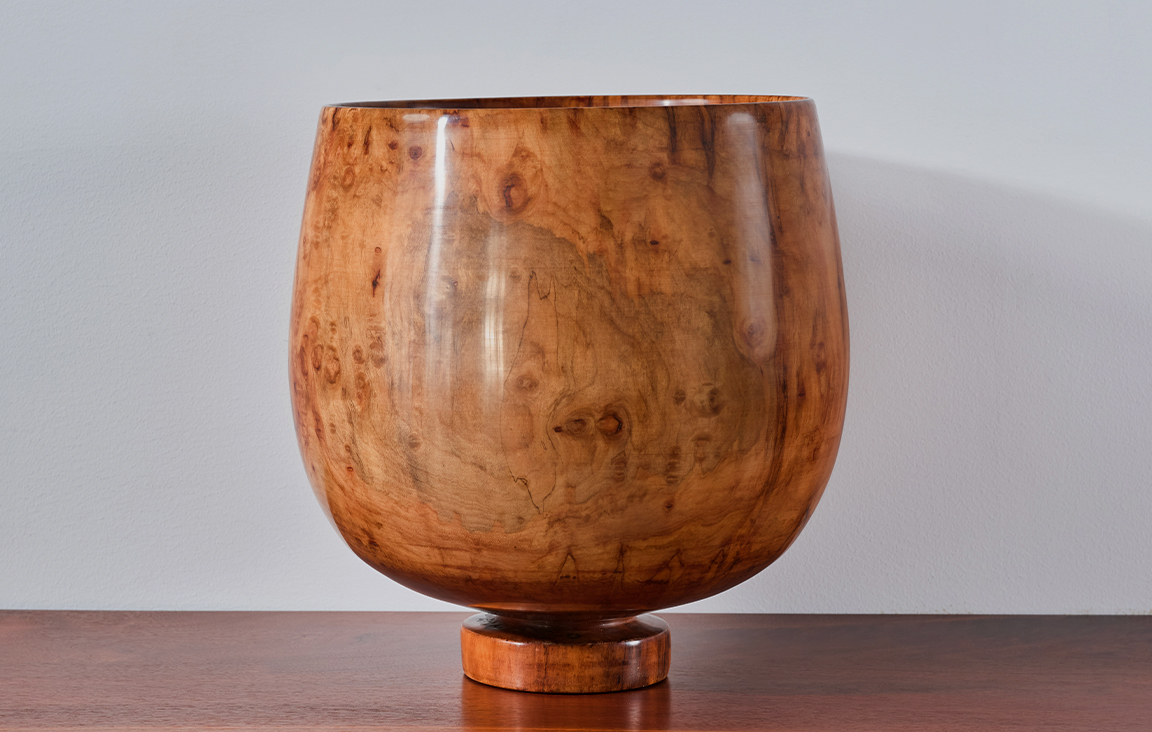
Edward Moulthrop is known as the “father of modern woodturning,” a nickname that Moulthrop earned through his mastery of woodturning techniques and the innovative vision behind his work. Moulthrop inspired contemporaries and later generations alike with his oversized wooden pieces, handcrafted with pioneering techniques that cemented his one-of-a-kind talent for the craft. In this article, we’ll explore key facts about Edward Moulthrop’s life, work, and the pieces he is known for.
What Makes Edward Moulthrop Turned Wood So Special?
Edward Moulthrop is known for his use of unique materials, tools, and design methods, including:
- Utilizing rotted wood
- The use of handmade tools
- Creating and using an oversized lathe
- Creating very large wooden objects
- Unique wood patterns, colors, and grains
Edward Moulthrop is chiefly known for creating super-sized vessels. The large pieces allowed Moulthrop to highlight the unique textures, features, and colorations of the woodcuts he chose to work with. Tulipwood can be found frequently in Moulthrop’s body of work. Tulipwood is sourced from several variations of trees occurring across continents, and is remarkable for its many beautiful variations, with colors ranging from white and pale yellows and greens all the way to deep purple and brown.
Edward Moulthrop Turned Wood Features
Moulthrop’s pieces often feature exciting variations and features natural to the woods he used, including sweeping crotch and block mottled patterns, burls and spirals, and patches of contrasting color that define the visual identity of each piece.
Because of the sheer scale of many of Moulthrop’s objects, these visual differences become a centerpiece of each vessel, elevating the individual spirit each piece possesses.
Edward Moulthrop’s Artistic Vision
Interestingly, in contrast to many artists and woodworkers of the time, Moulthrop uniquely favored rotting wood as a medium for his pieces, as the natural variations of the wood would become enhanced as the rotting discolored the tree.
In addition to utilizing this often-overlooked wood and creating towering works of art, Moulthrop is unique in the sense that he designed and created his own tools in order to bring his works to fruition.
To make gigantic pieces, Moulthrop needed extremely large and refined tools, which he made himself in order to fit his unique needs as an artist and woodworker. He is also credited with the innovative use of polyethylene glycol to coat his pieces, providing them with a glasslike shine and crack-resistance.
Moulthrop would also need an extremely large lathe, the shaping device used to make his dynamic works. Without a commercially available lathe large enough to accommodate the size of his works, Moulthrop needed to create his own, which he did successfully.
Edward Moulthrop’s tools would later be featured in wood artistry magazines, due to their uniqueness and the innovation that powered their creation.
About The Artist: Edward Moulthrop Biography and Examples
Edward Moulthrop was born in 1916 in Rochester, New York. He was interested in woodworking from a young age, purchasing his first lathe in his teens. Moulthrop attended Princeton University and graduated with an architecture degree in 1941.
In 1960, Moulthrop ended his architecture career to pursue woodworking full-time. Through his relationships with gallery owners and his notable clientele, Moulthrop’s work spread in popularity, even reaching the eyes of former President Jimmy Carter, a fellow woodworker, who visited Moulthrop’s studio and formed a long and enduring friendship with the artist as a result.
Moulthrop passed his love of woodworking down to his son, Philip, a Navy veteran and lawyer turned woodworker, and Philip’s son, Matt, who turned his first bowl at seven years old. His legacy continues on in his lineage and in his impact on the modern art world, with works featured in prestigious collections including those of Metropolitan Museum of Art, MoMA, Renwick Gallery, White House Collection of American Crafts, and MAD in NYC.
Examples of Edward Moulthrop Turned Wood
Below you will find some examples of Edward Moulthrop Turned Wood, all of which are available for purchase through Moderne Gallery.

Edward Moulthrop
Untitled, c.1970
Dimensions:
10 × 10 × 7 in (W x D x H)
25.4 x 25.4 x 17.78 cm
Early turned white pine bowl

Edward Moulthrop
“Untitled” Turned Vessel, c.1970
Dimensions:
17 × 17 × 8.5 in (W x D x H)
43.18 x 43.18 x 21.59 cm
Extremely Large turned Figured Tulipwood. Signed.

Edward Moulthrop
“Untitled” Turned Vessel by Edward Moulthrop, 1992
Dimensions:
13 × 13 × 8 in (W x D x H)
33.02 x 33.02 x 20.32 cm
Figured Tulipwood. Signed, dated and stamped
Edward Moulthrop Furniture at Moderne Gallery
Moderne Gallery is proud to be a leading authenticator and purveyor of Edward Moulthrop turned wood– browse the rest of our Moulthrop catalog on our website.